
Wellness programs can pay back their cost, but the return is variable and often smaller than vendor pitches suggest. Reviews of workplace health programs commonly find positive but modest benefit-to-cost ratios, and a few well-known figures near 5:1 exist alongside much more conservative independent estimates. Before scaling spend, define your objective, track participation and value beyond ROI, and use conservative financial assumptions.
TL;DR:
- ROI for wellness programs varies greatly depending on the targeted health risks and program duration, with better returns seen in disease management or ergonomic interventions.
- Vendor claims often differ based on what costs and benefits are included, making it essential to scrutinize their accounting and comparison groups before trusting ROI estimates.
- Participation and behavior change tend to appear within months, but healthcare savings and claims reductions may take one to three years or more to materialize.
- Setting clear objectives, establishing a baseline, and tracking participation metrics early can help justify the program and measure its long-term value beyond immediate ROI.
- Programs like Charity Miles offer quick wins by boosting participation and engagement, providing visible results that can support leadership buy-in without waiting for long-term claims data.
Table of Contents
- What studies and reviews commonly report about wellness program ROI
- Why ROI estimates vary and how to read vendor or published claims
- How to measure ROI and VOI for your program
- Which outcomes appear when
- A practical example: engagement-first participation and CSR results
- Three practical next steps for HR
- Boost participation and VOI with Charity Miles
- Sources
- FAQ
What studies and reviews commonly report about wellness program ROI
Published estimates span a wide range, and the type of program explains much of that spread. A modeled analysis reported by UR Medicine estimated annual savings of $1,224 per person and a 4.90:1 return for a comprehensive risk-reduction program, though that figure came from extrapolated risk models rather than a randomized trial against a comparison group. Disease-management and ergonomic interventions tend to produce steadier, more direct cost offsets than general lifestyle programs, since they target conditions with measurable, immediate claims impact.
A few patterns show up across the evidence:
- Programs targeting specific health risks or injuries (disease management, ergonomic redesign, smoking cessation) tend to show stronger, more consistent returns than broad lifestyle programs.
- Larger organizations and lower per-person program costs are associated with higher reported ROI, partly because fixed costs get spread across more people.
- Programs that run longer tend to report better ratios, likely because behavior change compounds and because short pilots rarely capture downstream healthcare effects.
The takeaway for HR is not that ROI is fictional. It is that ROI depends heavily on what the program targets and how long it runs, which is exactly why headline numbers deserve scrutiny before they anchor a budget request.
Why ROI estimates vary and how to read vendor or published claims
A 4.90:1 return and a break-even result can both be true descriptions of similar programs, because ROI is a construct built from choices, not a fixed property of “wellness.” Two evaluators looking at the same intervention can land on very different numbers depending on what they count and how long they watch.
A few accounting choices drive most of the disagreement:
- What counts as a cost: vendor fees, incentives, staff time, and administrative overhead are sometimes included and sometimes quietly left out, which inflates apparent returns when omitted.
- What counts as a benefit: some studies count only medical claims, others add absenteeism, productivity, and turnover, each with its own measurement error.
- Study design: without a genuine comparison group, it is hard to know whether outcomes came from the program or from the type of employee who chooses to enroll in one.
- Time horizon: a one-year window catches participation and behavior change; healthcare utilization shifts often take years to show up, if they show up at all.
- Conflicts of interest: reanalyses have found that the highest ROI claims cluster among vendor-funded studies with narrow accounting and short follow-up, according to a CDC-hosted reanalysis, while quality-adjusted reviews tend to produce more conservative estimates.
Pro Tip: Ask any vendor presenting an ROI figure to show their cost list and comparison group; a number without both is a marketing claim, not an evaluation.
How to measure ROI and VOI for your program

Before you can defend a number to finance, you need a plan that survives scrutiny. Start by defining the objective the program is meant to serve, whether that is reducing specific claims, improving retention, or simply raising activity levels, and identify a realistic counterfactual, such as a similar team that is not yet enrolled.
Core metrics worth tracking include:
- Participation, enrollment, and activation rates in the first 90 days.
- Repeat engagement and team reach over the full plan year.
- Medical claims, absenteeism, and validated presenteeism scores where available.
- Turnover and engagement survey results tied to the program cohort.
A simple ROI formula, benefits minus costs divided by costs, works fine as long as every cost line (vendor fees, incentives, staff hours) is included and benefits are annualized rather than projected indefinitely. The CDC’s evaluation framework recommends reporting value beyond ROI, or VOI, alongside financial figures, especially in the early years when morale, engagement, and CSR visibility are the clearest wins.
A minimal evaluation plan looks like this:
- Set a baseline before launch using existing HR and claims data.
- Choose an attribution approach, ideally a comparison cohort rather than before-and-after only.
- Monitor participation and early behavior metrics monthly.
- Layer in claims, absenteeism, or turnover data annually.
- Report both ROI and VOI on a consistent cadence, even when ROI is still uncertain.
Which outcomes appear when
Participation and behavior change tend to show up within months, but healthcare utilization moves much slower and does not always move at all. A long-run experimental evaluation published through the American Economic Association found that a firm-sponsored wellbeing program reduced primary-care visits and prescription purchases for up to seven years, yet produced no measurable change in hospitalizations, absence, or turnover.
That combination matters for budgeting:
- Expect enrollment, activation, and self-reported behavior shifts in the first two quarters.
- Expect claims and absenteeism data to take one to three years to stabilize, if they move at all.
- Build multi-year dashboards rather than single-year payback expectations, and treat early financial projections as provisional.
A practical example: engagement-first participation and CSR results
Not every program needs to chase medical savings to prove its worth. There are wellness programs where employees log walking, running, or biking miles through a free app, join private company teams, and generate donations that employers can sponsor on their own terms.
That kind of jump maps directly onto the leading indicators HR should already be tracking:
- Activation and enrollment rates rising sharply after launch.
- Repeat participation sustained through team challenges rather than a single event.
- Reach expanding across departments, which supports later attribution work once claims or turnover data mature.
Three practical next steps for HR
Define your objective and timeline before you commit budget, because a program built to raise engagement should not be judged by medical claims twelve months later. Set a baseline now, run a six-to-twelve-month pilot with real measurement attached, and report VOI alongside any ROI figure you present to leadership. Treat vendor ROI claims as a starting hypothesis, not a guarantee, until your own data confirms them.
— Gene
Boost participation and VOI with Charity Miles
If your wellness budget is stuck waiting for medical claims to prove a case, Charity Miles gives you a faster, visible win: participation you can show leadership this quarter, not three years from now. The Employee Empowerment program is free for employees to use, lets you run private team challenges, and puts sponsorship terms, rate per mile, total budget, and charity selection entirely in your hands.
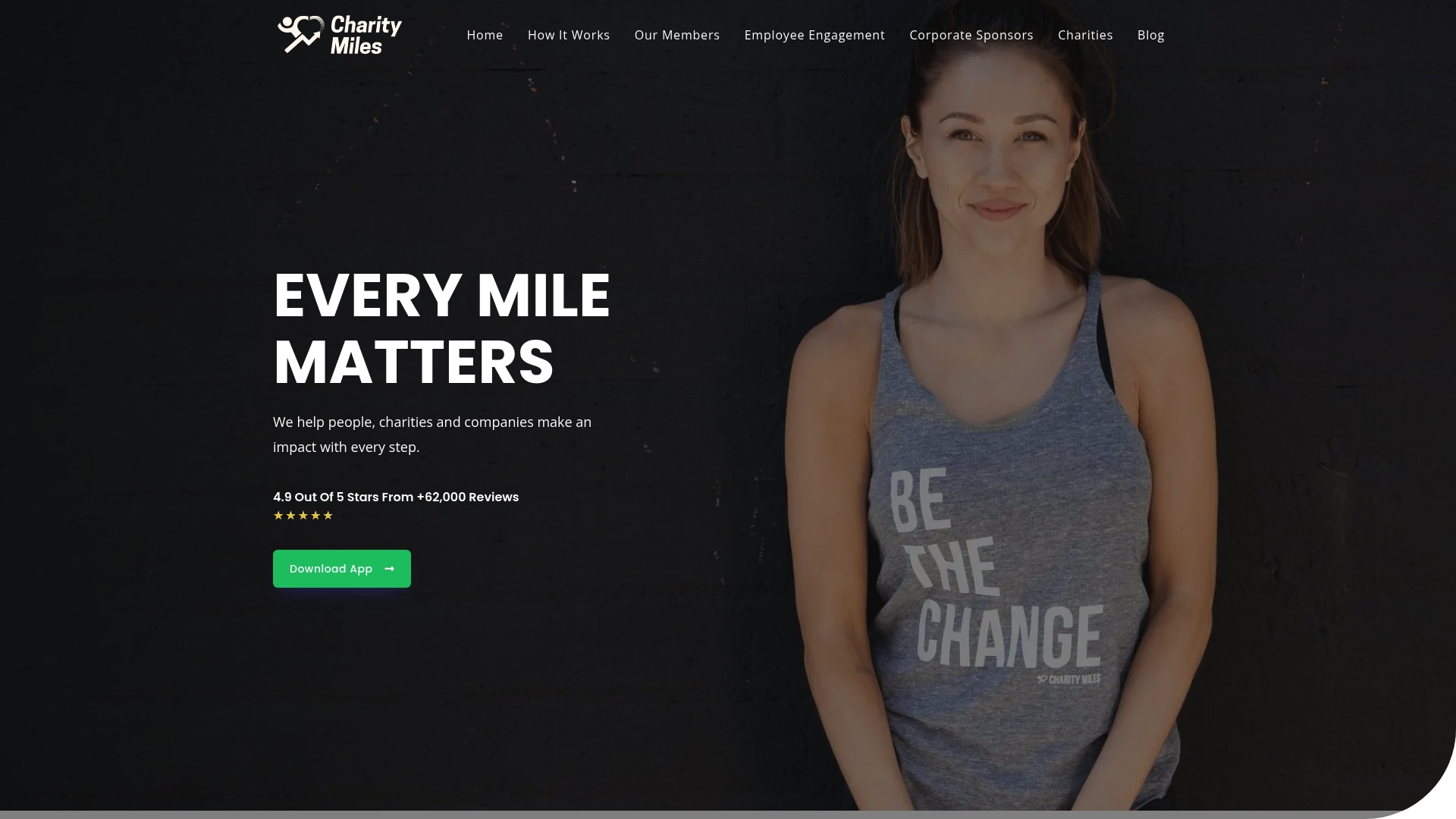
Such programs typically fit naturally into CSR-linked challenges, inclusion-focused engagement where any type of movement counts, and ongoing activity programs that need to stay fresh beyond a single kickoff event.
- Free for individual employees to join and use.
- Private company teams with configurable sponsorship caps and charity choices.
- Reporting employers can use to track activation, reach, and repeat participation.
| Metric | Result |
|---|---|
| Employee participation increase (HARMAN) | 11x |
| Funds raised for charity (HARMAN) | $120,000+ |
| Employees involved (HARMAN) | 1,200+ |
Visit the Employee Empowerment For Corporations page to see program features, or explore Corporate Sponsorship Opportunities to set up a sponsored challenge for your team.
Sources
The CDC evaluation framework and its action guide outline evaluation standards; the AEA long-run study and ROI heterogeneity review cover experimental and methodological evidence cited above.
- CDC evaluation framework (2024)
- American Economic Association: long-run experiment on firm-sponsored wellbeing program (2025)
FAQ
What is the 5-3-1 rule for wellness?
Definitions of this rule vary across wellness vendors and are not tied to a single federal standard, so treat any specific version cautiously. Rather than relying on a catchy formula, use the CDC’s evaluation framework to set measurable goals suited to your workforce.
How much do companies pay for wellness programs?
Published pricing varies widely by vendor, program scope, and company size, and no single figure applies across the market. Employers typically budget for vendor fees, incentives, and administrative time, all of which should be counted when calculating ROI.
What is a drawback to wellness programs?
The biggest drawback is that healthcare savings are unreliable and slow to appear, while headline ROI claims often rest on narrow accounting or short follow-up periods. A long-run experimental study found reduced primary-care visits and prescriptions for up to seven years but no improvement in hospitalizations, absence, or turnover.
What does “ROI” mean in health care?
In a wellness context, ROI measures the financial benefit of a program relative to its cost, usually expressed as a ratio like 3:1. Because studies differ in what costs and benefits they count, the CDC recommends reporting value beyond ROI alongside any financial figure.