
The most effective ways to be charitable right now are: donate to evidence-backed charities vetted by Charity Navigator or GiveWell, volunteer your time or professional skills, give usable goods to local nonprofits, donate blood or register as an organ donor, and use habit-based giving tools like Charitymiles to turn your daily movement into donations. The IRS provides clear guidance on what qualifies for a tax deduction, so you can give smarter from day one.
TL;DR: Quick ways to start giving today
- Donate to a 501©(3)-verified charity using Charity Navigator or GiveWell to confirm impact
- Sign up for Charitymiles and convert your next walk or run into a donation (free, takes under 5 minutes)
- Schedule a blood donation at your nearest Red Cross drive
- Drop off a bag of clean, gently used clothing at a local donation center
- Share a vetted charity’s post on social media with a direct donation link
- Ask your employer about payroll giving or matching programs
- Sign up for a shopping portal that directs a percentage of purchases to charity
Start in the next 10 minutes: Download Charitymiles, pick a cause, and log your first mile.
Table of Contents
- How do you donate money effectively?
- What are the best ways to give your time and skills?
- What goods do charities actually need from you?
- Why should you donate blood or register as an organ donor?
- How can advocacy and amplification multiply your impact?
- How do apps and programs make giving a daily habit?
- How do you start giving today with any budget?
- Key Takeaways
- Why everyday giving compounds more than you think
- Charitymiles turns your movement into measurable donations
- Useful sources and further reading
How do you donate money effectively?
Evidence-based giving focuses on impact per dollar, not overhead percentages. A charity can spend very little on administration and still run ineffective programs. The smarter move is to look for measurable outcomes: lives improved, meals delivered, treatments funded.
Set a giving budget first. Even $10 a month, given consistently to a well-vetted organization, compounds over time. Once you have a number, choose your giving structure: a one-time gift, a recurring monthly donation, or a donor-advised fund (DAF) for higher-income years when you want to batch contributions and take a larger deduction.
Choosing where to give can matter more than choosing how much to give. Charities often differ considerably in how effective they are, so researching which can produce the greatest benefit per dollar is time well spent.
Employer matching is one of the most underused tools in personal philanthropy. Many companies offer matching programs for employee donations. Check your HR portal before your next gift.
U.S. tax basics for charitable giving

| Situation | Key rule | What to keep |
|---|---|---|
| Itemizing deductions | Cash gifts to public charities deductible up to 60% of AGI | Written acknowledgment from charity |
| Not itemizing | Universal deduction available for cash gifts as per IRS guidelines | Bank record or receipt |
| Vehicle donation | Deductible amount equals the charity’s actual sale price, not Kelley Blue Book value | IRS Form for vehicle donation documentation |
| Non-cash goods | Fair market value at time of donation | Itemized list, photos for high-value items |
Pro Tip: Bundle two years of donations into one calendar year, or open a donor-advised fund in a high-income year. You take the deduction now and distribute grants to charities on your own timeline.
What are the best ways to give your time and skills?
Volunteering your time can be as valuable as a cash gift when it matches what an organization actually needs. A nonprofit short on marketing help gains more from a skilled volunteer than from a small check.
The range of options is wider than most people realize; for practical guidance on types of volunteering organizations can use, see vrijwilligers in jouw organisatie.
- Regular shifts: Food banks, homeless shelters, and animal rescues rely on consistent weekly volunteers.
- Episodic help: One-day events, fundraising drives, and disaster relief deployments suit busy schedules.
- Skills-based or pro bono work: Accountants, lawyers, graphic designers, and marketers can donate professional services that would otherwise cost nonprofits thousands of dollars.
- Mentoring and tutoring: Youth programs, literacy organizations, and workforce development nonprofits often have more demand than supply for one-on-one mentors.
Organizations like the American Red Cross run structured volunteer portals that match your availability to specific roles, including disaster relief and blood services. United Way connects volunteers to local community needs across the country. Federal opportunities are listed at Volunteer.gov.
Pro Tip: Before you commit, ask the organization’s volunteer coordinator what their single most urgent need is. Showing up for a task they don’t need wastes everyone’s time, including yours.
What goods do charities actually need from you?
Clean, gently used clothing, working small appliances, household linens, and nonperishable food are consistently useful to donation centers. Stained clothing, broken furniture, and used undergarments typically get rejected and create disposal work for the charity.
A quick prep checklist before you drop anything off:
- Wash and fold clothing; test that appliances power on
- Check the center’s “do not accept” list online before loading your car
- Bag items by category and label bags for faster sorting
- Request a receipt for any donation you plan to deduct
For larger items like furniture or vehicles, schedule a pickup directly with the organization and confirm intake rules first. When donating a vehicle, remember the deductible amount is the price the charity actually receives at sale, not the retail estimate.
Pro Tip: Clothing that’s too worn to donate isn’t trash. Many cities have textile recycling bins or municipal programs that keep fabric out of landfills. Check your city’s waste management site before discarding.
Why should you donate blood or register as an organ donor?
Biological donations save lives with a modest time investment. Every two seconds, someone in the U.S. needs blood. A single whole-blood donation can help multiple patients, and the process typically takes under an hour from check-in to recovery snack.
Getting started is straightforward:
- Find a local blood drive at redcrossblood.org or your hospital’s donation center
- Check basic eligibility (age, weight, recent travel, health history)
- Schedule an appointment rather than walking in to reduce wait time
- Hydrate well, eat a full meal beforehand, and bring a valid photo ID
Plasma and platelet donations are separate processes with their own eligibility rules and higher demand for certain patient populations. Bone marrow registration through Be The Match takes about five minutes online and a cheek swab by mail. Organ donor registration is handled through your state DMV or RegisterMe.org and costs nothing.
Statistic callout: A single blood donation can help up to three patients, according to the American Red Cross.
How can advocacy and amplification multiply your impact?
Using your voice to amplify causes, contact elected officials, or organize community events can multiply the resources of organizations you care about. Systemic change often requires public pressure, not just private donations.
Advocacy is giving at scale. One well-placed letter to a congressional office or one widely shared post from a credible source can move more resources than a single donation ever could.
Practical forms of advocacy include sharing verified charity posts with direct donation links, writing brief personal messages to your representatives about funding priorities, hosting a local awareness event or supply drive, and joining or starting a petition through established platforms. The key is accuracy: verify the charity’s claims before amplifying, and link to official donation pages rather than third-party fundraising pages you cannot vet.
Pro Tip: Keep your social sharing message to one or two sentences. State the cause, the impact, and the link. Long posts get scrolled past; short, specific ones get shared.
How do apps and programs make giving a daily habit?
Apps and programmatic giving integrate philanthropy into routines you already have, making it low-friction and repeatable. Activity-based giving tools like Charitymiles convert walking, running, and biking into sponsored donations. Round-up tools collect spare change from everyday purchases. Shopping portals direct a share of purchases to a chosen cause at checkout.
| Approach | How it works | Best for |
|---|---|---|
| Activity-to-donation (e.g., Charitymiles) | GPS tracks miles; sponsors convert distance to donations | Walkers, runners, cyclists; corporate teams |
| Round-ups | App rounds each purchase to the next dollar; difference goes to charity | Everyday spenders who want passive giving |
| Shopping portals | Opt-in portal at checkout directs a % of sale to charity | Online shoppers; retail loyalty program users |
| Employer match integration | Company matches employee donations or sponsors miles | Employees at matching-eligible companies |
When choosing a tool, check that it clearly states where money goes, lets you pick your own charity rather than a platform pool, and has a transparent privacy policy.
- Confirm the charity receiving funds is a registered 501©(3)
- Look for published impact reports or donation totals
- Check whether the platform takes a fee before passing funds to charities
Pro Tip: Pair a corporate step challenge with employer matching. The combination multiplies both employee engagement and total donations without adding cost to participants.
How do you start giving today with any budget?
A 30-day plan removes the friction of starting. Prioritize quick wins first, then build toward sustainable habits.
- Day 1: Download Charitymiles and log your first mile, or share a vetted charity post on social media.
- Day 2–3: Schedule a blood donation appointment at your nearest drive.
- Day 4–7: Sort one bag of clean, usable goods and drop it off at a local donation center; get a receipt.
- Week 2: Set a monthly giving amount (any amount) and set up a recurring donation to a Charity Navigator or GiveWell-recommended organization.
- Week 2–3: Check your employer’s HR portal for payroll giving or matching options.
- Week 3: Identify one skills-based volunteering opportunity through United Way or your local nonprofit’s volunteer page.
- Week 4: Review what you did, note the impact (miles logged, dollars donated, hours given), and plan next month.
For low-cost options, donating blood, helping neighbors, or using charity-linked debit products that round up purchases require no cash at all.
Pro Tip: Track your giving in a simple spreadsheet with columns for date, charity, amount or activity, and receipt status. Set a quarterly calendar reminder to review it. Visibility keeps the habit alive.
Key Takeaways
The most sustainable charitable giving combines evidence-based money donations, regular non-monetary contributions, and habit-driven tools that make giving part of your daily routine.
| Point | Details |
|---|---|
| Evidence-based giving | Use Charity Navigator or GiveWell to prioritize impact per dollar, not just low overhead. |
| Non-monetary options | Volunteering, donating goods, and giving blood are high-impact and cost nothing. |
| Habit-based giving | Apps like Charitymiles convert daily movement into donations, reducing giving fatigue. |
| Tax records matter | Keep receipts for all donations; itemizers can deduct cash gifts to public charities according to IRS limits. |
| Charitymiles for teams | HARMAN saw a dramatic increase in employee participation after launching Charitymiles, generating a significant amount for charity. |
Why everyday giving compounds more than you think
Most giving advice focuses on the single big gift: the year-end check, the gala donation, the matching campaign. That framing misses something. Repeated small acts, done consistently, build both habit and identity. When giving is woven into what you already do, whether that’s a morning run, a grocery run, or a lunch walk, it stops feeling like a sacrifice and starts feeling like who you are.
The Charitymiles model makes this concrete. The app is free, any movement counts, and the corporate wellness angle means employers can amplify individual effort into collective impact. HARMAN’s results (11x participation growth, $120,000+ generated) aren’t a fluke. They reflect what happens when giving becomes part of a daily routine rather than a once-a-year obligation.
The conventional wisdom says you need a large budget to make a real difference. The evidence says otherwise. Frequency and consistency, paired with smart charity selection, outperform sporadic large gifts in both personal satisfaction and measurable impact. Start small, start today, and let the habit do the work.
Charitymiles turns your movement into measurable donations
Every walk, run, or bike ride you already take can generate real donations for causes you care about. Charitymiles is free to use, tracks your miles via GPS, and lets you choose your own charity. There’s no minimum distance, no fitness requirement, and no cost to you or the nonprofit.
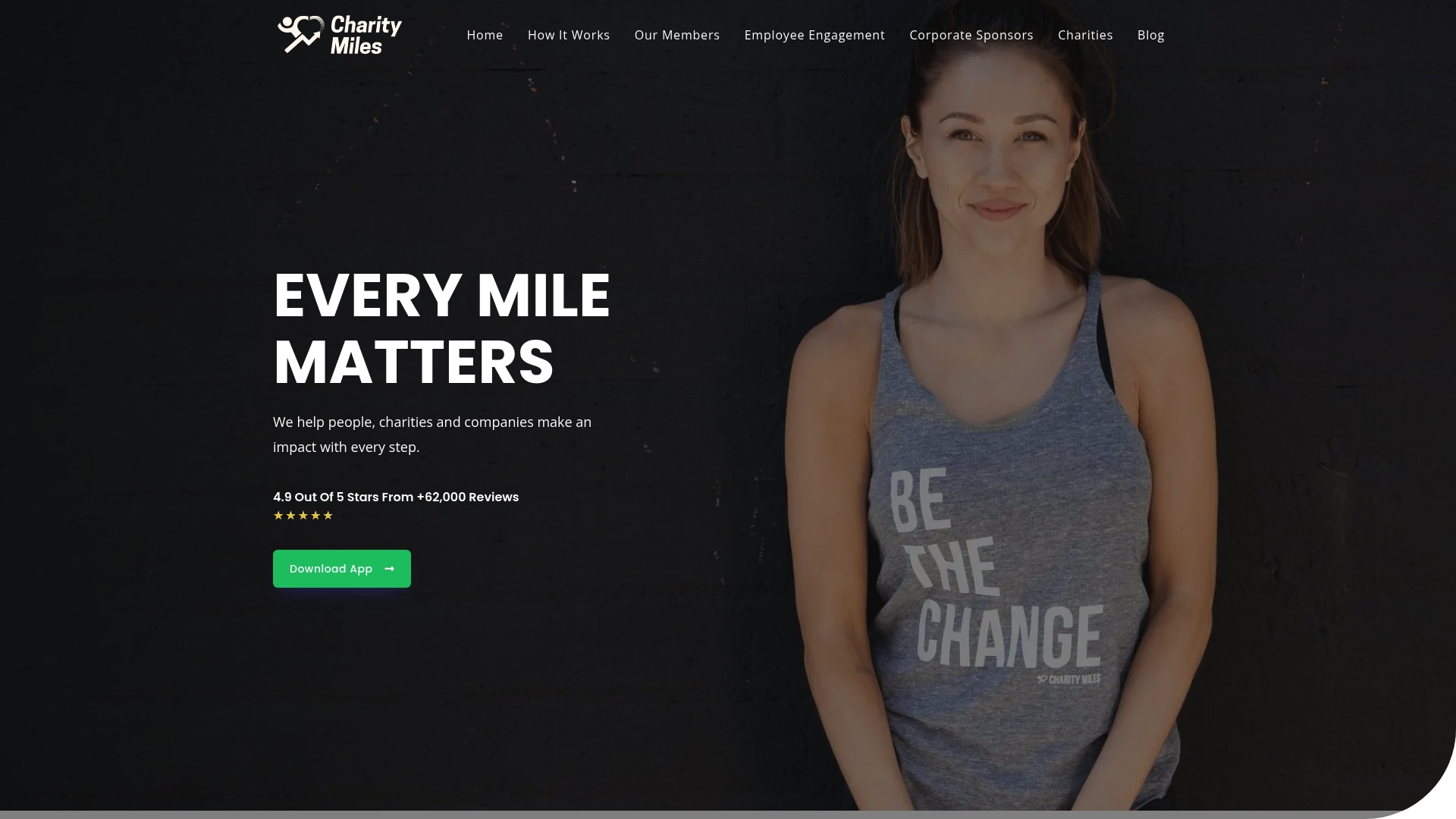
For companies, the Employee Empowerment Program goes further. HR and CSR teams can create private team challenges, set configurable sponsorship rates, and tie employee movement directly to charitable impact. HARMAN launched its Charity Miles team in 2021 and saw 1,200+ employees generate over $120,000 for charity, with an 11x increase in participation. That’s the kind of result that shows up in engagement scores and retention data. Explore corporate wellness benefits and see how your team can start generating donations with their next workout.
Useful sources and further reading
- Charity Navigator — quick charity ratings, program-level notes, and an introduction to evidence-based giving
- GiveWell — deep cost-effectiveness research on a small set of highly vetted global health charities
- DonationPlaces Beginner’s Guide — practical U.S. tax rules, goods donation checklists, and vehicle donation documentation
- American Red Cross Volunteer Portal — structured sign-up for blood services, disaster relief, and long-term volunteer programs
- Save the Children: Non-Money Giving — concrete non-monetary options including goods, blood, and advocacy
- Volunteer.gov — federal volunteer opportunities across the U.S.
- Charitymiles.org — free activity-based giving app and corporate Employee Empowerment Program details
- Turn daily activities into donations — how habit-based giving works in practice
This article is general information, not legal or financial advice. Confirm current IRS rules and charity eligibility with a qualified tax professional or the IRS directly for your specific situation.