
A moveathon is a peer-to-peer fundraiser where participants spend a set stretch of time moving, and supporters pledge money for their effort. Unlike a walk-a-thon, where everyone does laps, a moveathon usually mixes activities such as dancing, jumping jacks and running, so people of every ability can take part. This guide covers how to choose a format, set pledges, budget, stay safe and legal, recruit donors, and keep the momentum going after event day.
TL;DR
- A moveathon rotates people through different kinds of movement, so it works for mixed ages, abilities and fitness levels.
- Raise money through personal fundraising pages, with either a flat gift or a pledge per station, minute or mile.
- Get written permission for your space, collect signed waivers, and check your insurance before you announce a date.
- Keep costs low. A common nonprofit rule of thumb is that net revenue should be at least 80% of what you raise.
- Reward teams and groups, not just top individuals, and consider a longer, app-tracked challenge so giving continues beyond one day.
Table of Contents
- What a moveathon is, and how it differs from a walk-a-thon
- Choose your format
- Set your pledge structure
- Build a budget and protect your margin
- Permission, safety and insurance
- Match the activity to national guidelines
- Recruit donors with a personal story
- Reward groups, not just individuals
- Understand what donors can deduct
- Our perspective: make the moveathon the start, not the finish
- Turn one event into an ongoing challenge
- A simple timeline
- FAQ
- Sources
What a moveathon is, and how it differs from a walk-a-thon
The name is new to many parents and volunteers, so explain it plainly in your first message. In a moveathon, each participant gets a personal fundraising page and shares it with family, friends and colleagues. On event day they rotate through activity stations or take part in a timed session of general movement. Sponsors give either a flat amount or a pledge tied to what the participant does, such as a set amount per station completed. This is how one widely used guide describes the format.
The real difference from a walk-a-thon is inclusiveness. A walk-a-thon asks everyone to do the same thing. A moveathon lets a child who loves dance, a child who prefers stretching and a child who sprints all count equally. The same logic applies to adults: a team that includes a marathoner, a casual walker and a colleague who uses a wheelchair needs a format where each person’s effort counts.
The search results for this topic are dominated by school PTA and PTO events, and for good reason: schools were among the first to adopt the format. But the model works for nonprofits, community groups, clubs and companies too.
Choose your format
Pick the format before anything else, because it drives your pledge structure, your tracking method and your volunteer needs.
| Format | How it works | Best for | Tracking effort |
|---|---|---|---|
| Station rotation | Groups move between 8 to 12 activity stations in timed rounds | Schools, youth groups, large indoor spaces | Medium: stations need leads and counters |
| Timed session | Everyone moves for a set time, such as 30 to 60 minutes | Schools, offices, community centers | Low: one start and one stop |
| Flexible challenge | Participants log any movement over days or weeks | Companies, nonprofits, remote groups | Low if an app tracks it |
| Hybrid | A live event day plus a logging window before and after | Organizations wanting a longer fundraising tail | Medium |
If you have a gym or field and a lot of volunteers, a station rotation gives the most energy. If you have few volunteers or a distributed group, a flexible challenge is easier to run. Our guide to fitness fundraising ideas walks through 15 formats, which helps if you are weighing a moveathon against other options.
Set your pledge structure
Donors decide faster when the ask is clear. There are three common structures:
- Flat donation. The supporter gives a single amount. It is easy to collect and easy to explain, and it does not require counting afterward.
- Per-unit pledge. The supporter pledges an amount per station, minute, lap or mile. It feels more tied to effort, but you must record results and follow up for payment.
- Hybrid. Offer both, and let donors choose. Most people choose the flat gift when given the option, so many organizers set suggested flat amounts alongside the per-unit option.
Whichever you choose, give donors a few suggested amounts rather than a blank box. State exactly what the money pays for. “Support our school” raises less than “new playground equipment for the lower grades” or “meals for 200 families.”
Build a budget and protect your margin
A fundraiser that spends too much on the event leaves little for the cause. One athletic fundraising toolkit from a major cancer center suggests aiming for a return on investment of at least 4, meaning net revenue is at least 80% of the total raised. It also recommends lining up underwriters to cover event expenses where you can.
A moveathon is naturally low cost, but costs still creep in. List every line before you launch:
- Space rental, custodial or cleanup fees
- Insurance or event coverage
- Music, a sound system and a microphone
- Water, snacks and first aid supplies
- Printed signs, station cards and tally sheets
- Prizes or thank-you items
- Online donation platform and payment processing fees
To keep costs down, ask local businesses to cover specific items. A grocery store can donate water. A print shop can donate signs. In return, thank them on your event page and shirts. If you want a bigger sponsor, a company can also back the whole event, as we explain in our corporate sponsorship opportunities.
Permission, safety and insurance
Bring these up early, since they are the items that can derail a date.
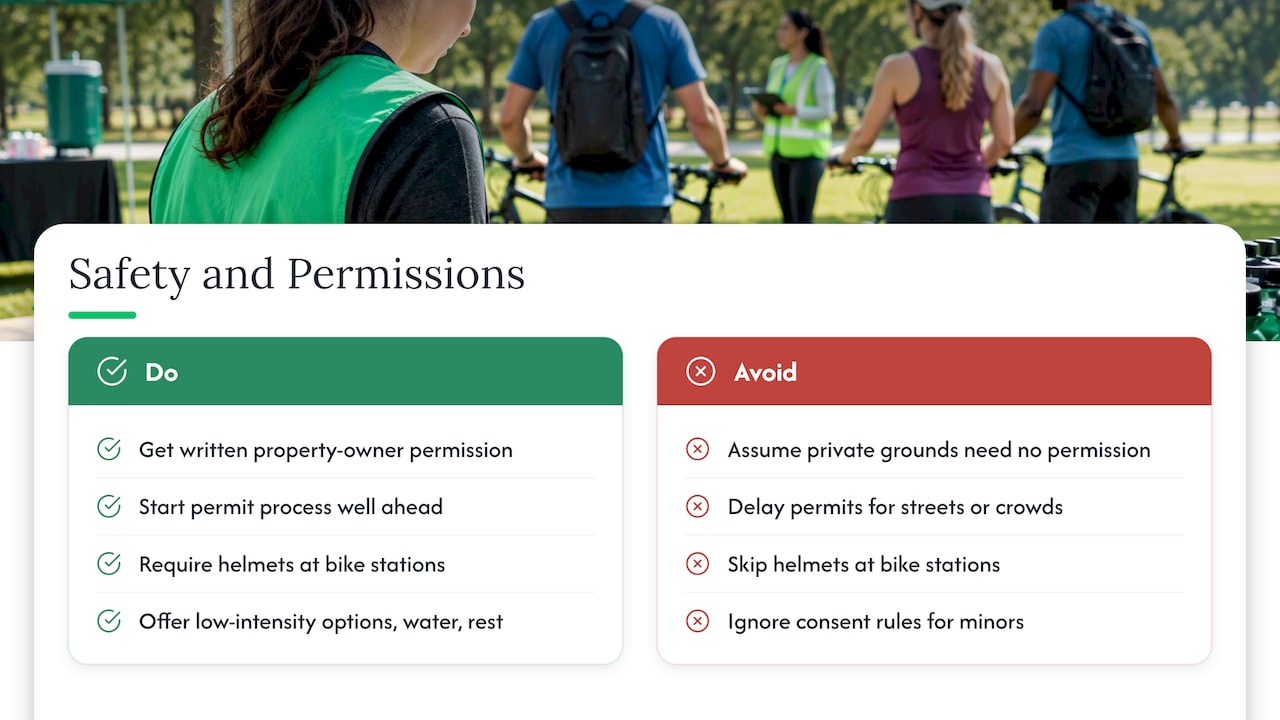
Permission. Do not assume that a small event on private grounds, like a school track, is automatically allowed. Get written permission from the property owner. If your event uses public streets, police escorts or draws a large crowd, start the permit process well ahead, because local requirements vary a lot. Call your city or county clerk or parks department and ask what applies to your route and head count.
Waivers and insurance. The same Friends of the Poor walk packet advises general liability insurance (often $1 million or more per occurrence) and having participants and volunteers sign an accident waiver and release of liability. Ask your insurance agent, and your school district or venue if you use their space, what they require. If minors take part, check what your attorney or district says about parental consent.
Cycling or high-activity stations. If any station involves bikes, require helmets. Consider asking a local bike shop to run pre-ride safety checks.
Health and exertion. Offer a low-intensity option at every station, water breaks, and a place to rest. Anyone with a medical condition should check with their own doctor before taking part. Make it fine to stop at any time.
Match the activity to national guidelines
A moveathon is a good place to show what healthy activity looks like. The Physical Activity Guidelines for Americans recommend that children and adolescents ages 6 to 17 get at least 60 minutes of moderate-to-vigorous aerobic activity daily, including muscle- and bone-strengthening activity on at least 3 days a week. Adults are advised to do at least 150 to 300 minutes of moderate-intensity aerobic activity weekly, plus muscle-strengthening on at least 2 days.
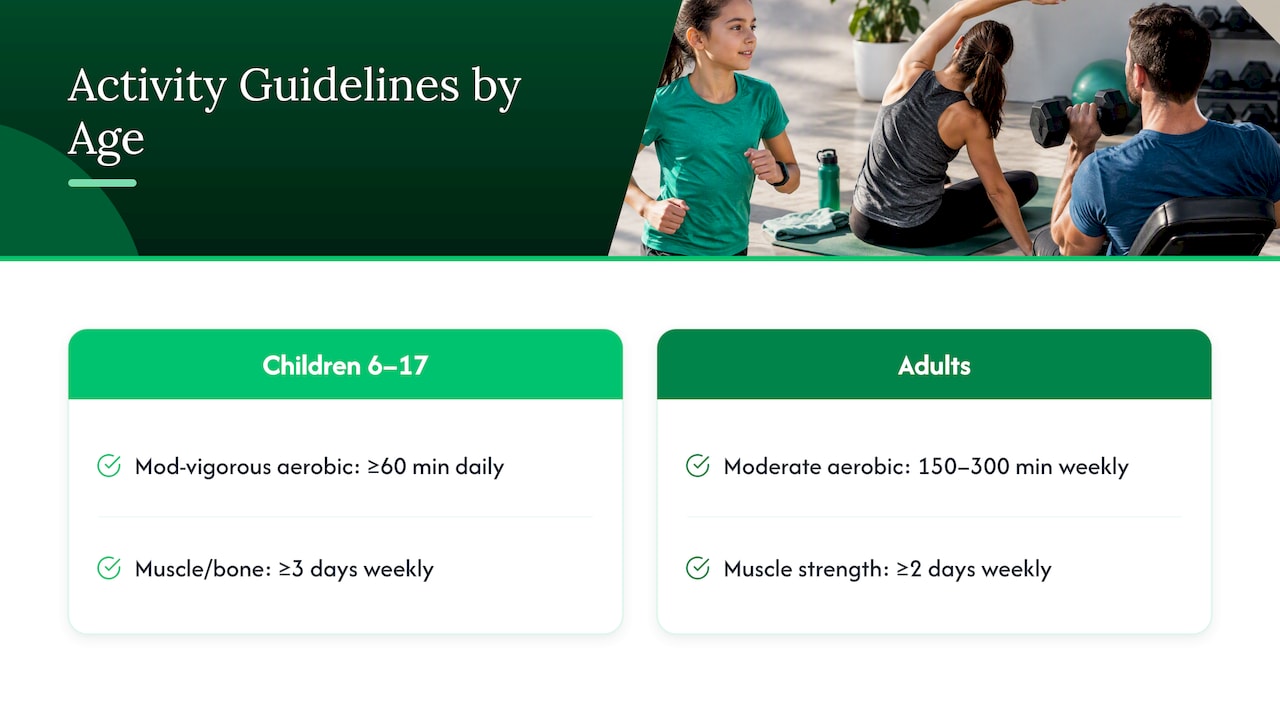
You do not need to design the event around these numbers, but they give you easy ways to vary stations. Mix aerobic stations (dance, jogging, jump rope) with strengthening ones (squats, wall sits, resistance bands) and keep each round short enough that nobody tires out.
Recruit donors with a personal story
Most of your money comes from participants asking people they know. Help them do it well.
- Give them templates. Provide short email and social post drafts that participants can edit. Experts in peer-to-peer cycling fundraisers recommend customizable templates because most people do not know what to write.
- Ask for a story. The most persuasive appeals say why this person is moving for this cause. A single sentence in the participant’s own voice beats a polished paragraph from the organizer.
- Seed the page. Encourage each participant to make the first donation to their own page. A page with a gift on it looks more credible than an empty one.
- Send reminders. One announcement is not enough. Plan a launch message, a midpoint nudge, a final-days push and a thank-you.
If you send organized email campaigns to supporters, you will need a tool that handles lists, templates and reminders. This comparison of email marketing platforms for nonprofits is a useful starting point.
For more on running the digital side, see our guide to planning an online fundraiser for your team.
Reward groups, not just individuals
It is tempting to give a prize to the top individual fundraiser. Consider something different. Guidance on move-a-thons suggests offering incentives to classes, teams or groups instead, because pure individual competition can discourage people and add unhealthy pressure. Group goals are also cheaper to reward, and they keep attention on shared effort and the cause.
Practical ways to do this:
- Set a team goal and celebrate when the whole group reaches it.
- Offer a collective reward, such as a dance party, an extra recess or a casual day at work.
- Recognize participation as well as dollars raised, so those who invited five donors get as much praise as those who invited fifty.
Understand what donors can deduct
Donors often ask whether their gift is tax deductible. The answer depends on your organization’s status and on what the donor gets back. Under IRS Revenue Ruling 67-246, a payment is deductible as a gift only to the extent that it exceeds the fair market value of anything the donor receives in return. Organizations should work out the value of any benefits in advance and state the deductible and non-deductible portions clearly on solicitations and receipts.
For a moveathon, this matters if you charge a registration fee that includes a T-shirt or a meal, or if you hold a ticketed finale. Pure pledges to a participant, with nothing given back, are simpler. Only a registered charity can offer deductible receipts, so confirm your status with your accountant, and tell donors to consult their own tax adviser about their situation.
Our perspective: make the moveathon the start, not the finish
We built Charity Miles around one idea: movement should mean something. A single event day can raise a good sum and create a burst of energy. The weakness of any one-day format is that it ends. Participation spikes, then the group goes quiet until next year.
What we see working is pairing the live event with a longer window of everyday movement. A lunchtime walk, a bike ride to work or a run on the weekend can each count toward the same cause. Because any movement counts, the people who would never sign up for an athletic event still take part, and that is where participation growth comes from. The same is true in a workplace: a one-off challenge reaches the already active, while an ongoing program draws in everyone else.
One example from our own work: since launching its Charity Miles team in 2021, HARMAN saw an 11x increase in employee participation, with more than 1,200 employees generating over $120,000 for charity. A company can choose its rate per mile, set a cap and decide whether donations go to each employee’s chosen charity or a company-selected cause.
Our advice for any organizer: decide who the event is really for. If it is for a school community, a station rotation on one afternoon is hard to beat. If it is for a company or a nonprofit with supporters spread across many places, give people a way to move on their own schedule and let the miles add up. If you want the one-day energy and the long tail, do both.
— Gene
Turn one event into an ongoing challenge
If you want to extend your moveathon, a step challenge for charity is the natural next step, and our overview of charity fitness challenge formats helps you pick the one that fits your group.
Charity Miles is a free app for iOS and Android. It tracks walking, running and biking with GPS and pedometer, and money is donated to the charity a member chooses for every mile logged. It is free for members and free for charities. Companies can create private teams, run friendly challenges and sponsor miles on their own terms through our Employee Empowerment program. Individuals and groups can see how the app works and download it in a few minutes.
A simple timeline
- About three months out: choose the date and the cause, avoid conflicts with other events, and secure permission for the space.
- Two months out: recruit volunteers and give each a clear role: coordinator, station lead, first aid, check-in, tally.
- Six weeks out: confirm insurance, waivers and any permits. Set your budget and look for underwriters.
- Three to four weeks out: launch participant fundraising pages and send templates.
- Event week: send a reminder, confirm volunteers, test your sound and tracking sheets, and brief every station lead on safety.
- Event day: keep rounds short, offer water and rest, and take photos for your thank-you message.
- Within a week after: tally results, collect pledges, send receipts with correct deductible language and thank every donor and volunteer.
The timing is a guide and not a rule. A small club can run this in a month. A large event with street use needs more lead time.
FAQ
What is the difference between a moveathon and a walk-a-thon?
A walk-a-thon has everyone doing one activity, usually laps. A moveathon lets participants take part through a mix of movement, such as dance, jumping jacks or running, so it suits a wider range of ages and abilities. The fundraising model is the same: personal pages and pledges from supporters.
How much can a moveathon raise?
It depends on your size, your cause and how well participants share their pages. Public school examples show goals in the tens of thousands of dollars, such as one PTO event aiming for $31,000, but your result will depend on participation and outreach. Set a goal from your own head count and past events, not from a headline figure.
Do we need insurance and waivers?
In most cases, yes. Check with your insurer and your venue. General liability coverage and signed waivers from participants and volunteers are standard advice for events like this. Ask your insurance agent what your situation requires.
Are donations to a moveathon tax deductible?
Only gifts to a qualified charity can be deductible, and only the portion above the value of anything the donor receives back. State the deductible portion on your receipts, and suggest donors check with their tax adviser.
Can a company run a moveathon?
Yes. Companies often run a short live event, then keep the energy going with a team challenge where employees log everyday movement and the company sponsors the miles. Our Employee Empowerment program is built for that.
Sources
- Move-a-thon guide, format and pledge structure
- Athletic fundraisers toolkit, budgeting and ROI
- Walk coordinator packet, permissions, insurance and waivers
- Physical Activity Guidelines for Americans, 2nd edition
- Fundraising for charity cycling, peer-to-peer tips
- Move-a-thon guide, group incentives
- IRS Revenue Ruling 67-246