
Run a short, purpose-driven activity challenge with manager champions and dead-simple tracking. That’s the fastest, most reliable path to sustained participation. A charity-linked option like Charity Miles works especially well here because it makes the challenge inclusive by design, not just competitive.
TL;DR:
- Challenges linked to a purpose, such as charity, can significantly boost participation, as shown by HARMAN’s elevenfold increase in employee engagement.
- Short, well-structured challenges lasting two to six weeks, with clear objectives and simple tracking, are most effective to sustain participation.
- Using multiple engagement tactics, like champion recruitment, frequent nudges, and recognizable milestones, helps maintain momentum through the challenge duration.
- Ensuring inclusivity with minutes-based or seated activity options and keeping rules clear prevents opt-outs and confusion during the challenge.
- Ongoing management support and iterative pilots are crucial for building long-term engagement beyond a single event.
Table of Contents
- How Do You Launch an Employee Challenge Step by Step?
- What Are the Best Employee Challenge Formats and Themes?
- How Do You Get Employees to Sign Up in the First Two Weeks?
- What Metrics Should You Track During an Employee Challenge?
- How Do You Make an Employee Challenge Inclusive and Fair?
- What Can You Learn From a Real Employee Challenge Case Study?
- Why One Challenge Isn’t Enough
- Turn Movement Into Measurable Impact With Charity Miles
- Sources
- FAQ
How Do You Launch an Employee Challenge Step by Step?
Most challenges fail before they start, not during. The failure happens in the two to six weeks before launch, when nobody nails down a goal, a format, or who owns what. Here’s the order that avoids that.
- Pick one objective. Decide whether this challenge exists to boost engagement, support wellbeing, or advance a CSR goal. Trying to serve all three at once dilutes the message and confuses employees about what “winning” even means.
- Set a measurable target. “More participation” isn’t a target. “35% of the Chicago office logs at least one activity per week for four weeks” is.
- Choose format and duration. Team-based formats build camaraderie faster than individual ones, but they can exclude quieter employees if scoring rewards only the top performers. Challenges lasting a few weeks can balance habit formation with sustained engagement. Practical playbooks for workplace competitions consistently point to short, well-hyped timelines as a driver of turnout.
- Define scope and recruit champions. Decide whether this is company-wide, department-based, or opt-in only, then find two or three well-liked, active employees per team to model participation before you ever send a company-wide email to foster participation.
- Lock tracking and privacy rules. Whether you use a fitness app, manual logs, or a platform like Charity Miles, decide upfront what data gets collected and who can see individual results.
- Set an incentive budget and recognition plan. Even a small budget for shoutouts, gift cards, or charitable matching outperforms a challenge with no recognition at all.
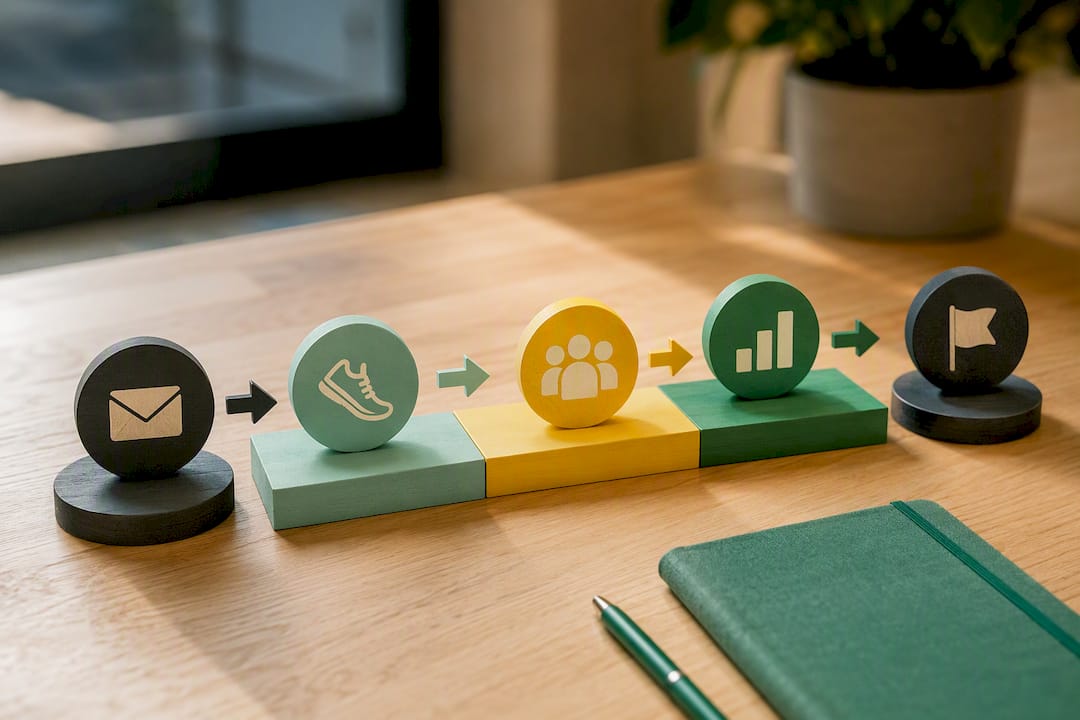
- Build a rollout timeline with milestones. Week one is champion recruitment. Week two is the teaser campaign. Week three is launch day. Keep it visible on a shared calendar so nobody scrambles.
Pro Tip: Don’t wait for a perfect plan to start recruiting champions. The employees who agree first are usually the ones who’ll help you fix problems mid challenge, so bring them in during the planning phase, not after launch.
What Are the Best Employee Challenge Formats and Themes?
Three formats cover almost every use case, and each has a natural failure mode you can design around before it happens.
- Collective mileage goal. The whole company or department accumulates miles, minutes, or steps toward one shared number, like “10,000 collective miles by month’s end.” This format flattens competition entirely. Nobody loses; everyone just contributes.
- Leaderboard team challenge. Small teams compete on a scoreboard, but structure scoring around participation rate or streak consistency rather than raw volume, or your most athletic employees will dominate and everyone else will quietly disengage. MIT Sloan Review’s research on internal competition warns that unstructured rivalry damages cohesion unless it’s unified by a shared purpose.
- Daily streak or habit challenge. Employees log any activity, no matter how small, for consecutive days. Recognition comes from streak length, not distance covered, which rewards consistency over athleticism.
Seasonal themes give these formats a hook: a spring “commute challenge” for walkers and bikers, a fall sustainability tie-in, or a charity month where miles convert to donations. For accessibility, always offer a minutes-based or seated-movement equivalent alongside distance goals. Organizations like Worcester Polytechnic Institute have run heart-health challenges with fixed start and end dates and daily tasks, a structure that transfers well to almost any workplace. For more format ideas, our fitness challenge templates for employees walk through a dozen variations you can copy directly.
How Do You Get Employees to Sign Up in the First Two Weeks?
Launch week determines whether your challenge builds momentum or fizzles by day ten. The sequence matters more than any single tactic.
- Before launch: Send teaser emails or Slack messages a week out. Brief managers so they can answer questions, and make sure your champions are already talking about it informally.
- Launch day: Host a short kickoff, in person or virtual, and walk everyone through sign-up and tracking in under five minutes. Friction at onboarding kills participation faster than almost anything else.
- Weeks one and two: Send light, frequent nudges rather than one big blast. Celebrate small wins publicly (first team to hit a mini-goal, most improved participant) and set a midpoint check-in around day seven to re-engage anyone who signed up but hasn’t logged activity yet.
- Data and comms owners: Assign one person to monitor sign-ups and flag technical issues, and another to handle recognition posts and reminders so momentum doesn’t depend on one overworked coordinator.
Pro Tip: Managers who actively promote a new program drive measurably better outcomes. Gallup found a 15-point higher engagement rate among employees whose organization provided a clear plan and manager support during rollout, compared to those without one. Brief your managers like they’re part of the launch team, not just spectators.
For a full onboarding sequence, our guide on starting a step challenge at work breaks down the exact week-by-week cadence.
What Metrics Should You Track During an Employee Challenge?
Three numbers matter more than any leaderboard: participation rate, active days per participant, and average activity logged per person. Track them weekly, not just at the end, so you can catch a stall before it becomes a trend.
- Participation rate = employees who logged at least one activity divided by total eligible employees.
- Active days measures consistency, not just sign-ups. A challenge with 200 sign-ups and 40 consistent loggers has a real problem hiding behind a good-looking headline number.
- Average activity per participant tells you whether engagement is deepening or flattening week over week.
Employee engagement globally sits at roughly 20%, according to Gallup’s State of the Global Workplace, which is exactly why a poorly run challenge does more harm than good. A weak launch confirms cynicism; a well-run one is a rare chance to counter it.
If participation dips at the midpoint, a common pattern, run a short activation boost: a bonus mini-goal, a surprise recognition post, or a reminder from a champion rather than HR. For incentives, mix charitable matching, tiered recognition, and randomized drawings that reward consistency rather than raw distance, so your most active employee isn’t always the same person winning every prize.
How Do You Make an Employee Challenge Inclusive and Fair?
Inclusivity isn’t a nice-to-have layered on top of a challenge. It’s what determines whether half your workforce opts out silently in week one.
- Offer minutes-based or seated-movement equivalents alongside mileage goals, and make sure any physical activity guidance nods to safe practices along the lines of OSHA’s guidance on workplace health programs.
- Collect the minimum data necessary. Use clear opt-in language and limit manager visibility to team-level trends, not individual daily logs.
- Avoid mandatory participation. It converts a wellness perk into an obligation, and resentment shows up fast.
- Keep rules simple and posted somewhere permanent. Confusing scoring is one of the most common reasons employees disengage mid-challenge.
- Don’t rely on a single incentive type. A cash-only prize excludes employees motivated by recognition or purpose instead of money.
Our piece on employee engagement challenge ideas that actually work covers more of these fixes in detail, drawn from patterns that repeat across dozens of company launches.
What Can You Learn From a Real Employee Challenge Case Study?
HARMAN’s experience with Charity Miles is one of the clearest examples of what changes when a challenge has a purpose attached to it. After launching its Charity Miles team in 2021, the company saw an 11 times increase in employee participation, with more than 1,200 employees generating over $120,000 for charity.
The shift wasn’t a bigger prize budget or a flashier leaderboard. It was tying everyday movement to a cause employees already cared about, then making tracking so simple that opting in took seconds, not a learning curve.
Three tactics carry over directly to any organization: align the challenge with a purpose employees find meaningful, keep tracking frictionless so nobody drops out over app confusion, and build a champion network before launch rather than after. Our corporate charity challenge playbook walks through how to structure a similar program from scratch.
Why One Challenge Isn’t Enough
A single challenge can prove the concept, but engagement compounds when it’s backed by manager coaching and ongoing recognition, not a one-time event. Gallup’s research on manager support as the strongest lever for sustained engagement should push you toward small, iterative pilots rather than one big annual push.
— Gene
Turn Movement Into Measurable Impact With Charity Miles
Charity Miles gives you a turnkey way to launch the kind of purpose-driven challenge this article recommends, without building tracking infrastructure or negotiating charity partnerships from scratch.
The program lets you create private teams for employees, run friendly intra-company challenges, and optionally sponsor employee miles on your own terms, choosing the rate per mile, the total budget, and whether donations flow to each employee’s chosen charity or a company-selected cause. It’s the same structure that helped HARMAN grow participation 11 times over. Instead of building a leaderboard app and a separate donation process, you get both in one place, with tracking simple enough that a first-time participant can sign up during a five-minute kickoff. If you’re ready to pilot a challenge that ties movement to real charitable outcomes, explore the Corporate Wellness Programs page to see how a private team is set up and request a walkthrough for your organization.
Sources
- Employee Engagement Remains Flat as AI Adoption Accelerates
- Competition from the inside out
- 12 Work Competition Games & Contest Ideas for Teams
FAQ
What Are the Biggest Challenges Organizers Face When Launching a Workplace Challenge?
The three most common obstacles are low initial sign-up, inconsistent participation after week one, and unclear rules that confuse employees about how to track or win. All three are addressed by recruiting champions early, keeping tracking frictionless, and posting simple rules somewhere permanent.
How Do You Handle Employees Who Resist Participating?
Some employees disengage from wellness programs because they feel like “mandatory fun” layered on top of unresolved workload concerns. Making participation genuinely optional, offering non-athletic ways to contribute, and letting managers model participation rather than mandate it tends to convert skeptics faster than repeated reminders.
Can You Give Examples of Overcoming Common Challenge Pitfalls?
If mid-challenge participation dips, a short activation boost, like a bonus mini-goal or a personal nudge from a team champion rather than HR, often revives momentum. If scoring feels unfair to less athletic employees, switching from raw-distance leaderboards to streak-based or participation-rate scoring usually fixes it.
What Are Some Examples of Workplace Exercise Challenges?
Popular formats include collective mileage challenges where a whole department accumulates miles toward one goal, daily movement streaks, and charity-linked challenges where every logged mile generates a donation. Charity Miles supports this last format directly, letting companies sponsor employee miles toward causes their teams choose.
How Long Should an Employee Challenge Run?
Two to six weeks works best for most first-time challenges. Shorter windows don’t give habits time to form, while longer ones tend to lose momentum without a mid-challenge boost or fresh mini-goal.