
The fastest way to increase challenge participation is to make signing up trivial, put people in small teams, and connect activity to something that matters to them. Everything else is optimization.
Four tactics move the needle most:
- Team-based formats of 5 to 10 people, not solo leaderboards
- One-click signup built into a channel employees already check
- Visible progress and recognition — shoutouts, spotlights, live standings
- A meaningful purpose or modest collective reward, not a big individual cash prize
When Charity Miles’ Employee Empowerment Program launched at HARMAN in 2021, participation jumped 11 times over, and employees generated more than $120,000 for charity. That is not a fluke. It is what happens when the four tactics above work together.
Key Takeaways
Participation rises fastest when signup is frictionless, teams create accountability, and the activity connects to a purpose employees actually value.
| Point | Details |
|---|---|
| Remove signup friction | One-click joins in existing channels beat any new form or app download. |
| Build small teams | Groups of 5 to 10 people drive far more follow-through than solo leaderboards. |
| Time the milestone reward | Place a reward around step 3 of 5 to counter the mid-challenge drop-off. |
| Match length to goal | Use 7 to 14 days for a participation spike, 21 to 30 days for habit building. |
| Use Charity Miles’ team model | Private teams, sponsor-per-mile funding, and employee-chosen charities drove HARMAN’s 11x participation increase. |
Table of Contents
- What Actually Boosts Challenge Sign-Ups This Week
- How Should You Structure Goals, Length, and Rewards?
- What Keeps People Engaged Once the Challenge Starts?
- How Do You Plan a Launch That Doesn’t Fizzle?
- Which Metrics Tell You the Challenge Is Working?
- How HARMAN Increased Participation 11x With Charity Miles
- Run Your Next Challenge on Charity Miles
- Frequently Asked Questions
- Sources
What Actually Boosts Challenge Sign-Ups This Week
If you want to increase challenge participation in the next three days, start with friction, not features. Most low sign-up numbers trace back to a join process that asks too much before giving anything back.
- Cut the signup to one click. Embed it in Slack, Teams, or whatever tool your people already open every morning. Every extra form field costs you sign-ups.
- Get a manager to say yes out loud. When a manager frames participation as sanctioned time rather than a personal favor, uptake rises because employees no longer have to guess whether it is okay to spend ten minutes on it.
- Pick a short, themed window for a participation spike. A 7 to 14 day challenge with a clear theme creates urgency. Save 21 to 30 day formats for when your actual goal is building a lasting habit, not maximizing headcount.
- Build teams of 5 to 10 people. Small-group accountability is one of the strongest single predictors of follow-through, stronger than almost any individual incentive you could offer.
- Put recognition where everyone can see it. Daily or weekly shoutouts, a rotating spotlight on a participant, and a visible leaderboard turn quiet effort into public momentum.
- Keep the reward collective and modest. A charity donation pool, a team lunch, or a symbolic badge beats a large individual cash prize, which tends to reward the already-competitive and demotivate everyone else.
Pro Tip: Themed challenges with a short deadline can roughly double sign-up rates compared with generic, open-ended ones, according to Cohorty’s guide to habit challenges. The trade-off is that a theme alone rarely sustains long-term continuation, so pair it with the team structure above.
None of this requires new software or a bigger budget. It requires removing steps between “I’m interested” and “I’m in.”
How Should You Structure Goals, Length, and Rewards?
Design decisions made before launch determine your completion rate more than anything you do mid-challenge. Get these four choices right and you are most of the way there.
- Limit objectives to 3 to 5 actions. More than that, and participants disengage before they understand what winning even looks like, according to Bricqs’ guide to multi-step engagement campaigns.
- Make the first action doable in the first session. People who complete step one immediately are far more likely to finish the whole challenge than people who leave session one with nothing checked off.
- Match duration to your goal. Run 7 to 14 days if you want a participation spike; run 21 to 30 days only if habit formation, not headcount, is the actual objective.
- Choose your scoring model deliberately. A simple step count rewards volume, a threshold rewards consistency, a streak rewards daily habit, and a completion checklist rewards finishing. Pick one and be explicit about it, because mixing models confuses participants about what they are actually chasing.
- Plan a milestone reward at roughly step 3 of 5. That is where most people start to drop off, and a well-timed reward there can lift completion by 15 to 30 percent, per Circle’s guide to running a community challenge.
Think of these as knobs, not fixed settings. You are trading participation volume against completion depth every time you touch one of them, so decide which one matters more for this specific challenge before you build it.
What Keeps People Engaged Once the Challenge Starts?
Every challenge hits a slump, usually somewhere in the middle third. The organizers who plan for it in advance are the ones who don’t lose half their field by day 10.
- Relaunch the energy mid-challenge. A short mini-challenge, a 48-hour bonus window, or a simple countdown to the finish line gives people a reason to check back in.
- Key your leaderboard to the behavior you actually want. If consistency matters more than raw volume, rank by streak length or days active, not total miles.
- Spotlight real people, not just top scores. A quick post about someone’s first 5K walk or a team hitting a milestone does more for morale than another number on a board.
- Send reminders where people already are. Slack, Teams, email, and app push notifications outperform anything that requires opening a new tool, and segmenting messages by engagement level (active, lagging, silent) keeps reminders relevant instead of annoying.
- Celebrate broadly, not just at the top. A challenge that only recognizes the winner loses everyone who was never going to be first.
Pro Tip: Let automation handle the routine reminders and progress recaps, but keep the personal shoutouts human. Circle’s research on community challenges found that automated admin frees up time, but personalized encouragement is still what drives retention.
How Do You Plan a Launch That Doesn’t Fizzle?
A strong launch is mostly logistics, done a few days early instead of the morning of.
- Pre-launch: Recruit a few champions in each department, get explicit manager buy-in, and prepare a 60-second explainer plus a one-click join link.
- Kickoff: Announce it somewhere everyone already looks, give a concrete example of a first-day action, and make joining a team as easy as clicking a name.
- Early cadence: Send reminders on day 3 and day 7, spotlight your first finishers publicly, and run a small mid-challenge event to reset momentum.
- Use what already exists. Team meetings, internal newsletters, and payroll emails outperform a new channel nobody has learned to check yet.
Explaining why the challenge exists at kickoff, not just how it works, can lift completion by 20 to 30 percent according to Nudj’s challenge strategy guide. Context is not fluff. It is fuel.
Which Metrics Tell You the Challenge Is Working?
You need five numbers, not a dashboard full of them: enrollment rate, day-1 completion, the mid-window drop between roughly day 3 and day 14, final completion rate, and whether activity levels stay elevated after the challenge ends.
| Metric | What to watch for |
|---|---|
| Completion rate above 60% | Suggests your difficulty and objective count were well calibrated |
| Completion rate below 30 percent | Signals overreach, unclear steps, or too many objectives |
| Mid-window drop (days 3-14) | The clearest early warning that a milestone reward is missing |
| Post-challenge activity lift | Shows whether the habit actually stuck beyond the challenge window |
Run small experiments between challenges rather than overhauling everything at once: shorten the window, add a mid-point reward, or rewrite your onboarding copy, then compare the next cohort against the last. Pull your numbers 48 to 72 hours after launch. That is early enough to fix a confusing first step before it costs you the whole field.
How HARMAN Increased Participation 11x With Charity Miles
HARMAN’s experience with Charity Miles’ Employee Empowerment Program is the clearest real-world proof that the tactics above compound when you stack them together.
Since launching its Charity Miles team in 2021, HARMAN saw an 11x increase in employee participation, with over 1,200 employees generating more than $120,000 for charity.
The program combined a few specific choices, all of them copyable:
- Private company teams gave employees the same small-group accountability that drives completion in any challenge format
- A sponsor-per-mile model let HARMAN control the budget while making every mile personally meaningful
- Employee choice of charity connected daily movement to a cause each person actually cared about, not a cause chosen for them
- Visible reporting kept both participation and impact easy to see and easy to talk about
If you are trying to replicate this pattern, start by defining your sponsorship structure, set up private teams before you announce anything company-wide, and let people pick their own cause. The reporting piece matters more than it sounds. It’s what turns a one-off event into something people talk about at their next team meeting.
An Operator’s Quick Checklist
Years spent watching corporate wellness and CSR programs succeed or stall taught a simple lesson: the programs that last aren’t the ones with the biggest prize pool, they’re the ones where movement is tied to something the employee actually cares about.
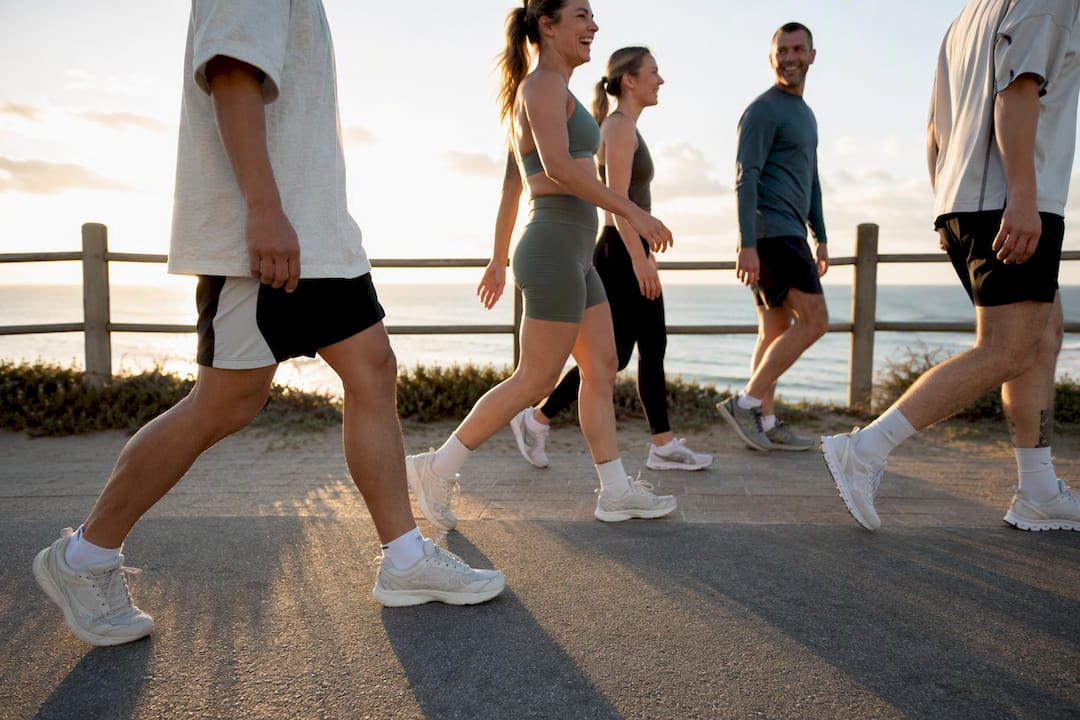
This week: fix your signup flow, form teams of 5 to 10, and get one manager to publicly endorse participation. Rule of thumb: chasing headcount, go short and themed; chasing habits, go longer and simpler. You rarely get both from the same design.
Run Your Next Challenge on Charity Miles
Charity Miles gives you the infrastructure for every tactic in this guide without building any of it yourself. Private team challenges handle the small-group accountability that drives completion. GPS and pedometer tracking through the app removes signup friction because employees log walking, running, or biking automatically, and you control the sponsorship rate, the cap, and whether donations go to each employee’s chosen charity or a cause you select.
You get built-in reporting to track enrollment, completion, and post-challenge activity, the same metrics covered above, without stitching together a separate spreadsheet. If you’re ready to put a participation-first challenge in front of your team, visit the Employee Empowerment program page and set up your sponsorship terms.
Frequently Asked Questions
What is the single biggest lever to increase challenge participation?
Small-team accountability. Groups of 5 to 10 people consistently outperform individual leaderboards for both sign-ups and completion.
How long should a workplace step challenge run?
Run 7 to 14 days if the goal is a participation spike, or 21 to 30 days if you’re trying to build a lasting habit. The two goals call for different lengths.
Do cash prizes increase challenge participation?
They can lift sign-ups by roughly 2.4 times, but continuation tends to drop afterward. Collective or intrinsic rewards, like a charity donation pool, hold engagement better over time.
How do I stop people from dropping out mid-challenge?
Schedule a milestone reward around the middle of the challenge, usually step 3 of 5, and send a relaunch message or mini-challenge at that point to rebuild momentum.
What metrics should I track to know if a challenge is working?
Watch enrollment rate, day-1 completion, the mid-window drop between days 3 and 14, final completion rate, and whether activity stays elevated after the challenge ends.