
An inclusive wellness program is one designed from the start to fit different bodies, budgets, cultures, and schedules, not retrofitted after low participation exposes the gaps. The first move is a mixed-method needs assessment paired with a representative wellness committee, drawing on guidance from groups like NCHPAD and the CDC, and on real-world models such as Charity Miles’ Employee Empowerment Program.
TL;DR:
- Inclusive wellness programs should be designed with diverse bodies, cultures, and schedules from the outset, not retrofitted after low participation occurs.
- Conducting a mixed-method needs assessment and forming a diverse committee helps identify barriers and ensures the program meets varied employee needs.
- Accessibility must be prioritized before launch, including physical space modifications, plain language materials, and flexible scheduling for different shifts and abilities.
- Measuring inclusion requires tracking participation across demographic groups, satisfaction levels, and business outcomes, focusing on closing engagement gaps over overall numbers.
- Using models like Charity Miles, which count all movement types and support personal or shared causes, can effectively foster participation among employees with different fitness levels.
Table of Contents
- What Makes Inclusive Wellness Programs Worth the Investment?
- How Do You Build an Inclusive Wellness Program Step by Step?
- What Does an Inclusive Wellness Rollout Timeline Look Like?
- How Do You Measure Whether a Wellness Program Is Actually Inclusive?
- How Charity Miles’ Employee Empowerment Program Models Inclusion
- What HR Leaders Consistently Get Wrong
- Ready to Pilot an Inclusive Wellness Program?
- Sources
- FAQ
What Makes Inclusive Wellness Programs Worth the Investment?
Employees who feel a program was built with them in mind participate more, and they stay longer. That’s the core business case, and it holds up whether you’re running a 200-person office or a 20,000-employee enterprise.
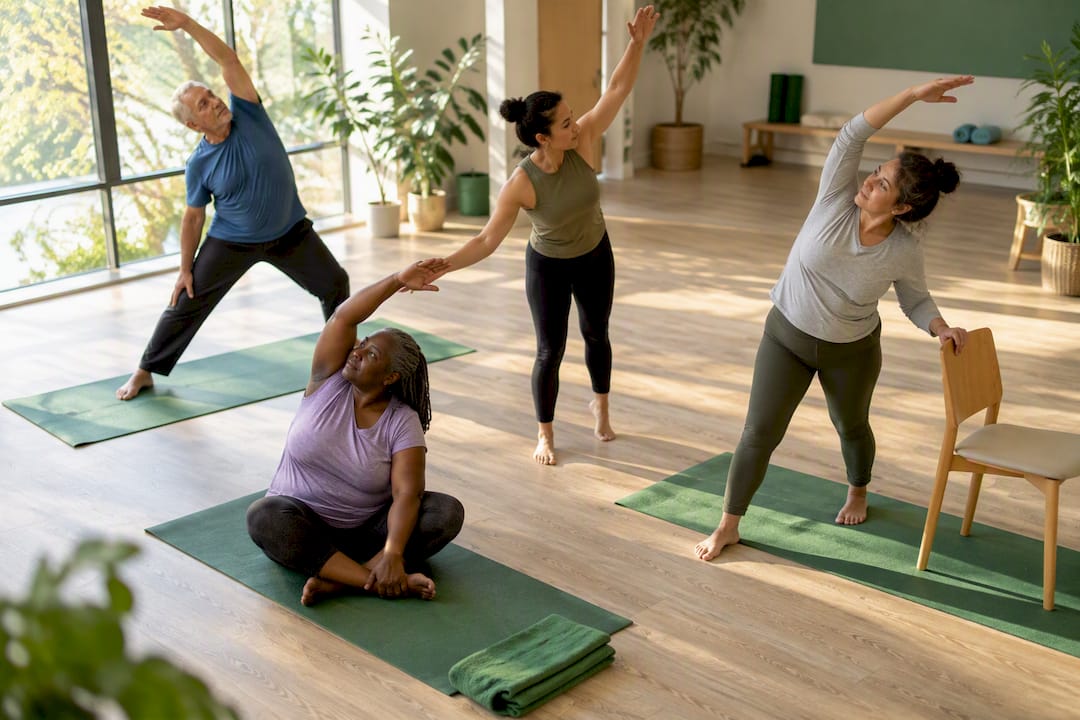
The equity angle matters just as much as the engagement one. Social and economic conditions, what the CDC calls social determinants of health, shape who can actually use a wellness benefit. A gym discount means little to a warehouse worker on rotating shifts, and a lunchtime yoga session excludes anyone using a wheelchair unless the room and instructor are ready for it.
There’s a compliance layer too. The EEOC’s guidance on reasonable accommodation makes clear that wellness offerings can’t create disability discrimination, whether through inaccessible venues or incentive structures that penalize people who can’t meet a specific health metric.
Put together, three forces push inclusive design from “nice idea” to operational priority:
- Engaged, included employees show stronger retention and morale signals.
- Health disparities tied to disability, income, and location mean uniform programs systematically underserved some employees.
- Legal exposure grows when accommodations and opt-out flexibility aren’t built in from day one.
How Do You Build an Inclusive Wellness Program Step by Step?
Strategy without sequence is just a wish list. Here’s the order that actually works, based on practitioner guidance from SHRM and NCHPAD.
- Run a mixed-method needs assessment. Surveys alone miss too much. Pair them with focus groups and health risk assessments, because NCHPAD’s guidance notes that lived-experience input surfaces barriers surveys never capture.
- Form a diverse wellness committee. Include people across ability status, caregiving responsibilities, shift patterns, and cultural background, not just the employees who already show up to every fitness event.
- Diversify the modalities. Offer virtual, in-person, and asynchronous options, plus nonfitness tracks like financial coaching, caregiving support, and restorative practices such as sleep or stress programming.
- Fix accessibility before you launch anything. Check materials for plain language and translation needs, confirm physical spaces accommodate visible and invisible disabilities, and build flexible scheduling for different shifts and time zones.
- Make participation opt-in and incentives non-punitive. SHRM’s research found that opt-in design and non-stigmatizing language raise voluntary engagement while protecting psychological safety. Keep health data confidential and separate from performance reviews.
- Bring in outside partners. Culturally competent community organizations and disability advocacy groups can fill expertise gaps your internal team doesn’t have, and they lend credibility that in-house memos rarely earn on their own.
Pro Tip: Before you announce anything company-wide, run your communications and sign-up materials past three employees who represent different backgrounds or ability levels. If any of them hesitate to participate, you’ve found a design flaw worth fixing before launch, not after.
For more concrete activity ideas across modalities, see corporate wellness ideas that actually boost engagement.
What Does an Inclusive Wellness Rollout Timeline Look Like?
Good intentions stall without ownership and dates attached. Here’s a realistic sequence for taking a program from concept to company-wide.
- Weeks 0 to 6, assess. HR and the wellness committee co-run surveys, focus groups, and a review of existing health risk assessment data. Map your stakeholders now, because IT, facilities, and legal all need a seat before design begins, not after.
- Weeks 6 to 12, pilot. Recruit a cohort that reflects your lowest-participation segments, such as shift workers, caregivers, and employees managing chronic conditions, and run an accessibility audit on every material and venue before anyone signs up. Train facilitators on inclusive language and unconscious bias so the pilot doesn’t repeat old mistakes at smaller scale.
- Weeks 12 to 20, scale. Build a communications plan tailored to different employee groups, translated materials, multiple channels, and manager talking points for teams less likely to opt in. Lock in budget and incentive structures before the wider launch, not during it.
- Ongoing, govern. Set timebound targets, report quarterly to leadership, and treat the whole thing as a continuous improvement loop rather than a one-time rollout. Public-health frameworks like the Health Equity Programs of Action guide recommend exactly this kind of accountability structure, with marginalized voices represented in ongoing decision-making, not just the initial design phase.
Assign a single owner for each phase. Diffuse ownership is where most inclusive wellness rollouts quietly die.
How Do You Measure Whether a Wellness Program Is Actually Inclusive?
Participation counts, but only if you break them down. Overall enrollment can look healthy while masking a program that only works for one segment of your workforce.
Track these categories specifically:
- Participation by demographic group, including disability status, department, shift, and tenure, not just a company-wide total.
- Quality signals, such as satisfaction scores, perceived relevance of offerings, and whether employees report feeling psychologically safe opting in or out.
- Business outcomes, including absenteeism trends, retention rates, and productivity proxies tied to program participants versus non-participants.
Rather than chasing a single participation number, watch the gap between your highest- and lowest-engaging groups over time. Peer-reviewed research on inclusion and accessibility suggests that a shrinking gap is a better equity signal than rising overall enrollment, since overall numbers can climb while leaving the same underserved groups behind. Set a specific target, for example, closing the participation gap between your top and bottom quartile groups by a defined percentage within two quarters, and report progress at the same cadence you use for other HR metrics.
How Charity Miles’ Employee Empowerment Program Models Inclusion
Structural design choices do more for inclusion than any single wellness activity. Charity Miles’ Employee Empowerment Program illustrates a few worth studying.
- Any movement counts. A walk, a bike commute, or a run all log the same way, so the program doesn’t quietly favor employees who already identify as athletes.
- Private team structures let companies group employees however fits their culture, department, or location, rather than forcing one company-wide leaderboard.
- Configurable sponsorship gives HR leaders control over the rate per mile, the total cap, and whether funds go to each employee’s chosen charity or a shared company cause.
The results back up the design. Since launching a Charity Miles corporate team in 2021, HARMAN saw a large increase in employee participation and raised significant funds for charity. That kind of jump rarely comes from a single feature. It comes from removing the usual friction points: motivation gaps, fitness-level disparities, and the sense that a wellness challenge doesn’t mean anything beyond a step count. Tying movement to a cause employees actually care about changes the calculation entirely.
What HR Leaders Consistently Get Wrong
Most programs fail quietly, not loudly. Nobody complains; people just stop showing up, and leadership never learns why.
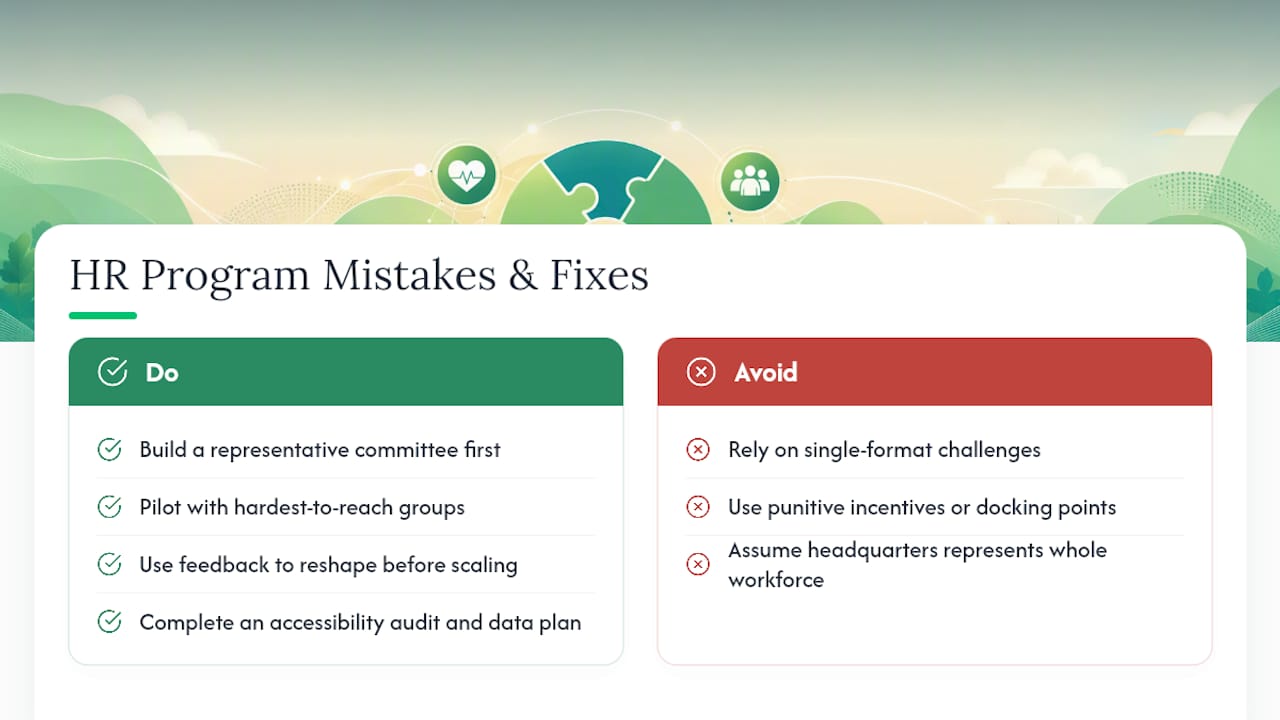
The most common mistake is launching a single-format challenge and calling it inclusive because participation is technically open to everyone. Open enrollment isn’t the same as accessible design. A second pitfall is punitive incentive structures, docking points or premiums for missed metrics, which the EEOC has flagged as a discrimination risk and which employees experience as surveillance, not support. A third is assuming your headquarters employee base represents your whole workforce, when shift workers, remote staff, and people managing invisible disabilities often look nothing like the group that designed the program.
Start representative, not perfect. Build your committee first, pilot with your hardest-to-reach segments, and let feedback reshape the program before you scale it company-wide. If your pre-launch checklist doesn’t include an accessibility audit and a plan for confidential data handling, you’re not ready yet.
— Gene
Ready to Pilot an Inclusive Wellness Program?
Most inclusive wellness efforts stall on modality, not motivation, because a single fitness challenge never fits a workforce with different abilities, schedules, and interests. Charity Miles solves that by counting any movement, a walk, a bike commute, a run, toward the same shared goal, so nobody is boxed out by fitness level. Through the Employee Empowerment program, your team creates private challenges and sets your own sponsorship terms, choosing the rate per mile, the total budget, and whether donations flow to each employee’s chosen charity or a shared cause.
If you’re planning a pilot cohort as part of your rollout, start by reviewing how the Charity Miles app works and explore corporate sponsorship opportunities to see which configuration fits your workforce best.
Sources
- Inclusive Worksite Wellness Guide (NCHPAD)
- 6 Steps to Make Wellness Programs More Inclusive (SHRM)
- EEOC guidance on reasonable accommodation
FAQ
What Are Examples of Inclusive Wellness Programs?
Strong examples mix modalities: financial coaching alongside fitness challenges, caregiving support groups, mental health resources, and movement programs like Charity Miles that count walking, running, or biking toward a shared goal regardless of fitness level. The common thread is choice. Employees pick what fits their life rather than being funneled into one required format.
What Is the 5-3-1 Rule for Wellness?
The 5-3-1 rule is a loose guideline suggesting five servings of fruits and vegetables, three sessions of physical activity, and one hour of screen-free time daily. It’s more of a personal wellness heuristic than a workplace program framework, and definitions vary depending on the source.
How Much Does a Wellness Program Cost Per Month?
Costs vary widely based on program scope, vendor, and company size, with no single industry-standard monthly figure. Charity Miles’ Employee Empowerment Program pricing is not published; companies interested in sponsorship terms and program costs can review details directly on the Employee Empowerment page.
What Are the 7 Pillars of Wellness?
Common frameworks list physical, emotional, social, intellectual, spiritual, environmental, and occupational wellness as the seven pillars, though some models vary the exact terms. Inclusive programs aim to offer at least a few options across these pillars rather than concentrating everything in physical fitness alone.