

Inclusive wellness activities are ones that people of any ability, fitness level, schedule or comfort zone can join without having to prove anything first. The most reliable way to build them is to pick activities where any movement counts, let participants set their own goals, involve people with disabilities in planning, and give the effort a purpose beyond the individual. Walking, rolling, biking and stretching challenges tied to a cause do all four.
This guide is for HR and wellness leaders, charity staff and individuals who want ideas that actually include everyone. We cover what makes an activity inclusive, concrete formats you can run, how to make them accessible and safe, and how pairing movement with giving keeps people coming back.
TL;DR
- Inclusion is a design choice, not a single accommodation: participant-led planning, ability-focused framing, equal opportunity and flexible delivery all matter.
- Choose activities where every kind of movement counts, such as walking, rolling, cycling, stretching or dancing, with no minimum distance and no required pace.
- Make access physical, social and behavioral: accessible routes, plain-language communication, quiet options and the choice to observe.
- Tie movement to a cause. Employees and supporters often find it more motivating when their existing activity also helps a charity.
- Start small: form a representative planning group, pick one flexible challenge and ask participants what to change.
Table of Contents
- What makes a wellness activity inclusive?
- Why “any movement counts” is the best starting rule
- Inclusive wellness activities to try
- Making activities accessible and safe
- Pairing movement with giving
- How to launch an inclusive movement challenge in six steps
- Our perspective
- Run an inclusive challenge with Charity Miles
- FAQ
- Sources
What makes a wellness activity inclusive?
A wellness activity is inclusive when the way it is designed, described and run lets people with different abilities, fitness levels and circumstances take part as full participants. It is not enough to let people in. A peer-reviewed expert panel on inclusive physical activity found that inclusion rests on focusing on participants’ needs, including disabled people in planning, emphasizing ability rather than disability and promoting equal opportunities. The same work points to adapting program rules and coaching, ensuring access and creating ways for participants’ voices to be heard.
The Special Olympics’ guidance goes further in a useful way. It says programs should be physically, socially and behaviorally accessible, going beyond simply meeting Americans with Disabilities Act requirements. In practice that means three questions for every activity you plan:
- Physical: Can someone with limited mobility, low vision or low stamina get to it, move through it and finish it?
- Social: Will a first-timer, a person who is self-conscious about their fitness or someone who is neurodivergent feel welcome, or does the activity reward the already fit?
- Behavioral: Are the rules, pace and expectations flexible enough that people can participate in their own way?
The National Center on Health, Physical Activity and Disability (NCHPAD) recommends that disability-inclusive programs explicitly include people with cognitive, intellectual, developmental, mobility, visual, hearing and mental-health disabilities. It also recommends involving disabled people and their representatives in development, implementation and evaluation, providing tailored accommodations, using accessible outreach, addressing affordability and measuring outcomes in ways that suit the group.
Why “any movement counts” is the best starting rule
Competitive formats quietly exclude. A step contest rewards the person with the most free time, the healthiest joints and the flattest commute. A format where every mile, roll, lap or stretch session counts shifts attention from performance to participation.
The U.S. benchmark most people have heard of is also more flexible than it sounds. The CDC says adults need at least 150 minutes of moderate-intensity physical activity a week, such as 30 minutes a day, five days a week. That can be split across the week and across activity types. A walking lunch, a bike ride after work and a weekend roll around the neighborhood all add up.
NCHPAD also cautions that a goal like 10,000 steps a day may not suit every employee, and suggests letting people track in ways that fit their abilities. That is a good test for any challenge you design: if one fixed target is the only way to “win,” redesign it.
Inclusive wellness activities to try
Below are formats that work for workplaces, charities and individuals. Most can be run in person, remotely or both.
Walking, rolling and active-break formats
NCHPAD’s worksite guide lists group exercise, walking clubs, active breaks and walking meetings as worksite wellness activities, and notes that employee-centered programs can benefit employers, employees, families and communities. A few ways to make each one more welcoming:
- Walking club: Call it a “walk and roll” club so wheelchair and mobility-device users know they are included. Offer a short and a long route that start and finish together.
- Moving meetings: Announce them in advance, set the route beforehand and offer a seated or remote option for anyone who prefers it.
- Active breaks: Five minutes of stretching, chair-based movement or a lap of the building. Invite people to do whatever feels right.
- Gentle-pace sessions: Run one session a week with no pace expectations, so a slower walker is never left behind.
Movement challenges with no minimum distance
Self-set challenges let each person decide what counts as a good week. IASP’s annual Move for Life campaign is a clear example: individuals or teams choose a goal, log activity over a campaign period and share progress. It has no minimum distance and no competition, and its listed activities range from marathon training to dog walking, cycling, community classes and five-minute stretching.
For a company, the same logic applies to a team challenge. Set a shared team goal rather than ranking individuals, and let everyone contribute in their own way. If you want to compare formats, our guide to which charity fitness challenge format fits you breaks down the options, and our team challenge ideas for HR offers a longer list.
Mixed-activity events
PepsiCo India’s Move for Good program let employees of different fitness levels take part through walking, running, cycling, gardening and dancing. The lesson carries over to U.S. teams: widen the definition of movement and more people see themselves in it.
Calm, low-stimulation options
Not every inclusive activity is high-energy. Athletics Australia’s program toolkit recommends quiet spaces, plain-language pre-event information, adapted activities and equipment, and allowing participants to observe rather than join in. Offering a quiet corner at a wellness day or letting someone cheer from the sidelines is part of being inclusive, not a lesser way to take part.
Activities for older adults
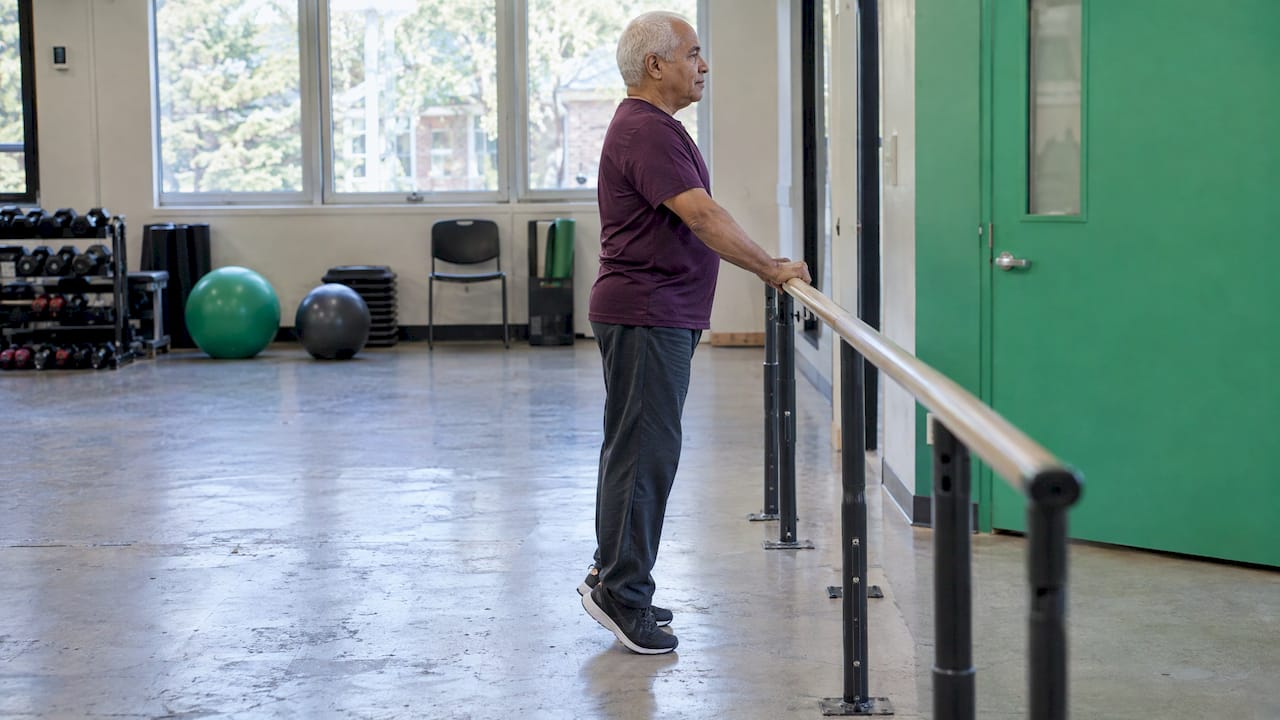
Movement that supports balance and strength helps many older participants stay confident on their feet. If you are planning for an older group, a resource on balance training for seniors can help you think through safer exercise choices. Pair that kind of preparation with a walking or rolling challenge that has a gentle, self-set goal.
Making activities accessible and safe
Good intentions fall short without logistics. These steps come from the guidance above and from the practical details those organizations publish.
Plan with the people you want to include
The Special Olympics guide recommends committing to inclusion, involving people with disabilities in planning, training staff and providing tailored accommodations and accessible communication. For workplaces, NCHPAD’s guide suggests a representative wellness committee that includes people with disabilities or consults disability organizations, plus a coordinator who understands accessibility and inclusion.
Check the route
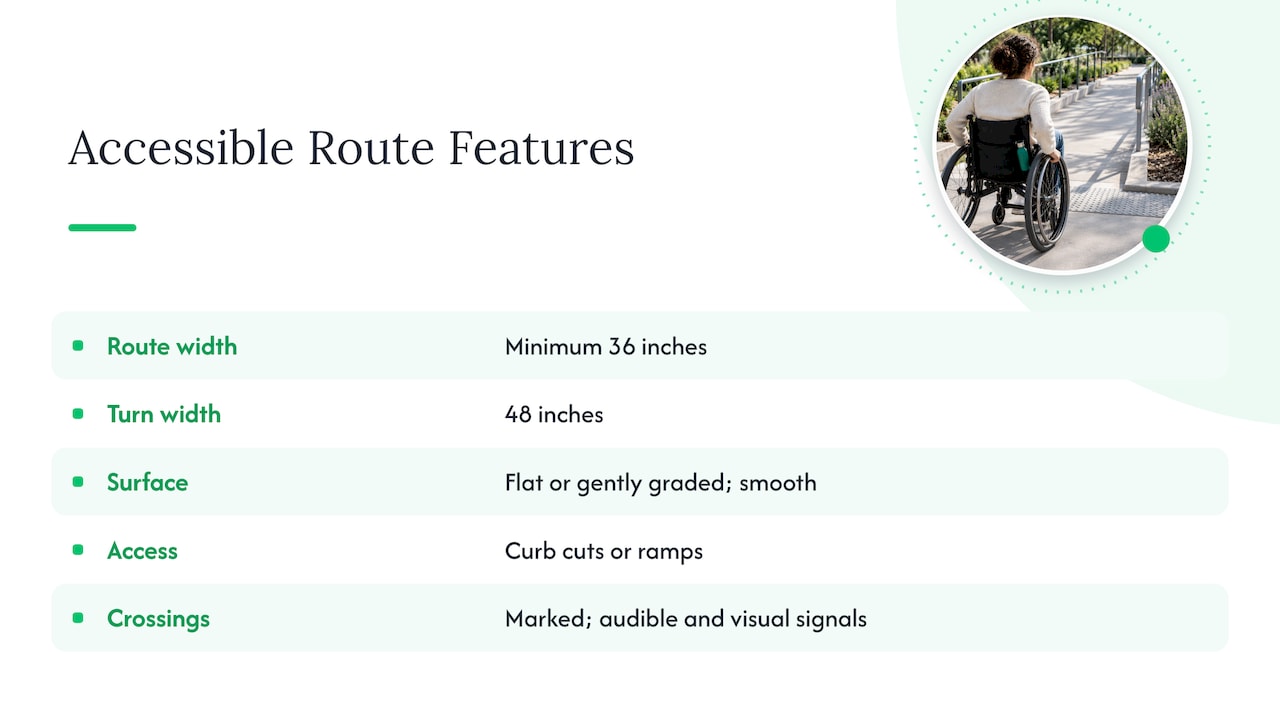
For a workplace walking club, the same NCHPAD guide recommends a flat or gently graded route, smooth surfaces, curb cuts, ramps, marked crossings with audible and visual signals, and enough width. It gives 36 inches as the minimum route width and 48 inches for turns. Walk the route yourself, ideally with colleagues who use mobility devices, before you announce it.
Communicate in more than one format
NCHPAD suggests inclusive marketing that shows people with and without disabilities, uses person-first language and offers formats such as audio, picture-based, large print and accessible electronic versions. Keep sign-up simple and write instructions in plain language.
A quick checklist
| Question | What to do |
|---|---|
| Can everyone reach it? | Choose accessible routes, venues and remote options |
| Can everyone understand it? | Use plain language and more than one format |
| Can everyone join in their own way? | Allow walking, rolling, biking, stretching or observing |
| Is it affordable? | Keep participation free or low cost |
| Did it work? | Ask participants what to change and adjust |
If someone has a health condition or has been inactive for a long time, they should talk with their own doctor before starting a new exercise routine. A good program makes that easy by never pressuring anyone to do more than they choose.
Pairing movement with giving
Purpose is what turns a one-off activity into a habit. When movement also supports a cause, people have a reason to keep going on days when motivation is low.
Many nonprofits already work this way. Free Wheelchair Mission’s Move for Mobility lets groups walk, run, hike, roll, swim, bike or choose another activity, completing the distance at once or over several weeks. Individuals have options too: St. Jude lists runs, walks, bike events, DIY fundraisers and virtual events, and virtual formats let supporters take part from wherever they are.
For charities, flexibility is the draw. Project Purple describes formats such as distance teams, shorter-distance run/walks, virtual treadmill events and a personal race at any distance. Offering several ways to take part widens the circle of supporters beyond those who run races.
Companies can do this at scale. Principal’s 2025 Charity Miles challenge saw more than 5,000 employees participate, with a goal of 1 million miles and $1 million for the V Foundation. Employees ultimately logged 2 million miles. Principal’s account says employees found it meaningful because it connected activity they already did with a charitable purpose, and that friendly competition and team tracking added motivation and camaraderie.
For more on connecting these pieces, see our guides on cause-based wellness, charity wellness programs and wellness and CSR integration for US employers.
How to launch an inclusive movement challenge in six steps
- Form a small planning group. Include people of different abilities, roles and comfort levels with exercise, and consult disability organizations where it makes sense.
- Define “movement” broadly. Walking, rolling, biking, running, swimming, dancing and stretching all count.
- Set team goals, not individual rankings. A shared total keeps the focus on contribution rather than comparison.
- Choose a cause people care about. Let participants pick their own charity where possible, or offer a company-selected cause.
- Communicate in several formats and channels. Use plain language, accessible materials and clear instructions for logging activity.
- Review and adjust. Ask what worked, what did not and who is missing, then change the next round.
Our 6-step HR playbook for inclusive wellness programs and our guide to launching an employee challenge go deeper on each step. If you want a broader menu of options, see corporate wellness ideas that boost engagement.
Our perspective
We built Charity Miles on a simple belief: the best wellness activity is the one people actually do, and people do the things that matter to them.
That is why any movement counts in our app. A lunchtime walk, a bike commute and a run all log miles toward a charity the member chooses. It is free for members and free for charities, so cost is never the barrier. For companies, our Employee Empowerment Program adds private teams and friendly challenges, and lets a company decide whether to sponsor employees’ miles, at what rate per mile, up to what cap, and whether donations go to each employee’s chosen charity or a company-selected cause.
We think this is what inclusive wellness looks like in practice. It does not ask people to be athletes. It asks them to move in the way that suits them, and it connects that effort to something bigger. When HARMAN launched its team in 2021, it saw an 11x increase in employee participation, with 1,200+ employees generating over $120,000 for charity. People joined because the entry point was low and the purpose was clear.
Inclusion is also an ongoing conversation. Ask your employees what would make participation easier, and build the answer into the next challenge.
Gene
Run an inclusive challenge with Charity Miles
If you want to put these ideas into practice without building a program from scratch, our Employee Empowerment Program lets your company create private teams, run challenges and sponsor miles on your own terms. Walking, running and biking are tracked through GPS and pedometer, so every employee can take part in the way that suits them.
Individuals can start right away with the Charity Miles app, and brands and companies can explore corporate sponsorship opportunities. Not sure where to begin? Our guide on integrating charities into wellness walks HR teams through it.
FAQ
What are some examples of inclusive wellness activities?
Walk-and-roll clubs, moving meetings, five-minute stretch breaks, self-set movement challenges and mixed-activity events with walking, cycling, gardening or dancing are all good examples. Each works because people can take part at their own pace and in their own way. Adding a charitable goal gives the group a shared reason to participate.
How do I make a workplace walking program accessible?
Choose a flat or gently graded route with smooth surfaces, curb cuts and enough width, and walk it first with colleagues who use mobility devices if possible. Announce routes in advance and offer a remote or seated alternative. NCHPAD’s worksite wellness guide gives 36 inches as the minimum route width and 48 inches for turns.
Do inclusive challenges need a minimum distance or step count?
No. Programs like IASP’s Move for Life have no minimum distance and no competition, and let people choose goals that match their ability. A shared team total can motivate everyone without ranking individuals.
Can individuals take part in fitness activities that support a cause?
Yes. You can join a charity walk, run or bike event, start a DIY fundraiser or take part in a virtual event from your own location. In the Charity Miles app, you walk, run or bike, and money is donated to the charity you choose for every mile you log.
Sources
- Principles and strategies of inclusive physical activity
- Guidelines for Including People with Disabilities in Health Programs, Special Olympics
- Guidelines for Disability Inclusion in Programs and Policies, NCHPAD
- Tips for a Culture of Disability Inclusion in Worksite Wellness, NCHPAD
- Worksite Wellness Guide, NCHPAD
- Adult Activity: An Overview, CDC
- Move for Life, IASP
- How PepsiCo India energised its workforce with Move for Good
- Able With Athletics Program Toolkit
- Move for Mobility as a Group, Free Wheelchair Mission
- Sports and Fitness Fundraisers, St. Jude
- Get Active, Project Purple
- Raising funds one mile at a time, Principal