

A gamified wellness program uses game elements such as points, badges, leaderboards and challenges to make healthy habits easier to start and easier to keep. Research on gamification for health and wellbeing describes it as applying game design to non-game settings to motivate engagement. The evidence says it can work, but not automatically. Results depend on which mechanics you pick, who your participants are, and whether the activity means something to them. This guide covers what to include, what the studies show, how to protect fairness and privacy, and how to tie movement to charitable giving.
TL;DR
- A gamified wellness program adds goals, feedback, rewards and social features to everyday healthy behavior, such as walking, running or biking.
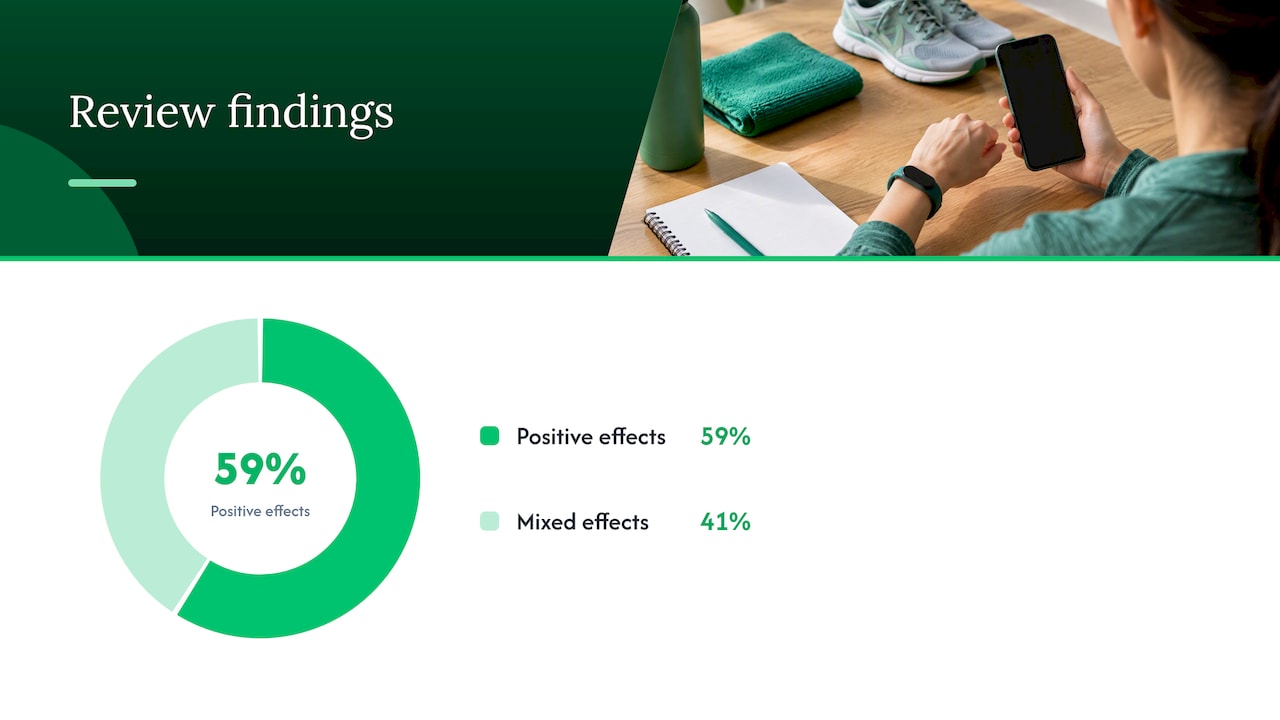
- The research is mixed: a systematic review found positive effects in 59% of studies and mixed effects in 41%, so design choices matter.
- In a large US trial, competition produced the biggest increase in physical activity, but it works best when participants are comfortable with it.
- Keep participation voluntary, protect health data, and let any level of fitness count.
- Linking miles to a donation gives employees a reason to move beyond points and badges.
Table of Contents
- What a gamified wellness program actually is
- The game elements worth using, and what each does
- What the evidence says about results
- Competition, support or collaboration?
- Why charitable giving changes the game
- Designing for fairness and privacy
- Our perspective
- How to launch a gamified wellness program, step by step
- Measuring results and reporting impact
- Put it into practice with Charity Miles
- FAQ
- Sources
What a gamified wellness program actually is
The label covers a lot of ground, from a simple step challenge to a full app with levels, streaks and team standings. What they share is the same idea: borrow the parts of games that keep people playing, and apply them to health.
A systematic review of gamified health apps found the most common techniques were feedback and monitoring, rewards and incentives, social support and goal setting. The authors argue that gamification can tap into the playful, goal-driven side of human nature and help people sustain healthy behavior.
For an employer, that translates into a program where people:
- Set or receive a clear goal, such as a weekly distance.
- See their progress right away.
- Earn recognition when they hit milestones.
- Take part alongside coworkers, in teams or friendly competition.
Notice that none of this requires expensive hardware or a wellness budget the size of a hospital’s. It requires a few well-chosen mechanics and a habit people can fit into a workday.
The game elements worth using, and what each does
Not every mechanic earns its place. This table maps the common ones to the job they do.
| Game element | What it does | Watch out for |
|---|---|---|
| Goals and challenges | Give people a clear target and a sense of progression | Targets set too high discourage beginners |
| Instant feedback | Shows progress the moment someone logs activity | Too many notifications become noise |
| Points and badges | Provide immediate and cumulative rewards | Rewards alone can fade once novelty wears off |
| Leaderboards | Use peer comparison to raise motivation | Can alienate people who are new to exercise |
| Team play | Builds accountability and camaraderie | Works better among people who already know each other |
| Meaningful reward | Connects effort to something the person values | Needs to be genuine and transparent |
The research behind the middle rows is worth knowing. A review of mobile health gamification studies concluded that challenges give clear goal-setting and progression, and that rewards help sustain effort when they are immediate and cumulative. A JMIR study on mobile health makes the same point: a reward right after reaching a goal, and a badge earned after accumulating points, can both motivate physical activity.
What the evidence says about results
If you are building a business case, be precise about what the studies do and do not show.
The overall picture is encouraging but uneven. The systematic review of gamification for health and wellbeing found that 59% of the empirical papers reported positive effects and 41% reported mixed effects. Most of the evidence was of moderate or lower quality. That is a reason to design carefully and measure your own results, not a reason to skip gamification.
Effects on steps and weight are modest when the design is generic. A 2024 systematic review of 36 randomized controlled trials found trivial increases in steps and a 0.70-kg reduction in body weight, with moderate-certainty evidence for the weight result. Small average effects are what you would expect from a tool that works differently for different people. The takeaway: pick mechanics that fit your workforce and give people a reason to come back.
Behaviorally designed programs can move activity. In a randomized clinical trial of 602 adults in the United States, known as STEP UP, gamification interventions built around support, collaboration and competition all increased physical activity. Competition produced the greatest increase.
Competition, support or collaboration?
This is the design question teams argue about most. The evidence gives a useful, nuanced answer.
- Competition tends to win on raw activity. In the STEP UP trial above, the competitive arm led. A 2014 randomized trial in Philadelphia likewise found that social comparison increased physical activity more than social support did.
- Collaboration depends on relationships. The mobile health review notes that teamwork among family members can significantly raise activity, while it is often ineffective among participants who do not know each other.
- Context decides. The same review says the effect of social features depends heavily on the setting and the relationships between participants.
For a workplace, that suggests a blend. Use existing teams, such as a department, a office floor or a project group, so collaboration rests on real relationships. Add friendly competition between those teams rather than a single company-wide ranking that only your most athletic people can win. Make the leaderboard show team progress, and celebrate participation as well as distance.
Why charitable giving changes the game
Points and badges are extrinsic rewards. They work, but they can wear thin. Giving people a reason that matters to them adds intrinsic motivation, the kind that comes from doing something because it feels worthwhile.
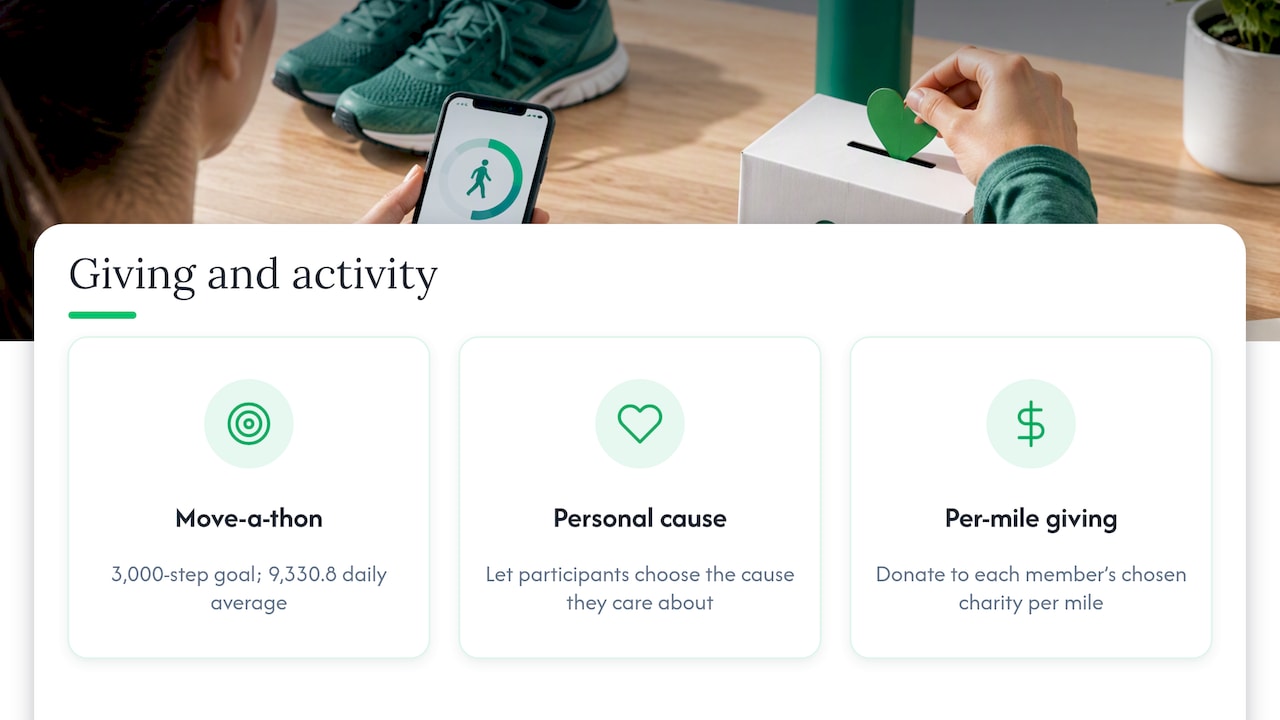
There is a workplace precedent. A CDC-published demonstration of a workplace Move-a-thon linked physical activity to charitable giving by making donations depend on participants’ logged steps. The project set a minimum goal of 3,000 daily steps, and participants averaged 9,330.8 steps per day.
There is also a behavioral reason to think about the structure. Research on “prosocial apathy” describes people as more reluctant to put in effort for others’ benefit than for their own. A well-designed program takes that seriously: it makes the effort small (a lunchtime walk counts), makes the link to the donation visible, and lets people pick the cause they care about so the giving feels personal.
This is the idea our own platform is built around. Members walk, run or bike, the app tracks distance with GPS and pedometer, and money is donated to the member’s chosen charity for every mile. Our step challenge guide walks through how to organize a challenge around a cause.
Designing for fairness and privacy
A program that excludes people or exposes their data will lose trust fast. Build these protections in from the start.
Keep participation voluntary and inclusive
The research on workplace gamification flags fairness and privacy as design challenges. One study from the Netherlands, DMCoach+, used personalized goals and a privacy-protected social competition to address them.
Practical steps:
- Count any movement. A walk, a bike commute and a run should all log. If only athletic activity scores, most of your workforce opts out.
- Personalize goals where you can, so a beginner and a marathoner each have a winnable target.
- Never penalize nonparticipants. A 2011 EEOC informal discussion letter described voluntary participation as neither requiring participation nor penalizing those who decline. That letter was rescinded in 2019, so treat it as historical context and talk to employment counsel about current rules for any program tied to incentives or health plans.
Protect health data
The same academic work notes that occupational gamification raises privacy concerns because health data could affect employees’ career prospects. Keep individual data away from managers, report in aggregate, and say plainly what you collect.
If your wellness program is part of a group health plan, the rules get stricter. The U.S. Department of Health and Human Services explains that HIPAA protects individually identifiable health information held by the plan in that situation. Ask your benefits counsel whether your program falls under it before you connect any data to plan administration.
Our perspective
We built Charity Miles on a simple observation: people will move more when their movement does something. A badge is nice. A donation to a cause you picked, triggered by a walk you were going to take anyway, is better.
That is why we think the strongest gamified wellness programs are the ones that blend three things most employers handle separately: wellness, philanthropy and team building. When a company creates a private team, runs a friendly challenge and chooses how it sponsors miles, a single program does all three jobs.
We also believe in lowering the bar for entry. Because any movement counts, a lunchtime walk is as welcome as a long run. That inclusiveness is how a program reaches the people who need it most, not only the ones who already exercise. At HARMAN, the Charity Miles team launched in 2021 saw an 11x increase in employee participation, with more than 1,200 employees generating over $120,000 for charity.
Companies keep control, too. They set the rate per mile, the total sponsorship cap, and whether donations go to each employee’s chosen charity or to a company-selected cause. Games bring people in. Purpose keeps them coming back.
Gene
How to launch a gamified wellness program, step by step
- Define the goal. Pick one primary outcome: participation, weekly active minutes, team connection or charitable impact. Everything else follows from it.
- Choose one core activity. Walking is the easiest to include. It needs no equipment, suits almost every fitness level and fits into a workday.
- Form teams around real relationships. Departments, offices or project groups tend to work better than random assignment, given what the research says about collaboration.
- Pick two or three mechanics, not ten. Combine a clear goal, instant feedback and a team standing. Add badges for milestones.
- Attach a meaningful reward. Decide whether your company will sponsor miles, at what rate, and with what cap. Decide whether employees choose the charity or you pick one.
- Set privacy rules before launch. Decide what is collected, who sees it, and how it is reported. Tell participants in plain language.
- Run it as a rhythm, not an event. Short, recurring challenges keep momentum better than one big push, and give you chances to refresh goals.
- Review and adjust. Look at who joined, who dropped off and why, then change the design.
For more ideas on structuring the program, see our guide to corporate wellness ideas that boost engagement and our blueprint for investing in corporate wellness.
Measuring results and reporting impact
Gamification claims are only as good as the numbers behind them. Decide what you will track before the first challenge starts, so you can compare against a baseline.
A workable scorecard has three layers:
- Participation: the share of eligible employees who joined, the share still active after four weeks, and the spread across departments and locations.
- Activity: total miles or minutes, and the average per active participant. Watch the median as well as the total, so a few very active people do not hide a quiet majority.
- Impact: total donations generated, which causes received them, and how much came from employees versus company sponsorship.
Report in aggregate, and publish the same figures to participants that you share with leadership. When employees can see how many miles became how many dollars, and where the money went, the program earns trust. Keep claims modest: your own data shows what happened in your company, and it should not be presented as proof that the program improves health outcomes in general. The wider research, as above, shows mixed results.
If you are building the case for leadership, our corporate wellness ROI guide and our piece on CSR and employee engagement cover how HR teams frame the value.
Put it into practice with Charity Miles
If you want a ready-made way to run a gamified wellness program with a charitable core, our Employee Empowerment program lets your company create private teams, run friendly challenges and optionally sponsor employees’ miles on your own terms.
Employees log walking, running and biking in the free app, and you choose the rate per mile, the cap, and where donations go. Individuals can start right away with the Charity Miles app, and companies interested in funding miles can explore corporate sponsorship opportunities.
FAQ
What is an example of a gamified wellness program?
A workplace step challenge with teams, a leaderboard and badges is the most common example. A version with a charitable link has employees’ logged activity trigger donations, as in the CDC-published Move-a-thon demonstration. Research examples include the STEP UP trial, which tested support, collaboration and competition among adults in the United States.
Does gamification really improve employee wellness?
The evidence is mixed. A systematic review found positive effects in 59% of studies and mixed effects in 41%, and a 2024 review of randomized trials found small average gains in steps. Programs that use well-chosen mechanics, such as clear goals, immediate feedback and relevant social features, give you the best chance of results. Measure your own participation data to see what works for your people.
Should wellness competitions be mandatory?
No. Keep them voluntary and do not penalize people who decline. The 2011 EEOC letter defined voluntary participation that way, though it was rescinded in 2019, so check current rules with employment counsel if incentives or health plans are involved. Offering several ways to take part, such as team goals and personal milestones, helps more people join.
How do you keep a gamified wellness program from excluding less active employees?
Count all movement, not just exercise, and personalize goals where possible. Reward participation and consistency as well as distance, and use team-based standings rather than a single company-wide ranking. A lunchtime walk should count as much as a long run.
What should we do about employee health data?
Collect only what you need, report in aggregate, and keep individual data away from managers. If the program is part of a group health plan, HIPAA may apply to information held by the plan, so involve your benefits counsel before launch.
Sources
- Gamification for health and wellbeing: A systematic review
- Gamification for health promotion: systematic review
- The Effects of mHealth-Based Gamification Interventions
- JMIR mHealth and uHealth: Unraveling Mobile Health gamification
- Effect of digital health applications with or without gamification
- Effectiveness of Behaviorally Designed Gamification (STEP UP trial)
- Support or competition? How online social networks increase physical activity
- A Move-a-thon Event: A Workplace Demonstration (CDC)
- Effort Expenditure Reduces Prosocial Decision-making
- Promoting Occupational Health through Gamification
- EEOC Informal Discussion Letter
- HIPAA Privacy and Security and Workplace Wellness Programs (HHS)