
Gamification for employee engagement applies game design principles — points, challenges, streaks, leaderboards, and team goals — to workplace behavior, turning routine participation into something employees actually want to do. When it is built around intrinsic motivators like purpose, mastery, and social connection rather than hollow prizes, it drives sustained behavioral change. For HR and CSR leaders, the most effective version of this approach goes one step further: it links physical activity to charitable giving, so every mile an employee walks or runs generates a real donation. Platforms like Charitymiles and its Employee Empowerment Program make that connection concrete, measurable, and personal.
Core components that make gamification work in this context:
- Intrinsic motivation: Employees engage because the activity feels meaningful, not just because a prize is dangled.
- Real-time feedback: Progress is visible, so employees know their effort counts.
- Team challenges: Friendly competition and collaborative goals build camaraderie.
- CSR alignment: Donations tied to movement connect personal wellness to company values.
- Inclusive design: Any movement counts, so participation is open to every fitness level.
Impact in numbers: Since launching its Charity Miles team in 2021, HARMAN saw 1,200+ employees participate, generating over $120,000 for charity — an 11x increase in engagement.
Table of Contents
- What makes gamification design actually work for your workforce?
- How physical-activity philanthropy apps connect wellness to real impact
- How to align your gamification strategy with CSR goals
- Measuring success and sustaining participation over time
- The Charitymiles Employee Empowerment Program as a model
- Charitymiles puts your CSR and wellness goals in motion
- Key Takeaways
What makes gamification design actually work for your workforce?
Gamification is effective only when it addresses specific motivational gaps and aligns with meaningful purpose. Slapping a leaderboard onto an existing program rarely moves the needle. What does work is designing mechanics that satisfy three core psychological needs: autonomy (employees choose their path), competence (they see measurable progress), and relatedness (they feel connected to colleagues and a shared cause).
Leaderboards alone create a real problem. Employees who consistently rank near the bottom disengage faster than they would without any gamification at all. Combining multiple achievement types — streaks for consistency, team milestones for collaboration, and personal bests for individual growth — keeps motivation alive across skill levels and fitness backgrounds.
Key design principles to build on:
- Tie mechanics to controllable behaviors. Reward effort and consistency, not just outcomes employees cannot fully control.
- Make progress transparent. Employees should see their impact in real time, not just at a quarterly review.
- Avoid surveillance optics. Programs that feel like monitoring erode trust; frame data as personal feedback, not management oversight.
- Use collaborative goals alongside competition. Team challenges reduce the pressure of individual rankings.
- Anchor habits to existing routines. A lunchtime walk or a bike commute is already happening — the app just makes it count.
Pro Tip: Before you launch, survey employees on which causes matter most to them. Aligning the charity selection with employee values from day one dramatically increases early adoption and long-term participation.
How physical-activity philanthropy apps connect wellness to real impact
The mechanics are straightforward: an employee walks, runs, or bikes; the app tracks distance via GPS or pedometer; and a donation flows to a charity of their choice for every mile logged. What makes this model powerful is that it turns a solo habit into a collective act of giving. Employees are not just getting healthier — they are generating tangible social impact with every step.
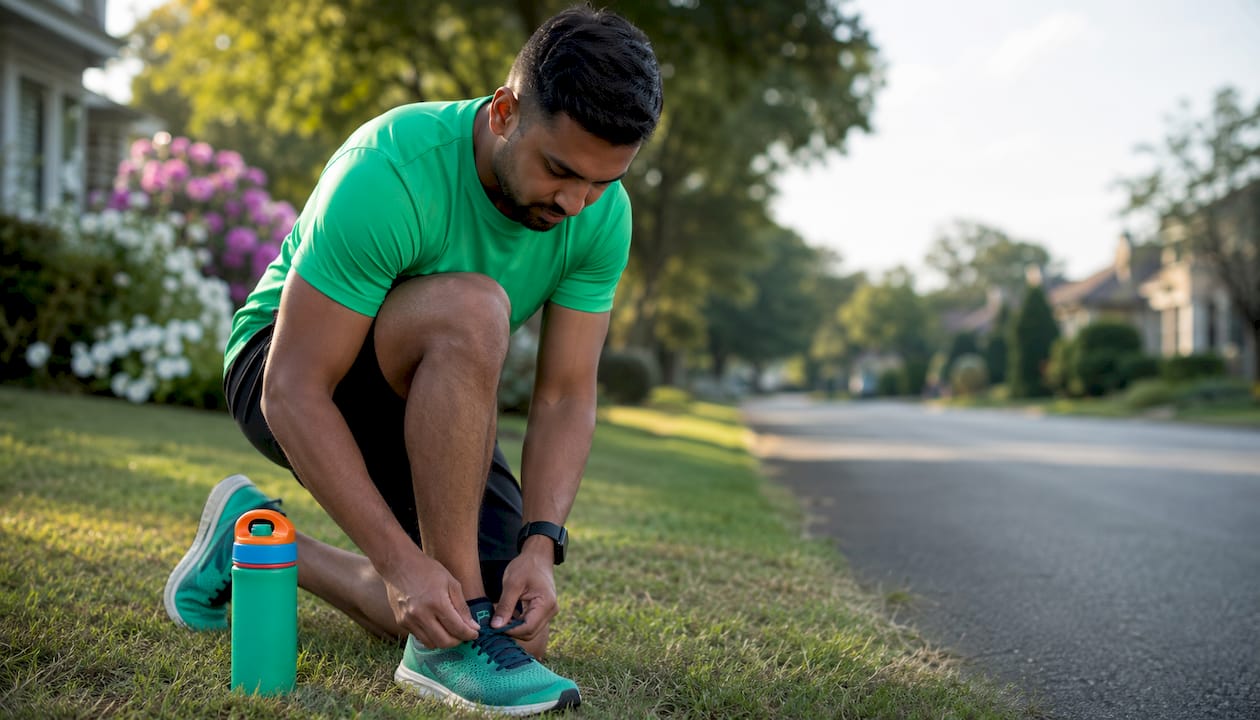
The wellness benefits compound quickly. Regular movement reduces stress and fatigue, lowers burnout risk, and builds the kind of daily energy that shows up in productivity. Because any movement qualifies, the program includes remote workers, employees with limited mobility, and people who would never sign up for a 5K. That inclusivity matters enormously for participation rates.
| Metric | Before Charitymiles | After Charitymiles (HARMAN, 2021) |
|---|---|---|
| Employee participation | Baseline | 11x increase |
| Employees active | Low | 1,200+ |
| Charitable donations generated | — | $120,000+ |
| Program type | Standard step challenge | Gamified philanthropy |
Gamified training programs with leaderboard mechanics have shown voluntary completion rates climb by over 40% — a pattern that holds in physical-activity programs when the stakes feel personal and the cause feels real.
Pro Tip: Run a themed challenge tied to a cause your company already supports — disaster relief, environmental conservation, children’s health. Employees who already care about the cause participate at higher rates and recruit colleagues organically.
For a broader look at how corporate wellness programs drive measurable health and engagement outcomes, the research is consistent: purpose-driven activity outperforms generic step challenges every time.
How to align your gamification strategy with CSR goals
CSR programs often live in a separate silo from daily employee experience. Gamification closes that gap by making social impact something employees generate themselves, not something the company announces in a press release. When an employee’s morning run directly funds a cause they care about, the company’s values stop being abstract.
Structuring that alignment takes deliberate choices:
- Let employees choose their charity (or offer a curated shortlist tied to company priorities). Personal ownership drives participation.
- Set transparent KPIs. Share total miles logged, total donations generated, and team rankings in a visible dashboard.
- Connect challenges to CSR calendar moments — Earth Day, Giving Tuesday, or a cause the company publicly champions.
- Give leadership visibility. When executives participate in the same challenge, it signals that the program is a genuine company value, not an HR checkbox.
- Report outcomes publicly. Sharing donation totals in all-hands meetings or internal newsletters reinforces that participation produces real results.
- Design flexible sponsorship structures. Companies can set their own rate per mile, cap total sponsorship, and direct funds to a strategic charity partner or let employees choose freely.
Research on gamified HRM confirms that when organizations satisfy employees’ needs for autonomy, competence, and relatedness through game mechanics, intrinsic motivation activates and engagement follows. CSR-linked gamification hits all three: employees choose their cause (autonomy), track their impact (competence), and move alongside colleagues (relatedness).
Measuring success and sustaining participation over time
The most common failure mode in gamified programs is a strong launch followed by a slow fade. Participation spikes in week one, then drops as novelty wears off. The fix is not more prizes — it is better feedback loops and varied achievement structures that keep the experience fresh.
Key performance indicators worth tracking:
- Active participation rate: Percentage of enrolled employees logging activity each week.
- Miles logged per employee: Average movement volume, a proxy for wellness engagement.
- Donation totals: The clearest signal that the CSR component is working.
- Team challenge completion rate: Measures collaborative engagement, not just individual activity.
- Retention over 90 days: The real test of whether the program has become a habit.
| Engagement metric | What it tells you | Healthy benchmark |
|---|---|---|
| Weekly active rate | Program stickiness | Active participation rate |
| 90-day retention | Habit formation | Sustained vs. launch spike |
| Avg. miles per user | Wellness depth | Trending upward month-over-month |
| Donation total | CSR impact | Visible and growing |
Strategies that sustain participation beyond the launch window:
- Rotate challenge themes monthly so the experience does not feel repetitive.
- Introduce tiered achievements so both high performers and casual participants have something to work toward.
- Celebrate milestones publicly — team donation totals, individual streaks, collective miles — in company communications.
- Use real-time feedback so employees see their impact without waiting for a report.
- Recruit internal champions in each department to keep energy high and answer peer questions.
The Charitymiles Employee Empowerment Program as a model
The Charitymiles Employee Empowerment Program is built around one core idea: physical activity should generate charitable impact, and that impact should be visible, personal, and tied to company culture. Companies create private employee teams, run intra-company challenges, and set their own sponsorship terms — rate per mile, total cap, and charity direction.
What sets it apart from a standard step challenge:
- Flexible sponsorship: Companies control exactly how much they contribute and where donations go.
- Inclusive mechanics: Walking, running, and biking all count — no fitness threshold required.
- Private team challenges: Friendly competition stays within the company, building internal community.
- Transparent impact reporting: Employees and HR leaders see donation totals and participation data in real time.
- No cost to employees: The app is free, removing any barrier to participation.
Program scale: Charitymiles has been generating charitable donations since 2012, with tens of millions of dollars raised and hundreds of top companies running active programs.
The HARMAN case is the clearest proof point. After launching their Charity Miles team in 2021, HARMAN grew from a small cohort to 1,200+ active employees, generating over $120,000 for charity — an 11x participation increase. That result came from combining a cause employees cared about with a format that fit naturally into their daily routines.
Pro Tip: Start with a 30-day challenge to build momentum, then transition to an always-on program. The challenge creates urgency; the ongoing program builds the habit.
For companies evaluating their options, a look at corporate wellness app alternatives shows how purpose-driven platforms consistently outperform generic fitness trackers on long-term engagement.
Charitymiles puts your CSR and wellness goals in motion
If you are looking for a way to connect employee wellness, charitable giving, and team engagement without building a complex program from scratch, Charitymiles does exactly that. Every walk, run, or bike ride your employees take generates a real donation to a cause they choose — or one your company champions. There is no cost to employees, no fitness requirement, and no complicated setup.
The Employee Empowerment Program gives your HR and CSR teams full control: set your sponsorship rate, cap your total contribution, choose your charity partners, and run team challenges that fit your culture. HARMAN’s 11x participation growth is not an outlier — it is what happens when physical activity is tied to purpose. If you want to see what that looks like for your organization, explore engagement activities that have driven real results for companies like yours, or visit charitymiles.org to get started.
Key Takeaways
Gamification for employee engagement works when it connects game mechanics to intrinsic motivation, real-time feedback, and meaningful social purpose — not just prizes.
| Point | Details |
|---|---|
| Intrinsic motivation drives results | Gamification tied to autonomy, competence, and relatedness produces sustained engagement, not just short-term spikes. |
| Leaderboards alone backfire | Combining streaks, team goals, and personal milestones keeps all employees motivated, not just top performers. |
| Physical activity plus philanthropy | Apps that convert movement into charitable donations link wellness outcomes directly to CSR impact. |
| HARMAN’s 11x growth | Since 2021, HARMAN’s Charity Miles team grew to 1,200+ employees generating over $120,000 for charity. |
| Charitymiles as the model | The Employee Empowerment Program gives companies flexible sponsorship, private team challenges, and transparent impact reporting at no cost to employees. |