

The employee charity challenge that gets the widest participation is one where everyday movement turns into donations. A walk, a bike commute or a run counts, so a marathoner and a first-time walker can sit on the same team. Our Employee Empowerment program is built for exactly this. Companies create private teams, run friendly challenges between them and, if they choose, sponsor employees’ miles at a rate and cap they set.
This guide covers what these challenges are, which formats exist, how to run one from planning to thank-you, and how to measure what it achieved.
TL;DR
- An employee charity challenge links a shared activity, such as steps, miles or a contest, to a donation, so colleagues give through something they were already going to do.
- Movement challenges are the easiest to join because any distance counts and remote and hybrid staff can take part from anywhere.
- A good plan has a clear goal, a cause employees helped choose, simple rules, a kickoff, regular progress updates and a real thank-you.
- Companies can fund the challenge by sponsoring miles: you pick the rate per mile, the total cap and where the money goes.
- Measure participation and impact, then report both back to employees.
Table of Contents
- What an employee charity challenge is
- Why companies run them
- Challenge formats that work
- Why movement challenges lead
- How to run an employee charity challenge, step by step
- Choosing a cause that fits your people
- Rules, targets and governance
- Making it work for remote, hybrid and frontline teams
- Measuring impact and recognizing people
- Put your challenge on Charity Miles
- FAQ
- Sources
What an employee charity challenge is
An employee charity challenge is a time-limited activity in which colleagues compete or cooperate, and the result becomes money or help for a cause. The activity can be a step contest, a trivia night, a bake sale or a 5K. What makes it a charity challenge is the link: effort turns into a donation.
It sits inside the wider world of workplace giving. Fidelity Charitable describes workplace giving programs as employee benefits that support volunteering or donations, including group volunteer days, matching gifts and giving drives. It says they support communities, lift engagement and give workers a deeper sense of connection to their company, colleagues and jobs.
A challenge differs from a one-off donation drive in one way: it gives people something to do together. That shared activity is what builds momentum, and momentum is what most giving campaigns lack after the first week.
Why companies run them
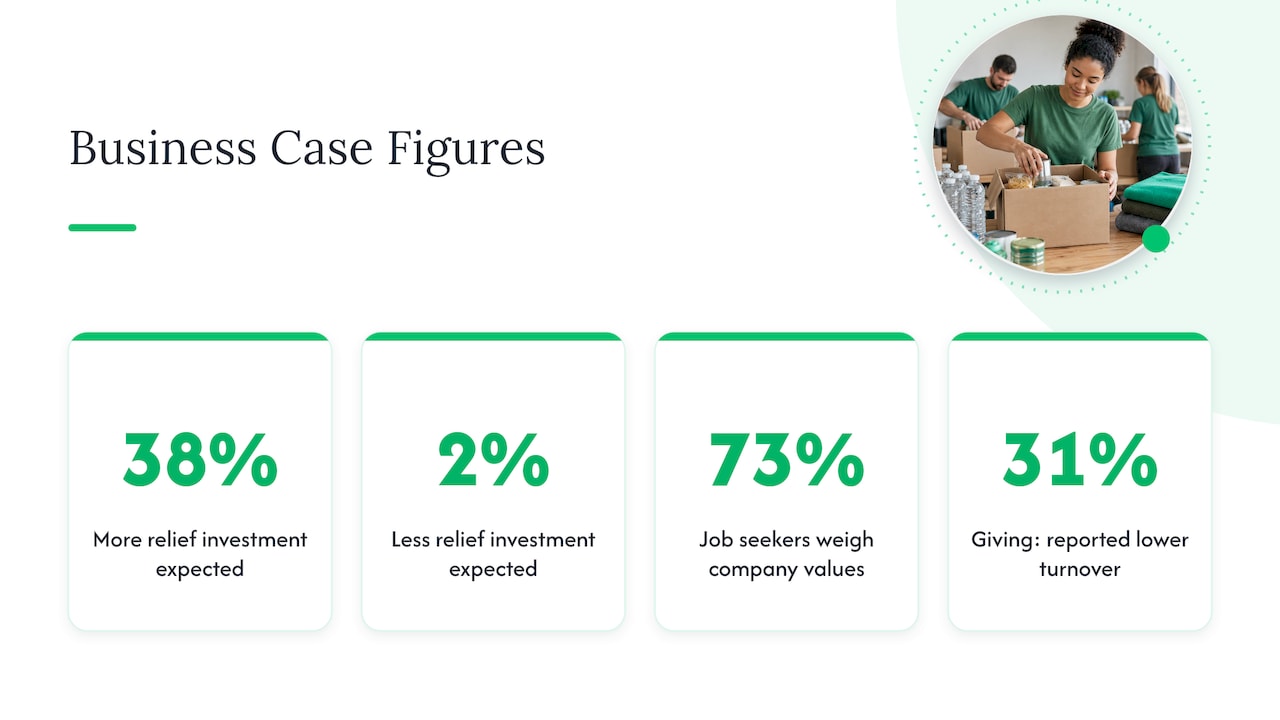
The business reasons are well documented. The Conference Board’s report of November 10, 2025 finds that HR and corporate philanthropy teams are collaborating more on employee giving and donation matching. The top motivators it names are strengthening culture and attracting and retaining talent. It also reports that 38% of respondents expect to invest more in employee relief programs over the next three years, against 2% who expect to invest less.
A 2025 article from Charity: The Foundation reports that 73% of job seekers consider company values when applying, and that companies with strong giving programs see 31% lower turnover. Treat the turnover figure as one organization’s reporting rather than a promise, but the direction is consistent across the research: people want to see their employer’s values in action.
For charities, the appeal is different. A company challenge brings a whole group of new grassroots supporters at once, and they come with a reason to keep logging activity and giving.
Challenge formats that work
Teams have many options, and the best choice depends on who you are trying to reach. Here are the formats that charities and workplace-giving organizations themselves recommend.
| Format | How it works | Best for |
|---|---|---|
| Walking or biking miles challenge | Teams log miles over the campaign; prizes go to the most active people or departments. Centre County United Way frames it as a way to boost wellness and giving together. | Mixed fitness levels, remote and hybrid teams |
| Wellness challenge | Employees log steps, distance, yoga minutes or meditation and link progress to donations, with team competition and an optional company match, as in Make-A-Wish’s 2026 toolkit. | Companies that want to tie giving to wellbeing |
| Virtual 5K or 30-day fitness challenge | Run or walk from home, or work out daily for a month. Alex’s Lemonade Stand also suggests virtual trivia and happy hours on Zoom or Teams. | Distributed teams |
| Fun-day and contest formats | St. Jude lists $5 themed dress days, karaoke, scavenger hunts, auctions, bake sales and car washes. | Office-based teams, short bursts of energy |
The table shows a pattern. Contest and event formats rely on people being in the same place at the same time. Movement formats do not. Employees log activity on their own schedule, which is why they are the easiest to keep running for weeks.
Why movement challenges lead
Three things make a miles-based challenge stronger than most alternatives.
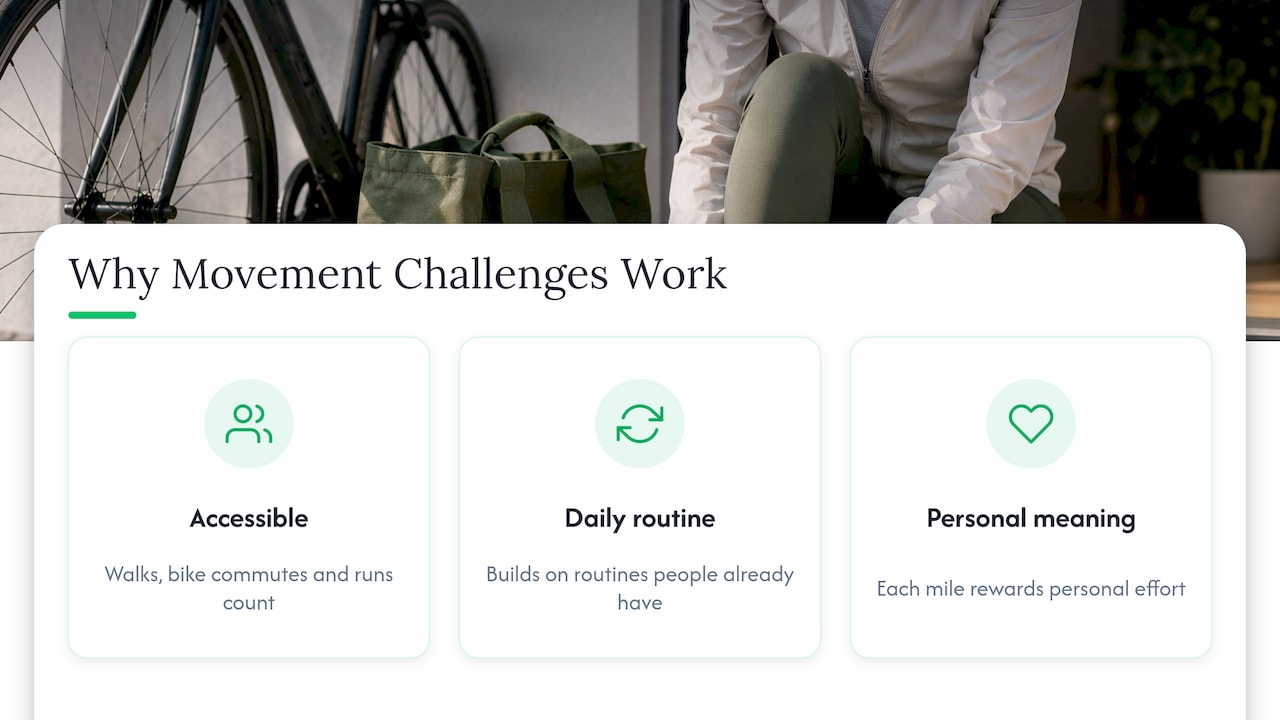
Anyone can take part. A lunchtime walk counts. So does a bike commute or a weekend run. In our program any movement counts, so the challenge includes all fitness levels, not just athletes. A push-up contest or 10K excludes many of your colleagues before it starts.
It repeats without extra work. A dress-down day happens once. A miles challenge builds on routines people already have, so participation continues day after day instead of peaking at the kickoff.
It gives everyone a personal reason to join. Employees feel good about their own effort and about their company with every mile. That is the point at which a campaign stops being something HR asks for and becomes something people want to do.
The results can be large. Since launching its Charity Miles team in 2021, HARMAN saw an 11x increase in employee participation, with more than 1,200 employees generating over $120,000 for charity.
How to run an employee charity challenge, step by step
Here is the routine, with the point at each step where things usually go wrong.
1. Set a goal you can measure
Pick one participation goal and one impact goal. For example, a percentage of employees who join and a total number of miles or dollars. Charity: The Foundation recommends specific, measurable targets, such as meals provided or students served. Vague goals such as “raise awareness” give you nothing to report afterward.
2. Plan about two months ahead
The United Way of Greater Nashville toolkit suggests starting two months before launch: form a campaign committee, choose dates and plan the kickoff. The usual failure here is an owner with no backup. Name two people, not one, and agree who approves messages and who answers employee questions.
3. Choose the cause with your employees
People give more readily to causes they picked. Offer a mix of local, national and international options, as Charity: The Foundation advises. With Charity Miles, the company decides whether donations go to each employee’s chosen charity or to one company-selected cause, so you can match the approach to your culture.
4. Create the teams
We set up private teams for your employees, so the challenge stays inside the company. Build teams by department, office or at random to mix people who rarely work together. Keep teams small enough that every member’s miles visibly matter.
5. Decide on sponsorship
Sponsorship is optional. If you choose it, you set the rate per mile and the total cap, so the budget is known before launch. That cap is the thing that keeps a popular challenge from becoming an open-ended cost. You can also leave sponsorship out and let the challenge run on employees’ own activity.
6. Hold a short kickoff
The Nashville toolkit says kickoff meetings are the most effective way to reach all employees and can take as little as 10 to 15 minutes. It suggests distributing materials in advance, having an executive speak, and making a clear ask. Post the rules in newsletters, email and the intranet in the weeks before launch.
7. Keep progress visible
Share the leaderboard and the running total weekly. In a miles challenge, the app tracks distance by GPS and pedometer, so nobody has to submit receipts or spreadsheets. If you run the challenge by hand instead, expect the organizer’s weekly tallying to take more time than the contest itself.
8. Close and thank
Publish the final results, name the winning teams and say what the money did. We cover recognition below.
For a longer walk-through of the planning side, see our guide on how to organize a fitness challenge at work.
Choosing a cause that fits your people
Fidelity Charitable’s data-driven view is that giving programs are not one-size-fits-all. Companies should offer several ways to take part, communicate clearly and revisit the program regularly to keep it aligned with employee and company values.
In practice, that means three questions before you pick:
- Who do employees already care about? A short poll answers this in a day.
- Can the impact be explained in one sentence? “Every mile funds a meal” travels farther than a mission statement.
- Is the cause close to your business or community? Points of Light describes the strongest companies as moving from transactional service to partnership: listening to communities and aligning employee engagement with what they say they need most.
If employees are divided, letting each person direct their own miles to a charity they choose removes the argument. The company can still point its sponsorship at one cause if a single story matters more to you.
Rules, targets and governance
Keep the rules to a page. Participants need to know what counts, when it starts and ends, how teams are formed and how prizes are awarded. The Conference Board’s report notes that unclear ownership and missing accountability structures limit collaboration between HR and citizenship teams, and that only a minority of firms have formal governance linking the two. For a challenge, the practical answer is simple: decide in writing who owns the budget, who owns communications and who signs off on results.
A few choices to settle early:
- Eligibility. Include part-time, remote and frontline staff from day one.
- Targets. Set a team-level goal as well as a company one, so small teams can win too.
- Matching or sponsorship. Decide the rate per mile and the cap together, and announce both at kickoff.
- Prizes. Reward participation as well as top performance. Prizes for only the fastest people discourage everyone else.
If you want more on funding models, our page on corporate sponsorship opportunities explains how companies back their teams’ activity.
Making it work for remote, hybrid and frontline teams
Participation is often lost before the challenge starts. The Points of Light Civic 50 report found that 40% of CSR teams cite barriers to participation linked to work setting, such as frontline, deskless or remote roles, as a top external challenge. It also lists limited staff capacity at 80% as the top internal challenge, so your plan must not depend on a large team.
What helps:
- Choose an activity that does not need a shared location. Miles logged on a phone work for a nurse on a break, a driver at a depot and a developer at home.
- Communicate on more than one channel. Frontline staff may never open the intranet.
- Hold the kickoff at several times or record it.
- Let people join on their own phone, with no special equipment.
- Count every kind of movement. Walking, wheeling and biking should all earn miles.
Because the Charity Miles app is free for members, joining does not cost employees anything.
Measuring impact and recognizing people
United Way of Pennsylvania Central advises setting a participation goal, monitoring and reporting results, recognizing volunteers and thanking employees, and notes that CEO letters are particularly effective. Global Impact adds that employees question whether their giving makes a difference, so organizers should share regular impact reports with concrete outcomes and invite nonprofit partners to present results.
Track three numbers:
- Participation rate: employees who logged activity divided by eligible employees.
- Activity total: miles, steps or hours across the campaign.
- Dollars and outcomes: what was donated and what it paid for.
For context, the Civic 50 report finds an average 45% participation rate in company-sponsored volunteering among its honorees, against 25% across U.S. companies overall. That gap is a useful reminder that how you run a program matters as much as having one.
Numbers alone rarely move people. A short story about what the money did does. Fundraising video storytelling is one way to show employees the outcomes their effort supports, whether you share a two-minute clip from the charity or a recap of the winning team.
Put your challenge on Charity Miles
If you want the challenge to run without a spreadsheet, our Employee Empowerment program gives you the pieces in one place: private teams for your employees, friendly challenges between them and optional sponsorship where you set the rate per mile, the total cap and whether donations go to each employee’s chosen charity or a company-selected cause. It also includes reporting for enterprise clients.
The program is used by hundreds of the world’s top companies. Because any movement counts, a lunchtime walk contributes as much as a long run, and the challenge becomes part of company culture instead of a one-off event.
See how it works on the Employee Empowerment program page, or look at the app itself to see what your employees will use.
Our view on employee charity challenges
Most workplace giving fails for one reason: it asks people to do something extra. A bake sale needs a Tuesday afternoon. A 5K needs fitness and a free weekend. The people most likely to opt out are the ones the company most wants to reach.
We built Charity Miles around the opposite idea. People already move every day, so the donation should come from that movement. A lunchtime walk, a bike commute or a run counts, and that is why the program works for every fitness level.
For companies, we think control matters. You choose the rate per mile, the cap and the destination of the money, and the employees choose how to take part. The result is a challenge that feels like part of the company, with a budget you can predict and a story you can tell. That combination of wellness, giving and team building in one place is what we believe sets a challenge apart from a one-day event.
If you are planning your first challenge, start with a goal you can measure, let employees help pick the cause, and make joining as easy as opening an app.
Gene
FAQ
What challenges can we do to raise money for charity at work?
The main options are movement challenges, such as walking, biking or running miles; wellness challenges; virtual trivia or 5Ks; and in-office events like dress-up days or auctions. Movement challenges tend to work best for mixed teams because every fitness level can take part and remote employees can join. With Charity Miles, those miles turn into donations to the charity each person chooses.
How do you encourage employees to donate to charity?
Make giving easy, personal and visible. Let employees pick or influence the cause, hold a short kickoff with a leader’s endorsement, share progress every week and thank people at the end. A challenge helps because employees give through an activity they enjoy rather than a separate request.
Does the company have to pay for the challenge?
No. The Charity Miles app is free for members and free for charities. Companies can choose to sponsor their employees’ miles, setting the rate per mile and the total cap, and can send donations to each employee’s chosen charity or to a company-selected cause.
How do we know whether the challenge worked?
Compare your results to the goals you set at the start: participation rate, total activity and dollars donated. Then share them with employees together with a short story about what the money accomplished. Reporting back is what makes people want to join the next one.
Sources
- Fidelity Charitable: Giving in the Workplace
- The Conference Board: Collaboration between HR and corporate philanthropy
- Charity: The Foundation: Rethinking workplace giving
- Centre County United Way: Workplace Wins Fundraising Guide
- Make-A-Wish: WishMakers at Work Toolkit 2026
- Alex’s Lemonade Stand: Hold a Virtual Fundraiser
- St. Jude: Workplace fundraising ideas
- United Way of Greater Nashville: 2026 Employee Campaign Toolkit
- Points of Light: Civic 50 Report
- United Way of Pennsylvania Central: Employee Campaign Coordinator Resource Guide
- Fundraising video storytelling for nonprofits