
Corporate social responsibility (CSR) is a self-regulating business model that integrates social, environmental, and ethical concerns into everyday operations, creating positive impact beyond profit. Think of it as the operating system beneath a company’s public commitments: it shapes how decisions get made, how employees are treated, how communities are affected, and how the planet is considered. CSR is no longer a nice addition to an annual report. It is woven into brand reputation, talent strategy, and long-term business resilience.
Here is what CSR actually does for a business:
- Builds brand reputation by demonstrating that the company operates with integrity, not just efficiency
- Attracts and retains talent because purpose-driven workplaces consistently outperform in recruiting
- Deepens customer loyalty as buyers increasingly choose companies whose values align with their own
- Reduces risk by identifying social and environmental issues before they become regulatory or reputational crises
- Drives long-term sustainability by addressing systemic challenges like climate change that affect corporate viability
- Engages employees by connecting daily work to a larger mission, which Gallup research links to measurably higher profitability
The core stakeholders in CSR are businesses, employees, consumers, communities, governments, and investors. Each group has a stake in how a company behaves, and each exerts pressure that shapes CSR priorities. Regulatory forces are also shifting: the EU has advanced mandatory ESG disclosure frameworks, while some US federal initiatives have been scaled back, creating a complex governance environment that every CSR leader must navigate.
The four pillars that define corporate social responsibility
CSR’s four pillars give structure to what can otherwise feel like a vague commitment to “doing good.” Each pillar addresses a distinct dimension of a company’s impact, and together they form a complete picture of responsible business practice.
-
Environmental responsibility focuses on minimizing ecological harm. This includes reducing waste, conserving energy, sourcing materials sustainably, and setting measurable targets for carbon reduction. Companies operating under this pillar often pursue certifications, publish environmental impact reports, and redesign supply chains to cut emissions.
-
Ethical responsibility covers how a company treats people: fair labor practices, transparent governance, respect for human rights, and honest communication with all stakeholders. This pillar extends into the supply chain, where sourcing decisions can either uphold or undermine labor standards in other countries.
-
Philanthropic responsibility is the most visible pillar to the public. It includes charitable donations, employee volunteer programs, community partnerships, and support for causes aligned with company values. Philanthropy works best when it is tied to the company’s core mission rather than treated as a separate giving budget.
-
Economic responsibility goes beyond profit margins. It means ensuring that business success creates tangible benefits for employees through fair wages and job security, for shareholders through sustainable returns, and for communities through local investment and job creation. Carroll’s Pyramid, a foundational CSR framework, places economic and legal responsibilities as the base that makes ethical and philanthropic action possible.
These four pillars align with what society now expects from companies: not just compliance with the law, but a genuine commitment to operating in ways that leave people and places better off.
Why CSR is a strategic business priority in 2026
CSR improves brand reputation, customer loyalty, and talent recruitment in ways that directly affect the bottom line. Companies that integrate social responsibility into their core strategy tend to see increased trust and resilience, particularly when facing market disruptions or reputational challenges.
| Business Benefit | How CSR Delivers It |
|---|---|
| Brand reputation | Ethical operations build public trust over time |
| Talent recruitment | Purpose-driven culture attracts top candidates |
| Employee retention | Engaged employees stay longer and perform better |
| Customer loyalty | Buyers favor companies whose values match their own |
| Risk management | Early identification of social and environmental risks |
| Access to capital | ESG-aligned companies attract responsible investors |
The role of the CSR manager has evolved considerably. According to MIT Sloan Management Review, CSR pioneer Alberto Andreu Pinillos describes three core responsibilities for CSR directors: foresight, nurturing, and evangelism. Foresight means acting as a “social radar,” detecting emerging social and environmental risks before they reach the executive agenda. Nurturing means running the CSR office like an incubator, building internal projects until they are mature enough to transfer to the relevant department. Evangelism means spreading a sustainability mindset across the entire organization until every function owns its own ethical decision-making.
That last point is the most ambitious goal in CSR leadership: making the CSR function redundant by embedding responsible thinking everywhere. As Andreu Pinillos puts it, “The true test of a responsible company is when all functions and departments are capable of minimizing their own negative impacts.”
Pro Tip: If your CSR team is the only group thinking about social and environmental impact, the program is still in its early stages. The goal is for procurement, HR, finance, and operations to each own their piece of the responsibility.
CSR managers also face a persistent tension: translating long-term social and environmental goals into the language of short-term business outcomes. The most effective CSR professionals frame every initiative in terms executives already care about, whether that is cost reduction, regulatory compliance, or employee productivity. That translation skill separates CSR programs that get funded from those that stay on a slide deck.
Companies with engaged employees are 21% more profitable, according to Gallup research, and CSR programs that connect personal purpose to company mission are one of the most reliable drivers of that engagement.
How companies implement CSR initiatives and report on their impact
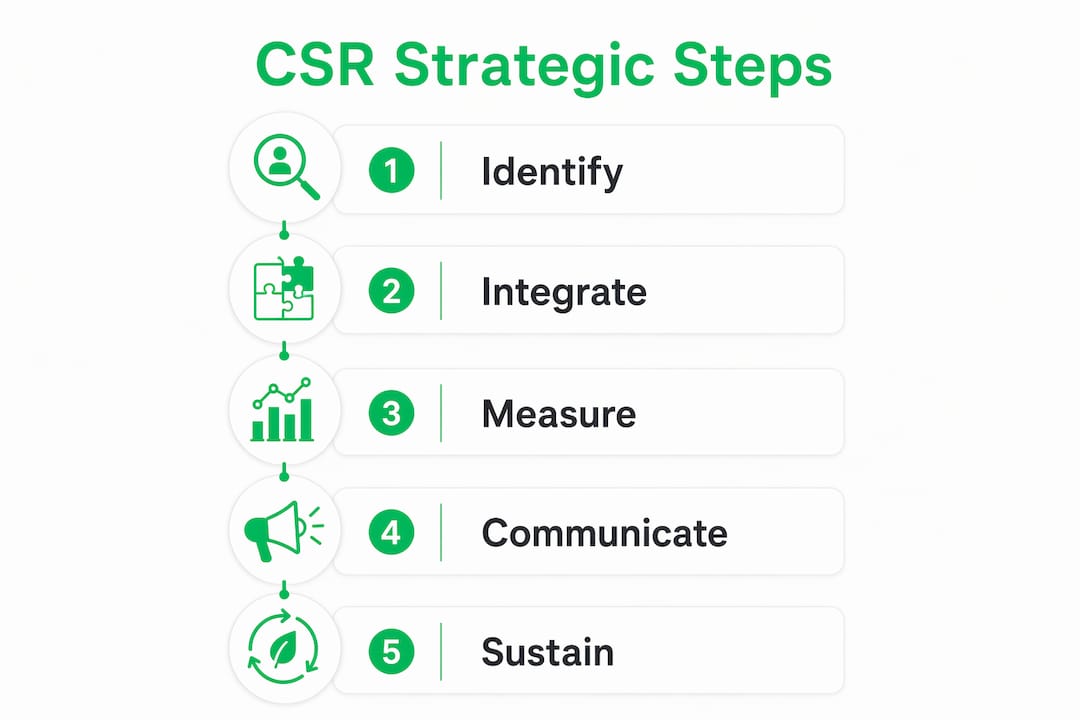
Effective CSR implementation requires genuine stakeholder engagement, not just polished communications. Harvard Law School’s Corporate Governance research makes clear that success depends on authentic integration across departments rather than an isolated CSR function producing reports in a silo.
Common implementation practices include:
- Cross-departmental coordination: CSR practitioners work with HR, legal, procurement, finance, and operations to embed responsible practices into existing workflows rather than layering them on top.
- Stakeholder engagement: This means listening to employees, community partners, NGOs, and investors, not just informing them. Genuine input shapes better programs.
- Employee volunteer programs: Structured volunteering connects employees to community causes and builds internal pride. When paired with company-sponsored charitable giving, the impact compounds.
- Charitable partnerships: Formal relationships with nonprofits and community foundations allow companies to direct resources strategically rather than making ad hoc donations.
- Environmental initiatives: From energy audits to supply chain reviews, environmental programs require data collection, goal-setting, and regular progress reporting.
- Internal communication: CSR strategies only take root when employees understand them. Regular updates through newsletters, intranet posts, and team meetings keep the mission visible.
- Compliance integration: CSR practitioners serve as internal consultants, ensuring that initiatives align with relevant legal standards and reporting requirements such as the Modern Slavery Act or gender pay gap disclosures.
Reporting is where CSR commitments become verifiable. Companies use frameworks like the Global Reporting Initiative (GRI) and the UN Sustainable Development Goals (SDGs) to structure their disclosures. The best CSR reports go beyond listing activities: they quantify outcomes, acknowledge shortfalls, and set forward-looking targets. Transparency here builds the credibility that stakeholders are increasingly demanding.
How CSR and ESG work together, and where they differ
CSR and Environmental, Social, and Governance (ESG) frameworks are related but distinct. CSR is the broader, values-driven concept: it describes a company’s commitment to operating responsibly across social, environmental, and ethical dimensions. ESG is the measurement layer: a standardized, data-driven framework that investors and analysts use to score and compare corporate performance on those same dimensions.
Key distinctions worth understanding:
- Audience: CSR programs are typically designed with employees, communities, and customers in mind. ESG reporting is primarily aimed at investors and financial regulators.
- Measurement: CSR activities are often qualitative and narrative. ESG scores are quantitative, enabling direct comparison across companies and sectors.
- Reporting standards: ESG frameworks like the Sustainability Accounting Standards Board (SASB) and the Task Force on Climate-related Financial Disclosures (TCFD) provide structured templates. CSR reports vary widely in format and depth.
- Regulatory pressure: The EU has moved toward mandatory ESG disclosure, while US requirements remain more fragmented. Some American companies have scaled back public ESG commitments in response to shifting political environments, even while maintaining their underlying CSR practices.
- Integration: CSR has not been replaced by ESG. Instead, CSR strategy increasingly feeds into ESG reporting, with the values and programs developed under CSR providing the substance that ESG metrics measure.
For companies seeking access to responsible investment capital, aligning CSR programs with ESG reporting standards is a practical advantage. Investors who screen for ESG performance want to see not just good intentions but documented, comparable outcomes.
How CSR evolved in the United States
CSR in the United States did not emerge from regulation. It grew from a gradual recognition, accelerated by public pressure, that corporations owe something to the communities that sustain them.
The modern conversation began in earnest in the 1950s and 1960s, when scholars like Howard Bowen argued that business leaders had social obligations extending beyond shareholder returns. The civil rights movement and environmental activism of the 1960s and 1970s pushed companies to address labor practices, pollution, and community impact in ways they had previously ignored. The creation of the Environmental Protection Agency in 1970 formalized some of those expectations into law.
Through the 1980s and 1990s, CSR became more strategic. Companies began to see that ethical behavior and community investment could differentiate their brands. Carroll’s Pyramid, introduced in 1991, gave practitioners a framework for prioritizing responsibilities: economic first, then legal, then ethical, then philanthropic. That hierarchy still informs how many US companies structure their CSR programs today.
The 2000s brought supply chain accountability into sharp focus. Scandals involving labor conditions overseas pushed American brands to examine not just their own practices but those of their suppliers. The Bangladesh textile factory collapse in 2013, which killed more than 1,000 workers and implicated major global brands, made clear that CSR responsibility does not stop at a company’s own walls.
By the 2010s, CSR had moved from the margins to the C-suite. Chief Sustainability Officers became standard at large corporations. Today, CSR is integral to core business strategy, and ignoring broader stakeholder concerns carries real financial risk.
Real-world CSR initiatives across industries
CSR looks different depending on the industry, the company’s size, and the communities it serves. What works for a technology company in San Francisco will not look the same as what works for a manufacturing firm in the Midwest. The most effective programs are specific, measurable, and connected to what the company actually does.
Technology: Major tech companies have committed to carbon neutrality and renewable energy sourcing, often publishing detailed environmental impact reports. Employee volunteer programs tied to STEM education in underserved communities are common, connecting the company’s expertise to a genuine community need.
Retail and consumer goods: Responsible sourcing is the defining CSR challenge in retail. Companies audit suppliers for labor standards, reduce packaging waste, and invest in circular economy programs that extend product life cycles.
Financial services: Banks and investment firms focus on community development lending, financial literacy programs, and responsible investment products. ESG-screened funds have grown substantially as investor demand for transparency has increased.
Healthcare: Pharmaceutical and healthcare companies engage in access-to-medicine programs, health education initiatives, and partnerships with community health organizations. Quest Diagnostics, for example, has run employee-driven charitable programs that connect workplace wellness with disaster relief support.
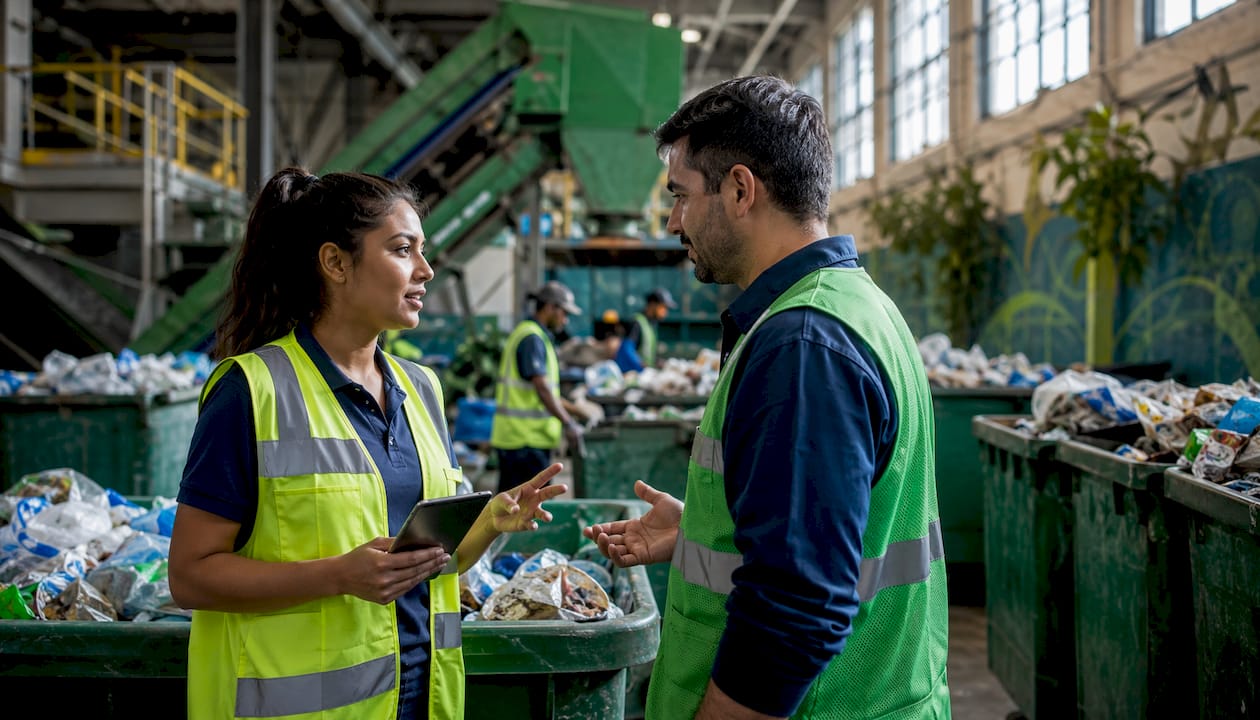
Manufacturing: Environmental responsibility dominates CSR in manufacturing, with energy efficiency, waste reduction, and supply chain sustainability as primary focus areas. Employee safety and fair labor practices are also central commitments.
Across all sectors, employee volunteer programs consistently rank among the most effective CSR initiatives because they engage employees directly, build community relationships, and generate measurable social impact at relatively low cost.
How to measure and evaluate CSR impact
Measuring CSR impact is where many programs stall. Good intentions are easy to communicate; demonstrable outcomes require discipline, data, and honest reporting.

The most widely used measurement approaches include:
Output metrics track what a company does: dollars donated, volunteer hours logged, tons of carbon reduced, gallons of water conserved. These are straightforward to collect and useful for internal tracking, but they do not tell you whether the activity actually changed anything.
Outcome metrics measure what changed as a result of CSR activity: students who completed a scholarship program and graduated, community members who gained access to clean water, employees who reported higher job satisfaction after a volunteer program. Outcome data is harder to collect but far more meaningful to stakeholders.
Third-party frameworks provide structure and comparability. The Global Reporting Initiative (GRI) is the most widely adopted standard globally. The UN SDGs offer a common language for aligning company programs with global priorities. The SASB provides industry-specific standards that make ESG data comparable across companies in the same sector.
Employee engagement surveys are an underused CSR measurement tool. When CSR programs are working, employees feel more connected to their company’s mission. Tracking engagement scores before and after a CSR initiative gives HR and CSR leaders concrete evidence of impact.
The honest challenge is that CSR measurement is still maturing. Many companies report on activities rather than outcomes because outcomes are harder to attribute and slower to appear. The shift toward ESG reporting is pushing companies toward more rigorous, auditable data, which will ultimately strengthen the credibility of CSR claims across the board.
The real challenges and criticisms of CSR
CSR has genuine critics, and their concerns deserve a direct response rather than a dismissal.
Greenwashing is the most common criticism: companies that make bold public commitments to sustainability while their actual practices lag far behind. The gap between CSR communications and CSR reality has eroded public trust in corporate claims, making authentic transparency more important than ever.
Profit vs. purpose tension is a structural challenge that every CSR professional faces. Short-term financial pressures can push companies to cut CSR budgets when earnings disappoint. Programs that cannot demonstrate a clear connection to business outcomes are the first to go. This is why the most durable CSR initiatives are those that serve both a social purpose and a business function simultaneously.
Measurement gaps allow companies to claim credit for activities without proving impact. Without standardized, auditable reporting, it is difficult for stakeholders to distinguish genuine programs from public relations exercises.
Regulatory inconsistency creates confusion, particularly for multinational companies. ESG disclosure requirements vary widely across jurisdictions, and the US regulatory environment has shifted in ways that make long-term planning difficult. Some companies have quietly scaled back public ESG commitments while maintaining internal programs, navigating political risk on both sides.
Scope limitations are a subtler problem. A company can have an excellent philanthropic program and still cause significant harm through its supply chain, pricing practices, or lobbying activities. CSR that addresses only the visible, comfortable parts of a company’s impact while ignoring the harder questions is incomplete by definition.
The answer to most of these criticisms is the same: genuine integration. When CSR is embedded across every department rather than managed by a single team producing annual reports, the gap between commitment and practice narrows considerably.
Charitymiles turns CSR into something employees actually feel
Most CSR programs live in a PDF. Charitymiles lives in your employees’ daily routines.

The Charitymiles Employee Empowerment Program gives companies a way to make CSR personal and participatory. Employees walk, run, or bike, and every mile they log generates a charitable donation to a cause they care about. Companies set the sponsorship terms: the rate per mile, the total cap, and whether funds go to a company-selected charity or each employee’s own choice. The result is a CSR program that employees experience every day, not just once a year at a volunteer event.
HARMAN launched its Charitymiles team and saw a marked increase in employee participation, with many employees generating substantial charitable donations. That kind of engagement does not happen with a top-down mandate. It happens when the program is easy, inclusive, and tied to something employees already want to do.
If you are looking for CSR initiatives that work at scale, Charitymiles is worth a close look. It combines wellness, philanthropy, and team-building in one platform, with no cost to individual employees and full control for the company.
Key Takeaways
CSR’s role is most effective when it is embedded across every business function, not managed in isolation by a single team.
| Point | Details |
|---|---|
| CSR has four pillars | Environmental, ethical, philanthropic, and economic responsibility together define a complete CSR strategy. |
| CSR managers serve three functions | Foresight, nurturing, and evangelism are the core responsibilities of effective CSR leadership, per MIT Sloan research. |
| ESG complements CSR | ESG provides the measurement and reporting layer that makes CSR commitments verifiable to investors and regulators. |
| Employee engagement drives impact | Gallup research links engaged employees to 21% higher profitability, and CSR programs are a proven engagement driver. |
| Measurement gaps remain a challenge | Most companies still report on CSR activities rather than outcomes, limiting the credibility of their claims. |