

The corporate-nonprofit partnerships that work best give every employee an easy way to take part, tie company money to employee action, and measure the result. The eight cases below, from ALDI to Microsoft to HARMAN, show how that looks in practice, with the participation and fundraising figures each company has published. If you run CSR or wellness at a company, work at a charity that wants corporate supporters, or just wonder how your daily walk could raise money, you will find the pattern repeated across all of them.
The cases fall into three groups: campaigns built around one nonprofit, matching programs that follow each employee’s own causes, and movement programs where everyday activity becomes the donation. We close with the lessons and with how a movement-based team challenge fits in.
TL;DR
- The strongest programs offer several ways to take part (giving, volunteering, activity) so no employee is left out.
- Company money works best when it responds to employee action: a match, a per-hour grant or a per-mile donation.
- Participation numbers vary widely. Blue Shield of California reports 99% of employees taking part, while the U.S. company average for volunteering is about 25%.
- Movement is the most inclusive entry point: a walk counts the same whether you are an athlete or a beginner.
- Programs last when they are measured, sponsored by leadership and repeated on a rhythm, not run as a one-off event.
Table of Contents
- How we chose these corporate nonprofit case studies
- Case 1: ALDI and Alex’s Lemonade Stand Foundation
- Cases 2 to 4: matching programs that follow employee choice
- Case 5: T-Mobile’s Magenta Giving Month
- Cases 6 and 7: scale and campaign design
- Case 8: HARMAN and a movement-based team challenge
- What the benchmarks say
- Comparing the cases at a glance
- Lessons you can apply
- For charities: what these cases mean for you
- Start a movement-based team challenge
- Our perspective
- FAQ
- Sources
How we chose these corporate nonprofit case studies
We looked for programs where the company or the nonprofit has published its own numbers, and where the mechanics are clear enough to copy: who participates, what the company funds and what the nonprofit gets. Each case below states the mechanism first, then the result, then what you can take from it.
Case 1: ALDI and Alex’s Lemonade Stand Foundation
The mechanism. ALDI built its partnership with the childhood cancer charity around two campaigns. In Lemonade Days, ALDI donates to every employee-created lemonade stand that raises at least $20. In Million Mile, the company matches employee-logged miles with a business-wide donation. There is also an ALDI Heroes Fund, funded entirely by employees, which supports the foundation’s Travel for Care, SuperSibs and Cancer Care Guides programs.
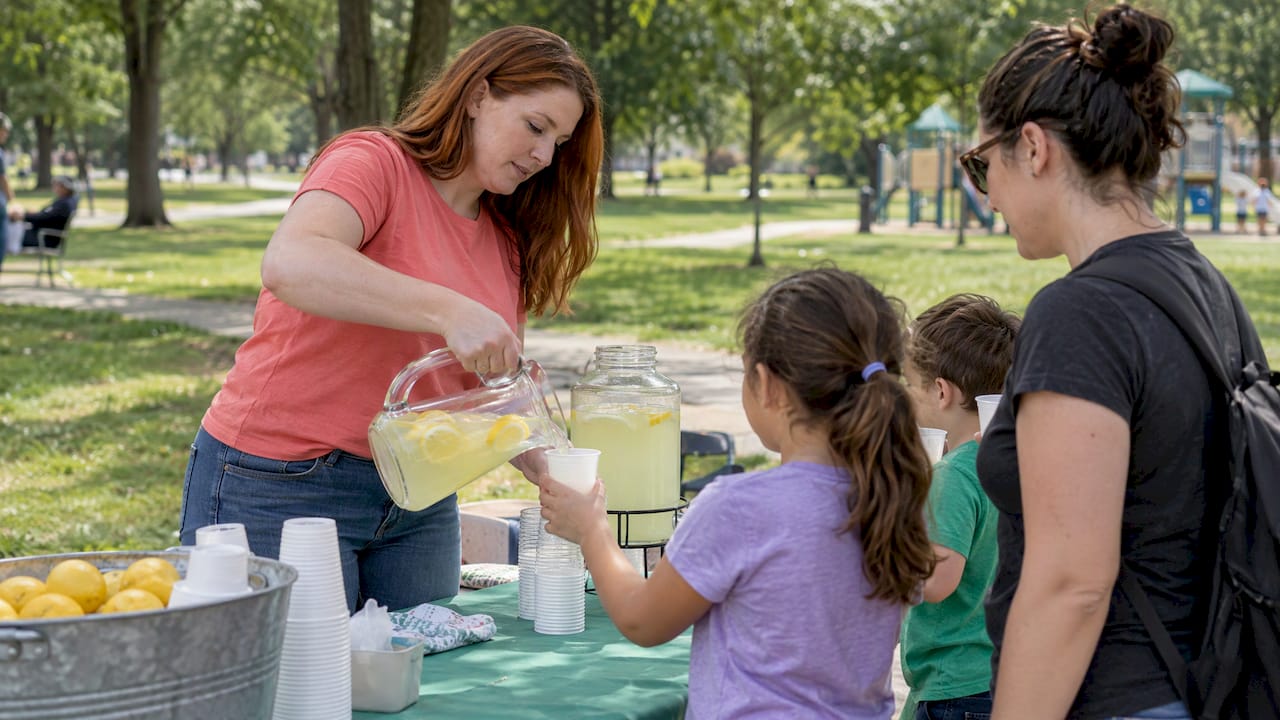
Why it works. ALDI’s philanthropy team says it chose the foundation because it offers several entry points for direct employee involvement and flexibility within campaigns. A stand-builder, a mileage logger and a gala chef can all have a visible role in the same mission.
Takeaway. One cause, several ways in. The low $20 threshold for a company donation keeps the barrier small, and the mileage campaign shows that activity can be a funding mechanism, not just a wellness perk.
Cases 2 to 4: matching programs that follow employee choice
Matching gifts are the most familiar corporate giving tool. The company matches what employees give or volunteer, and employees pick the nonprofit. Three published programs show the range.
Autodesk
The Autodesk Foundation offers 1:1 matching of donations up to $5,000 per employee, with 2:1 matches in crises, 48 paid volunteer hours per year and grants for logged volunteer hours. Its 10-year report says nearly one-third of employees now participate in giving, volunteering and pro bono programs.
The Hershey Company
Hershey matches employee donations 1:1 up to $5,000 a year, offers two paid volunteer days and awards a $500 grant to the nonprofit of an employee’s choice after 50 volunteer hours. According to its Employee Impact page, 433 employees gave nearly 2,300 volunteer hours to 65 nonprofits in July 2025, and the Season of Giving payroll program has contributed more than $31 million over 15 years.
Blue Shield of California
Blue Shield matches $1 for $1 up to $1,000 per employee per year. It reported that 99% of employees took part in volunteer and giving programs in 2024, up from 96% in 2023 and 79% in 2022. Employees logged more than 68,700 volunteer hours, and donations of over $1.6 million reached more than 2,600 nonprofits.
Takeaway. Participation can climb quickly when a program is simple and sustained: Blue Shield’s rate rose 20 points in two years. Notice, too, how the grants tied to hours (Hershey, Autodesk) reward effort, not only wallet size, which helps employees who cannot give much cash.
Case 5: T-Mobile’s Magenta Giving Month
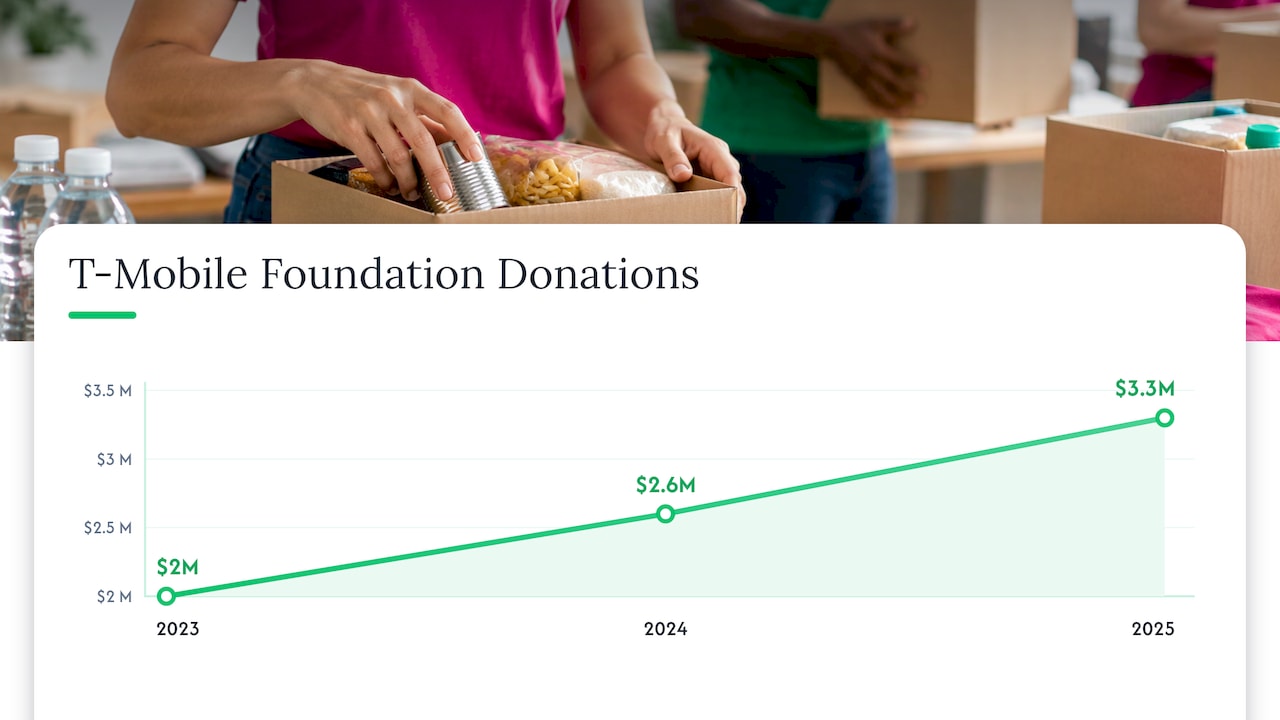
T-Mobile concentrates its giving into one month. Starting April 1, 2025, every employee received a $30 donation credit from The T-Mobile Foundation to give to a nonprofit of their choice. The third annual event produced more than 27,000 volunteer hours and $3.3 million in donations, up from $2.6 million in 2024 and $2 million in 2023.
Executive sponsor Mike Katz framed it as coming together as “One Team” to make a real impact in communities. That framing matters: a giving month works as team building as much as philanthropy.
Takeaway. A recurring annual event, with a built-in starter credit for everyone, builds a habit. Three straight years of growth suggests the rhythm is doing as much work as the dollar amount.
Cases 6 and 7: scale and campaign design
World Bank Group
The Community Connections Campaign runs every November and December and is promoted by a grassroots staff-volunteer network. In 2025, staff and retirees donated over $7.3 million to more than 500 colleague-nominated organizations, matched by the World Bank Group, and over 86% of staff from 137 countries contributed.
The lesson is peer nomination. When colleagues propose the causes, giving feels personal and the list of recipients stays broad.
Travelers
Travelers’ program matched employee donations up to $500 per employee in 2025 and paid $20 per logged volunteer hour, up to $1,000 in rewards per employee. About 28% of employees participated, the company donated $2.8 million in matching funds and employees logged more than 125,000 volunteer hours, according to the company’s sustainability report. In the same year’s campaign, employees raised about $1 million through 170 virtual and live fundraising events supporting United Way affiliates.
The lesson is variety of format. Virtual and live events both counted, so remote and office-based staff could join.
Case 8: HARMAN and a movement-based team challenge
Every case above relies on giving money or scheduling volunteer time. Movement offers a third route that costs employees nothing and fits into a normal day. HARMAN launched a Charity Miles team in 2021 and saw an 11x increase in employee participation, with 1,200+ employees generating over $120,000 for charity.
The mechanics are simple. Employees join a private company team, walk, run or bike, and the app tracks distance by GPS and pedometer. Money is donated to a charity for every mile logged. Because any movement counts, a lunchtime walk contributes as much as a long run, which makes the program inclusive of all fitness levels. The company decides whether to sponsor the miles at all, and if so sets the rate per mile, the total cap and whether donations go to each employee’s chosen charity or a company-selected cause.
Takeaway. Activity-based giving reaches people who skip volunteer days (because of schedules) and giving campaigns (because of budgets).
What the benchmarks say
Individual case studies are easier to judge against industry data. Points of Light’s 2026 Civic 50 report found that employee volunteering at honoree companies reached 45% of employees, the highest in its 2019 to 2026 series and well above the 25% U.S. company average from CECP’s Giving in Numbers 2025. Employees averaged 4.7 volunteer hours, and volunteers averaged 12.5.
Two more findings from the same report are useful for planning:
- Skills-based volunteers contribute 22.9 hours a year, nearly twice the all-volunteer average, yet only 7% of employees take part in skills-based service.
- 80% of CSR teams cite limited staff capacity as a challenge, and 66% are navigating shifting political or regulatory environments.
The capacity figure is the practical one. A program that runs itself, with automatic tracking and no manual hour logging, leaves a small CSR team free to work on strategy.
If you want evidence that these programs affect well-being too, the CDC-published LifeWorks@TURCK study found that a benefits package including a volunteering match, charitable fundraisers and a Work-Life Pursuit benefit was associated with more volunteering and giving to personally meaningful causes, and with a 13% increase in employees saying they were very satisfied with their benefits.
Comparing the cases at a glance
| Program | Core mechanism | Published result |
|---|---|---|
| ALDI and ALSF | Donation per stand and per logged mile | Multiple entry points, employee-funded Heroes Fund |
| Autodesk | 1:1 match up to $5,000, paid volunteer hours | Nearly one-third of employees participate |
| Hershey | 1:1 match up to $5,000, $500 grants after 50 hours | 433 employees, 65 nonprofits in July 2025 |
| Blue Shield of California | $1-for-$1 match up to $1,000 | 99% participation in 2024 |
| T-Mobile | $30 credit per employee, giving month | $3.3 million, 27,000+ volunteer hours |
| World Bank Group | Peer-nominated causes, matched gifts | 86%+ of staff contributed |
| Travelers | Match up to $500, $20 per volunteer hour | About 28% participation |
| HARMAN | Private team, per-mile donations | 11x participation, $120,000+ |
Lessons you can apply
- Offer more than one way in. ALDI, Travelers and the Civic 50 leaders all combine giving, volunteering and events. Add movement and you reach people the others miss.
- Let employees choose the cause, or let them see the company’s. Hershey and the World Bank lean on employee choice. A company-selected cause can work too, if the story is clear.
- Tie company dollars to action. Matches, per-hour grants and per-mile donations all make an employee’s small act visibly bigger.
- Run on a rhythm. T-Mobile’s three-year climb and the World Bank’s annual campaign show that repetition builds participation.
- Measure from day one. Participation rate, hours or miles, dollars and nonprofits reached are the four numbers every case above reports.
- Connect giving to well-being. If your culture work also covers stress and energy, pair a giving program with wellbeing training in organizations so the message is consistent.
For more on building the program around your people, see our guides on corporate social responsibility and employee engagement and corporate volunteering ideas. If your workforce is distributed, our CSR initiatives for remote employees cover how to include them.
For charities: what these cases mean for you
The ALDI case shows what corporate partners value in a nonprofit: several ways for employees to engage and room to adapt campaigns. A charity that can offer a mileage challenge, a fundraising event and a volunteer role gives a company program officer more to work with. Charity Miles is free for charities, so listing your cause is a low-effort way to put it in front of walkers, runners and company teams.
Start a movement-based team challenge
Charity Miles is a free mobile app for iOS and Android that tracks walking, running and biking and turns each mile into a donation to the charity the member picks. Companies use our Employee Empowerment program to create private teams, run friendly challenges and, if they choose, sponsor their employees’ miles at a rate and cap they set. Companies that want to put their name behind a cause can see corporate sponsorship opportunities.
Individuals can start today: download the app, pick a charity and log your first mile.
Our perspective
The pattern we see in these case studies is that people take part when the first step is small and the meaning is obvious. A match asks for money. A volunteer day asks for time off. A mile asks only that you do what you were already going to do: walk to lunch, ride to work, go for a run.
That is why we built Charity Miles around movement. Any movement counts, so the program is open to every fitness level, and the donation follows automatically. Companies keep control of the terms: the rate per mile, the total cap and whether money goes to each employee’s chosen charity or a company-selected cause.
HARMAN’s 11x rise in participation, with more than 1,200 employees generating over $120,000, is what happens when a program is easy, inclusive and part of the culture instead of a one-off event. Giving, well-being and team building do not have to be three separate budgets. They can be one habit.
Gene
FAQ
What makes a corporate-nonprofit partnership successful?
The published cases share a few traits: several ways to participate, company funding that responds to employee action, a repeating schedule and clear measurement. Blue Shield of California’s 99% participation rate and T-Mobile’s three straight years of growth both come from simple, recurring programs.
How do companies fund employee giving programs?
The common models are matching gifts (Autodesk, Hershey, Blue Shield), per-hour volunteer grants (Hershey, Travelers), starter credits (T-Mobile) and per-activity donations (ALDI’s mileage match, or sponsored miles in Charity Miles). Many companies combine two or more.
What participation rate should we aim for?
The U.S. company average for employee volunteering is about 25%, and Civic 50 honorees reached 45% in the 2026 report, per Points of Light. Set your own goal against your starting point and track it every quarter.
Can remote and hybrid employees join these programs?
Yes, if the program has formats that do not depend on a location. Virtual fundraising events, as in Travelers’ campaign, and app-tracked activity both work for distributed teams, since each person logs their own contribution wherever they are.
Is Charity Miles free?
The app is free for individual members and free for charities. Companies that want private teams, challenges and sponsored miles use the Employee Empowerment program.
Sources
- ALDI | Alex’s Lemonade Stand Foundation case study
- Autodesk Foundation, A decade of impact (FY25 report)
- Employee Impact, The Hershey Company
- Blue Shield of California: 99% of employees gave back in 2024
- T-Mobile: Third Annual Magenta Giving Month
- Community Connections Program, World Bank Group
- Employee Volunteerism & Giving, Travelers
- Points of Light 2026 Civic 50 report
- LifeWorks@TURCK, CDC Stacks