

A micro wellness challenge is a small, specific healthy action repeated for a short stretch, usually a day to a week and rarely more than a month. Think a 10-minute walk after lunch, a daily stretch break or one mile a day. The goal is not a transformation. It is a habit people can actually finish, and finishing is what builds momentum. Below we cover what makes a challenge “micro,” one-week ideas you can start on Monday, how teams can run them at work, and how to attach a charitable cause so each small action counts for someone else too.
TL;DR
- A micro challenge is one small, clearly defined action, repeated for a short period, with a simple way to log it.
- Short activity bouts count: the CDC says physical activity can be broken into 5 to 10 minute segments, alone or in groups.
- Pairing movement with giving, such as a donation per mile, gives people a reason beyond the workout to show up.
- Keep it inclusive: let people choose the activity, adapt it to their bodies and report simply.
- Measure three things at the end: participation, how people felt and what the challenge raised.
Table of Contents
- What makes a wellness challenge “micro”
- Why small actions work
- One-week challenge ideas you can start Monday
- Running micro challenges at work
- Adding a charitable cause
- Keep it inclusive and safe
- Our perspective
- How to run one, step by step
- Start a micro challenge with Charity Miles
- FAQ
- Sources
What makes a wellness challenge “micro”
Three traits separate a micro challenge from a typical 30-day program.
It is small enough to do on a bad day. Walking for 10 minutes or doing a few stretches takes almost no planning. If a challenge needs a gym, special equipment or an hour, it is not micro.
It is specific. “Be healthier” is a wish. “Walk for 15 minutes after lunch” is a challenge. Researchers call this kind of cue-linked plan an implementation intention. In a 2020 randomized proof-of-concept trial with U.S. college students, linking a desired behavior to a cue produced more goal-congruent behavior than a goal intention alone. The study did not show better weight or diet outcomes between the groups, so treat it as evidence that cues help people follow through, not as a promise of results.
It is short. A week is long enough to feel a rhythm and short enough that nobody gets stuck in the middle of a month-long slog. Teams can stack one-week challenges back to back, changing the theme each time.
Why small actions work
Big goals often fail at the first missed day. Small ones are forgiving. A four-week Louisiana pilot, Small Changes, Healthy Habits, taught goal-setting and habit formation. Among 47 participants with complete data, it was associated with improved nutrition-related behaviors and reduced sitting time. It was a small pilot, so it points to a promising approach rather than proving one.
The physical activity side supports the same idea. The CDC’s workplace guide notes that activity can be broken down into short 5 to 10 minute segments, done individually or in groups across the workday. Employers also do not need an onsite gym to support it, according to the same guide.
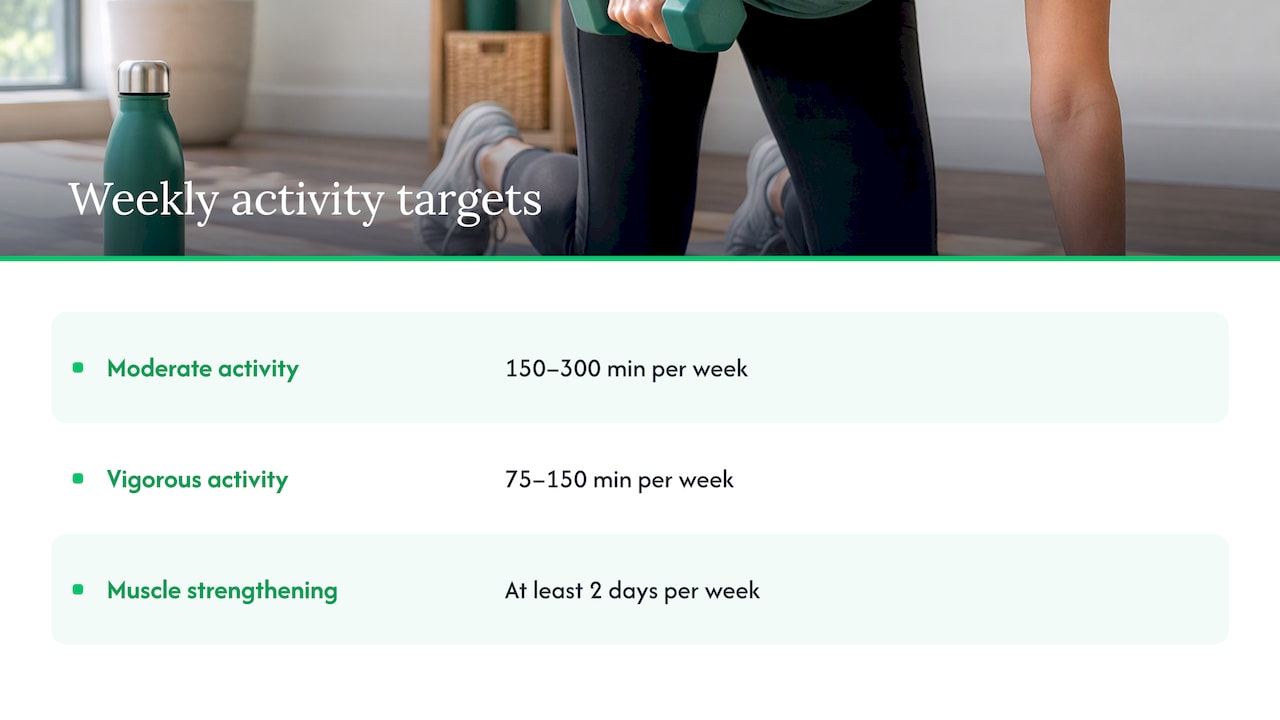
And the national baseline is more encouraging than people expect. The U.S. Physical Activity Guidelines say that any amount of moderate-to-vigorous activity provides some health benefit. The target for substantial benefit is 150 to 300 minutes of moderate activity a week, or 75 to 150 minutes of vigorous activity, plus muscle-strengthening on at least 2 days. A string of 10-minute walks is a real step toward that.
One-week challenge ideas you can start Monday
Pick one idea, one cue and one way to log it. Here are seven formats, grouped by what they ask of people.
Movement challenges
- A mile a day. Walk, jog or roll one mile each day for seven days. National Run for Mental Health Week from Still I Run lets people set their own goal for the week, such as a mile a day, a daily walk or a group run.
- The 15-minute walking day. One designated day when everyone, including remote and hybrid workers, walks for 15 minutes. It is one of the formats suggested in the Move More Month guide.
- Mixed mini-workouts. Rotate squats, push-ups and planks across the week. Positive Tracks lists mixed-workout challenges like these alongside mileage goals over a day, week or month.
- Anything counts distance. Let people convert whatever they do (cycling, wheeling, dancing, swimming) into miles. The American Public Health Association’s Keep It Moving Challenge lets any physical activity be converted into distance, so more people can take part.
Self-care challenges
- Phone-free first ten minutes. No screens right after waking. Log a simple yes or no.
- Breathe and stretch. Ten minutes of stretching in the morning or a short breathing exercise at your desk before each meeting.
- Time outside. Spend a few minutes outdoors each day. Hiking My Feelings runs a free community challenge where people join by spending time outside and recording it, with donations optional.
If you need more formats for a team, our guides to app-driven charity team challenge ideas and fitness challenge ideas for team building go deeper on setup and scoring.
Running micro challenges at work
Short challenges suit the workplace because they fit around a calendar that is already full. A few principles keep them working.
- Anchor them to existing routines. A walk after the Monday stand-up, a stretch before the first video call. Cues are what make small habits stick.
- Include everyone. Hybrid and remote employees need the same chance to join. A challenge based on logged minutes or miles works from any location.
- Prefer participation to competition. The North Carolina Falls Prevention Coalition’s STEP-tember planner recommends counting ordinary daily steps, adapting group goals to ability and rewarding participation rather than running it as a contest. It also suggests simple weekly reporting and publishing progress.
- Use a team total. A shared number, such as “our team’s miles this week,” gives a quiet walker the same stake as a marathoner.
A simple weekly rhythm looks like this:
| Day | Action | Time needed |
|---|---|---|
| Monday | Announce the challenge and the cause; everyone sets a personal target | 10 minutes |
| Tuesday to Thursday | Daily micro action, logged in the app | 10 to 15 minutes |
| Friday | Team total shared; one person tells a movement story | 10 minutes |
| Following Monday | Quick survey and donation recap | 5 minutes |
If you want a structure that carries across seasons, our fitness fundraising ideas walk through formats and the HARMAN case, where participation rose 11x.
Adding a charitable cause
Giving turns a small personal habit into something shared. The cause does not need to be elaborate, but it does need to be clear.
Define the impact. Feeding America’s Meals for Miles toolkit recommends translating a financial target into a defined impact formula: $1 provides at least 10 meals. The toolkit also describes linking each fundraiser’s activity to fundraising goals, with manual entry or syncing from common fitness trackers. People who can picture what a mile buys are likelier to keep logging.
Make the tracking trivial. NYU Langone’s 30-day Health and Wellness Challenge kept it simple: participants chose their activities, earned a point per minute, set a fundraising target, invited friends and family to give, and posted progress.
Pick a giving model that fits. There are three common ones:
- Participant-raised: each person asks friends and family to donate.
- Per-mile sponsorship: a company or sponsor pays a set amount for each mile logged, up to a cap.
- Optional giving: free to join, with donations welcome but never required, as in the Hiking My Feelings model.
Immediate rewards also matter. A peer-reviewed 2020 analysis of 512 adults found that immediate financial reinforcement increased physical activity compared with comparison conditions. A donation that registers the moment you log a mile is a quick, visible reward, even though the money goes to someone else.
Keep it inclusive and safe
The point of a micro challenge is that nearly anyone can join. A few design choices protect that.
Let people adapt. The CDC advises organizers to let participants adapt activities to fit their bodies and avoid joint pain, and to recommend that people with chronic conditions or symptoms talk to a health professional about appropriate activities before they start. Say so in your launch message.
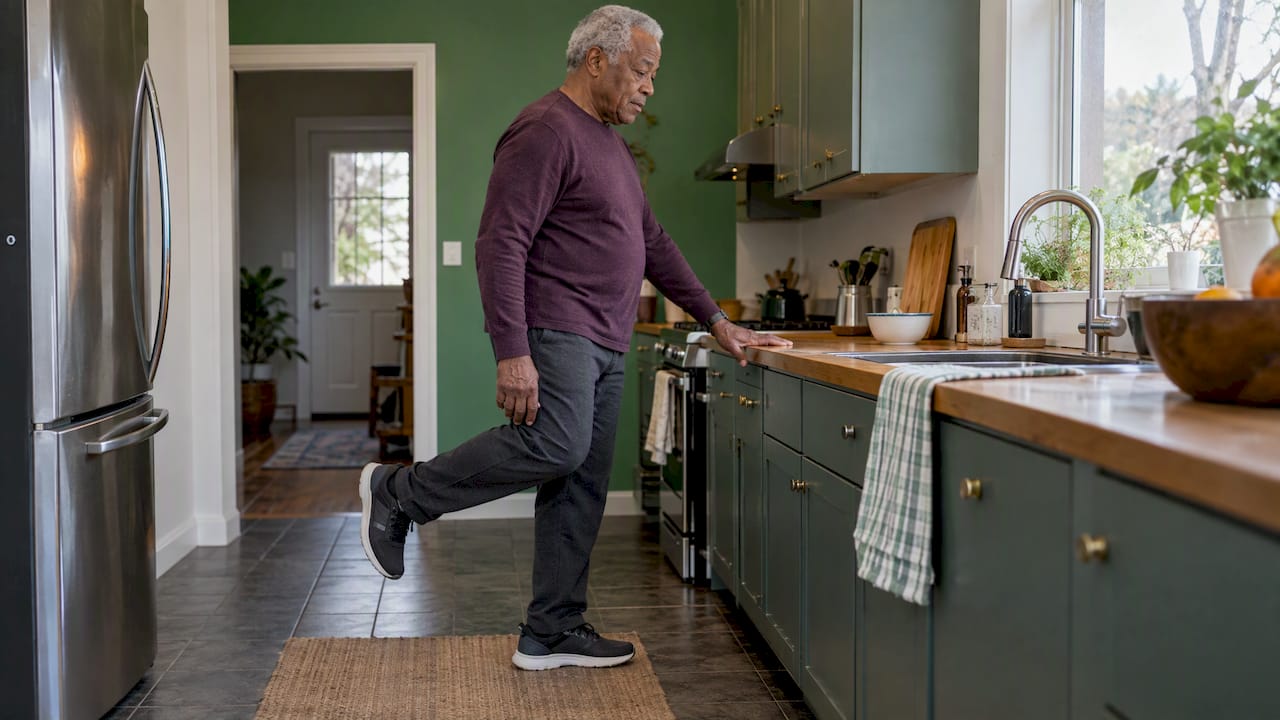
Start low and go slow. The same guide advises building intensity and duration gradually and stopping if there is pain. For older participants, or anyone worried about falls, a short balance training routine for seniors can be a gentle way to build confidence before adding more walking.
Do not turn it into a health screening. If you run the challenge through an employer, the EEOC says employers may ask health-related questions or require medical exams only as part of a voluntary wellness program that provides health or genetic services. Any information must reach the employer only in aggregate form with confidentiality safeguards. The simplest approach is to track minutes or miles, not weight, blood pressure or diagnoses. For anything beyond that, ask your employment counsel.
Skip the gimmicks. NIOSH notes that biomechanical studies have not confirmed meaningful benefits from stability balls as a sitting surface, so a challenge that swaps chairs for balls is not a safe bet. Walking breaks are a better use of everyone’s time.
Our perspective
We built Charity Miles on a simple belief: movement is easier to sustain when it matters to someone besides you. The app is free for individuals and for charities, it counts walking, running and biking, and it donates for every mile logged to the charity a member chooses.
What we see in corporate programs is that the strongest micro challenges are not the cleverest ones. They are the ones where a person can join in under a minute, log a lunchtime walk without feeling it is not athletic enough and see the team total rise by the end of the day. Inclusion drives repeat participation. A step challenge that rewards only the fittest ends in a week. A challenge where any movement counts can run for years.
We also encourage companies to give employees a say. Our Employee Empowerment Program lets a company set its own rate per mile, its total sponsorship cap and whether donations go to each employee’s chosen charity or a cause the company picks. When people see their own values reflected, the challenge stops feeling like an HR initiative and starts feeling like part of the culture.
— Gene
How to run one, step by step
- Choose one action and one cue. For example, a 10-minute walk after lunch.
- Set the length. Seven days is a good first run.
- Pick the cause and the formula. Say plainly what a mile or a minute does.
- Choose a logging method. One app, one form or one shared sheet. Not three.
- Share a launch message. Include the adaptation and check-with-your-clinician note.
- Post progress midweek. Team totals, not individual rankings.
- Close with a recap. Share the total, thank people and announce the next challenge.
Measuring the result
Keep the evaluation light. Three numbers tell most of the story:
- Participation: how many people logged at least one activity, versus how many were invited.
- Consistency: how many logged on four or more days.
- Impact: total minutes or miles and the donation they produced.
Add a two-question pulse survey, such as “Did this make your week better?” and “Would you do another?” Track the same measures across challenges to see whether they grow.
Start a micro challenge with Charity Miles
If you want the logging, team totals and donations handled for you, our Employee Empowerment Program lets a company create a private team, run friendly challenges between groups and optionally sponsor employees’ miles on its own terms. Individuals and charities can start right away with the Charity Miles app, and brands that want to back a community can see our corporate sponsorship options.
FAQ
How long should a micro wellness challenge last?
One week is a strong starting point. It is long enough to build a rhythm and short enough that people finish. If it goes well, chain several weekly challenges with different themes rather than stretching one into a month.
How many minutes of activity count?
Short bouts count. The CDC’s workplace guide says activity can be broken into 5 to 10 minute segments. The national guidelines also say any amount of moderate-to-vigorous activity offers some benefit.
How do we keep a challenge from excluding people?
Let participants choose their activity, convert any movement into a shared unit like miles or minutes and report in a simple way. Reward participation and team totals instead of rankings, and invite people to adapt activities to their bodies.
Can we add charitable giving without making it mandatory?
Yes. Free-to-join challenges with optional donations work, and a company can sponsor miles so employees give nothing out of pocket. Say clearly what the money supports so the cause is concrete.
Can an employer collect health data in a wellness challenge?
Be careful. The EEOC says health-related questions and medical exams are allowed only within voluntary wellness programs that provide health or genetic services, and employers should see only aggregate data. Tracking minutes or miles keeps the challenge simple. Check with employment counsel before collecting anything more.
Sources
- Implementation intentions for weight loss in college students
- Evaluation of the Small Changes, Healthy Habits Pilot
- CDC: Physical Activity Breaks for the Workplace Resource Guide
- Physical Activity Guidelines for Americans, 2nd edition
- National Run For Mental Health Week
- Move More Month: A Simple, Meaningful Month of Service
- Active Ideas | Positive Tracks
- Keep It Moving Challenge | APHA
- Reciprocity Rx Community Challenge | Hiking My Feelings
- STEP-tember Walking Challenge Planner
- Team Feed: Meals for Miles toolkit | Feeding America
- Wellness Challenge | NYU Langone Health
- Variable Magnitude and Frequency Financial Reinforcement study
- EEOC Issues Final Rules on Employer Wellness Programs
- Unstable sitting in the workplace | NIOSH
- Balance Training for Seniors: Safe Exercises to Prevent Falls