
A CSR strategy framework can move through stages such as Assessment, Vision & Strategy, Commitments & Implementation, Measurement, and Iterate. We walk through each stage below using guidance from FSG’s operating-model toolkit, GRI’s materiality standard, and ISO 26000, so you can align social impact with business priorities and strengthen employee engagement along the way.
TL;DR:
- Validate priorities with employees, customers, and community partners after assessment and visioning, before leadership locks budgets or commits resources to the plan.
- Choose one signature initiative using strategic fit, feasibility, social need, and measurable outcomes; set pilot metrics and partner roles before launch.
- Run a pilot for 90 days before scaling, then use participation and outcome data to decide whether to expand, adjust, or stop the initiative.
- Set a baseline before launch, assign one person to own data quality, and track inputs, outputs, and outcomes with quarterly internal reporting.
Table of Contents
- Why a CSR Strategy Matters Now
- The Step-by-Step CSR Framework at a Glance
- Assessment and Materiality: Mapping Your Current State
- Vision, Priorities, and Signature Initiative Design
- Implementation and Operating Model: Governance, Resourcing, and Coordination
- Measurement, Indicators, Reporting, and Learning
- Embedding CSR Across the Organization
- What Practitioners Get Wrong About CSR Strategy
- FAQ
- Sources
- Where to Go for Deeper Guidance
Why a CSR Strategy Matters Now
A scattered CSR program drains budget without building trust, loyalty, or resilience. A strategic one does the opposite: it ties social impact to business priorities, reduces reputational risk, and gives employees a reason to stay. Investors, regulators, and job candidates increasingly expect companies to show their work, not just state good intentions.
The most common failure mode is decoupling CSR from corporate strategy, running philanthropy and sustainability efforts as side projects disconnected from what the business actually does well. FSG and IISD practitioners warn that this disconnect, combined with spreading resources across too many unrelated initiatives, is what keeps CSR programs stuck at surface-level activity instead of lasting impact.
A few patterns separate strategic CSR from scattered goodwill:
- Programs tied to a focused, well-resourced “signature initiative” rather than many small ones.
- Clear ownership at the executive level, not just a committee that meets quarterly.
- Measurement built in from day one, using recognized frameworks like GRI 3 and ISO 26000 rather than invented metrics.
- Employee participation treated as a design requirement, not an afterthought.
Getting this right early saves months of rework later, which is exactly why the next section lays out the full sequence before you commit resources.
The Step-by-Step CSR Framework at a Glance
Every stage below builds on the one before it, and skipping ahead is the most common way programs lose credibility with stakeholders. Use this as your process map, then assign an owner to each stage before work begins.
- Assessment: inventory current activities, budgets, risks, and stakeholder expectations.
- Vision & Strategy: align leadership around priorities and pick a focus area worth committing to.
- Commitments & Design: translate priorities into a signature initiative with clear goals and partners.
- Implementation & Operating Model: build the governance, staffing, and systems that let the work run.
- Measurement & Learning: track indicators against a theory of change and report on progress.
- Iterate: revisit materiality, adjust the initiative, and scale what works.
Pause for stakeholder validation after Assessment and again after Vision & Strategy. Those are the two points where leadership commits resources, so input from employees, customers, and community partners needs to land before, not after, the plan is locked. Pilot before you scale: a 90-day test of a single initiative tells you more than a year of planning documents. At the end of each stage, you should have a tangible deliverable (an assessment report, a prioritized issue list, a signed commitment, a working dashboard) that the next stage can build on. The FSG CSR Strategy Roadmap organizes this same sequence into three modules: Alignment & Visioning, Strategy Development, and Measurement & Learning.
Assessment and Materiality: Mapping Your Current State
Start by assembling a cross-functional team, pulling in CSR, HR, legal, communications, and a business-unit leader or two. Their first job is an honest inventory: what CSR-related activities already exist, what they cost, which partners are involved, and whether anyone can say what outcomes they have produced. Most companies find this inventory surfaces more overlapping or forgotten initiatives than expected.
From there, the team should check for legal and regulatory exposure (labor practices, environmental compliance, disclosure requirements) and flag reputational risk areas before they become headlines. This is also the moment to run a formal materiality exercise, following the structure in GRI 3: Material Topics 2021:
- Identify actual and potential impacts across operations and the value chain.
- Assess the significance of each impact on people, the economy, and the environment.
- Group related impacts into a manageable list of topics.
- Set a threshold for which topics the strategy will actually act on.
Stakeholder mapping runs alongside this work. Employees, customers, investors, regulators, and community partners each carry different weight depending on your industry and footprint, so decide upfront how you will consult each group, through surveys, interviews, or advisory panels, and how their input will factor into prioritization.
Pro Tip: Weight employee input heavily during materiality assessment. They are the group most likely to act on whatever strategy you choose, and their early buy-in predicts participation later.
Vision, Priorities, and Signature Initiative Design
Once the assessment is complete, bring leadership together for a visioning workshop. The goal is simple but often skipped: get executives aligned on what success looks like before anyone drafts a strategy document. Without this step, different leaders carry different mental models of what CSR is for, and that disagreement resurfaces later as budget fights.
Use four criteria to prioritize which material topics become strategic focus areas:
- Strategic alignment: does this topic connect to what the business already does well?
- Feasibility: do we have the budget, staff, and partners to act on it credibly?
- Social need: is this an area where our involvement would make a real difference?
- Measurability: can we track outcomes, not just activity, over time?
The output of this stage should be a signature initiative, a focused, well-resourced program rather than a scattered list of good causes. Design it with an intervention matrix that maps possible activities against expected outcomes, set pilot metrics before launch, choose partners with proven delivery capacity, and build a scaling plan from the start rather than treating scale as a later decision. A workplace fitness and giving challenge, for example, can start as a single-department pilot and expand once participation and donation data confirm it works. Our CSR strategies for employers page walks through more initiative ideas built around this same logic.
Implementation and Operating Model: Governance, Resourcing, and Coordination
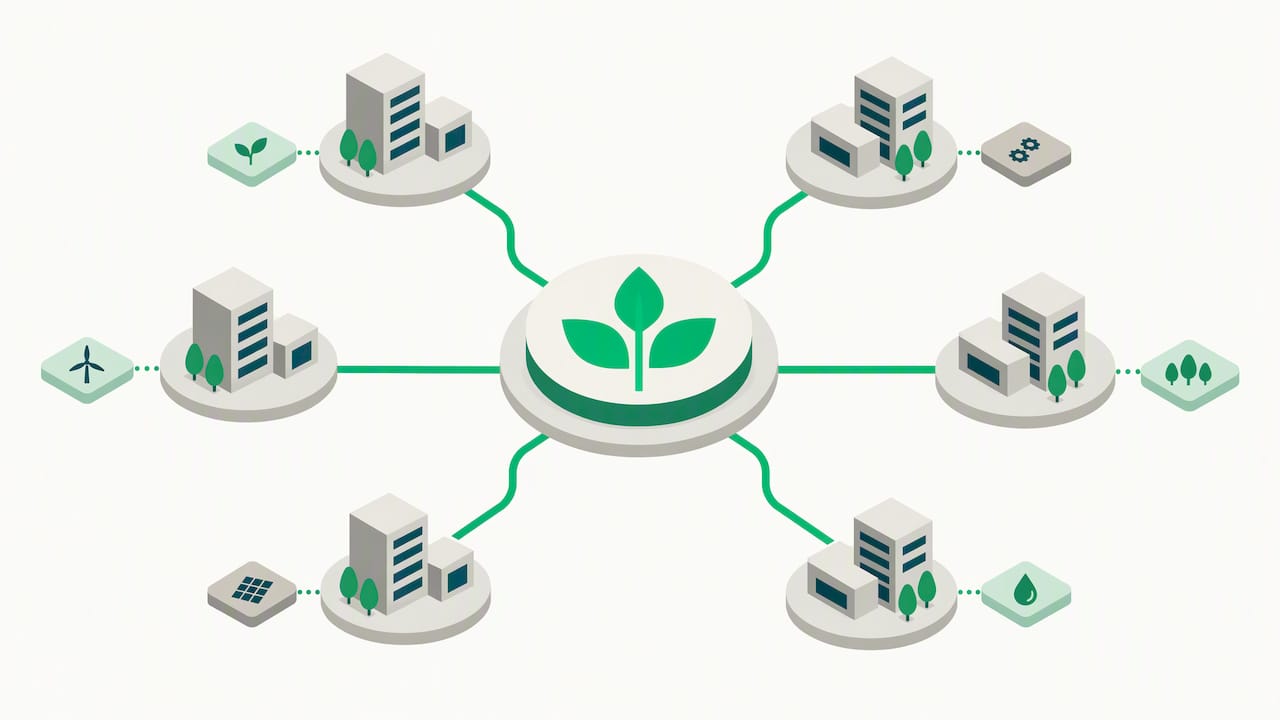
A strategy without an operating model stays a slide deck. FSG’s operating-model toolkit organizes the dimensions you need to resolve: business alignment, approach to impact, governance, coordination across geographies, resourcing, systems, and storytelling. Working through each one explicitly prevents the common trap of launching a program before deciding who owns it.
Governance decisions come first. Most organizations land on some combination of board-level oversight for accountability, an executive sponsor who controls budget and removes obstacles, and a cross-functional working group that handles day-to-day coordination between CSR, HR, communications, and business units. Skipping the executive sponsor is one of the fastest ways to watch a well-designed strategy stall at the budget review stage.
Once governance is set, prioritize these operational systems:
- A data-tracking system that captures participation, spend, and outcomes in one place.
- A process for managing grants and partnerships so commitments do not outlive their usefulness.
- HR integration so engagement data feeds performance and culture metrics, not a separate spreadsheet.
- Vendor and cross-team coordination so initiatives in one region or department do not duplicate another.
Pro Tip: Assign one person, not a committee, as the single point of accountability for data quality. Shared ownership of metrics usually means no one owns them.
Coordination matters most in companies operating across multiple business units or regions, where a signature initiative designed centrally needs local flexibility to land well. Building this in from the start costs less than retrofitting it after a global rollout stumbles.
Measurement, Indicators, Reporting, and Learning
Measurement starts with a simple theory of change: what inputs (budget, staff time) produce what outputs (programs run, people reached), which in turn produce what outcomes (behavior change, wellbeing improvements, donations generated). Mapping this chain, even on one page, tells you which indicators actually matter versus which just look good in a slide.
From there, apply a few measurement fundamentals:
- Establish a baseline before launch, so “progress” means something concrete.
- Assign clear data ownership so metrics do not fall between departments.
- Track indicators across all three levels: inputs, outputs, and outcomes, not just activity counts.
- Set a reporting cadence (quarterly internally, annually for public disclosure) and decide early whether external assurance is needed.
GRI 3 guides which material topics belong in public reporting and how to document your management approach for each. ISO 26000 complements this by framing how socially responsible practices should integrate across the organization and its sphere of influence, rather than sitting in a standalone report.
Companies with engaged employees are 21% more profitable than those without, which is one reason measurement should track participation and sentiment alongside donation totals or carbon figures.
Measurement only pays off when it feeds learning. Set explicit learning questions before each reporting cycle (did the pilot reach the intended group, did the partner deliver what they promised, did participation hold after the initial launch). Use those answers to adjust the next cycle rather than simply repeating the same program. FSG’s own practitioner guidance treats materiality as dynamic, something to revisit as the business and its stakeholders change, not a one-time exercise.
Embedding CSR Across the Organization
A strategy only works if employees actually participate in it, which means program design matters as much as program selection. The most durable CSR initiatives connect directly to employee wellbeing: movement, volunteering, and giving opportunities that fit into a normal workday rather than demanding extra hours.
A few design choices make the difference between a program people try once and one they stick with:
- Keep participation accessible to every fitness level and schedule, not just the already-active.
- Build in team challenges and friendly competition to create momentum and camaraderie.
- Recognize participation publicly so effort translates into visible, personal impact.
- Report back on outcomes regularly so employees see what their participation actually funded.
HR and internal communications should co-own this work with CSR, not receive it as a finished program. HR brings the channels (onboarding, intranet, all-hands meetings) and the engagement data that shows whether participation is holding or fading. Our CSR initiatives for engagement page has concrete examples of this kind of program mechanics in practice.
What Practitioners Get Wrong About CSR Strategy
Materiality is not a one-time checklist, it shifts as regulations, stakeholder expectations, and business priorities change, and treating it as static is one of the most common mistakes we see in otherwise well-designed strategies. The second most common mistake is decoupling CSR from core business strategy and enterprise risk management, which leaves social impact work vulnerable the moment budgets tighten.
Strong results tend to come from programs woven into daily routine rather than annual one-off events.
If you are starting from scratch, do not wait for a perfect five-year plan. Run a 90-day pilot focused on one signature initiative, measure participation and outcomes honestly, and use what you learn to decide whether to scale, adjust, or stop.
— Gene
FAQ
What are the four CSR strategies?
CSR efforts are often grouped into four approaches: philanthropic giving, ethical business practices, environmental sustainability, and economic responsibility to stakeholders. A strategic CSR framework typically draws on more than one of these at once, anchored around a signature initiative rather than treating them as separate programs.
What are the five essential components of strategic CSR?
A strategic CSR approach generally includes assessment of current impacts and risks, a clear vision tied to business priorities, concrete commitments with defined goals, an operating model for implementation, and ongoing measurement with a feedback loop for improvement. The FSG CSR Strategy Roadmap organizes these into assessment, visioning, strategy development, and measurement and learning.
What are the five pillars of CSR?
Common frameworks describe five pillars: environment, community, workplace, marketplace, and governance. Each pillar covers a distinct area of responsibility, from environmental footprint to ethical sourcing and fair treatment of employees.
What are the main CSR frameworks companies use?
Widely referenced frameworks include GRI’s materiality standard for reporting, ISO 26000 for guidance on social responsibility, and FSG’s operating-model approach for designing and governing CSR programs. The IISD implementation guide offers a six-stage plan, do, check, improve model that many practitioners use alongside these standards.
How do employee engagement apps fit into a CSR strategy?
Apps that turn everyday movement into charitable donations give employees a low-effort, inclusive way to participate in CSR daily rather than through occasional volunteer events. Our own Employee Empowerment program lets companies sponsor employee miles on their own terms, which is one way to fold participation directly into a signature initiative.
Sources
- ALIGNING STRATEGY
- CSR Strategy Roadmap
- GRI 3: Material Topics 2021
- ISO 26000:2010 – Guidance on social responsibility
Where to Go for Deeper Guidance
- FSG’s Operating Model Toolkit: governance and resourcing frameworks.
- FSG CSR Strategy Roadmap: step-by-step strategy process.
- GRI 3: Material Topics 2021: materiality assessment and reporting.
- ISO 26000: social responsibility guidance across operations.