
Activity based giving connects physical movement, like walking, running, or cycling, directly to charitable donations, so every mile covered produces real support for a cause. The main benefit is simple: it turns ordinary exercise into measurable social impact while keeping people more engaged in both their health and their giving. Free apps like Charity Miles make this possible at no cost to the individual.
TL;DR:
- Apps track miles with GPS or pedometers, then convert them into donations from sponsors; employers can set rates, spending caps, and charity choices.
- Before tracking, confirm how GPS or pedometer data is collected, how distances are measured, and how per mile rates and sponsor caps determine payouts.
- A randomized pilot found that incentives of $1 daily or $5 weekly could make donation programs financially workable for community partners such as YMCAs.
- Employers should pilot a private team, set the per mile rate and spending cap before launch, and report participation and donation totals regularly.
- HARMAN’s Charity Miles team grew participation 11x after launching in 2021, with more than 1,200 employees raising over $120,000 for charity.
Table of Contents
- How app-based, employer, and event models actually work
- Why movement makes people more generous
- Your step-by-step checklist to move and give
- Launching an Employee Empowerment program that works
- Making activity-based incentives last
- The HARMAN case study: what an 11x jump looks like
- Why purpose changes how we move
- How Charity Miles makes activity-based giving easy
- FAQ
- Sources
How app-based, employer, and event models actually work
Activity based giving takes a few practical shapes, and knowing the mechanics helps you pick the right one.
- App-based tracking: Your phone’s GPS and pedometer log miles walked, run, or biked, and a sponsor pays a set amount per mile toward your chosen charity.
- Employer-sponsored programs: Companies create private teams, set their own per-mile sponsorship rate, cap total spending, and choose whether funds go to employee-selected charities or a single company cause.
- Event-driven fundraising: Virtual races and community walking events track verified mileage and tie it to a one-time fundraising goal.
Verification matters in every model. Reputable platforms disclose how distances are measured and how donations get calculated, and they limit data collection to what tracking requires, which protects your privacy while keeping the math transparent.
Why movement makes people more generous
Exercise does more than tire you out. Research from the University of Portsmouth found that a post-exercise “warm glow” increases generosity, with people showing a greater willingness to give shortly after moderate-intensity activity. The same reporting noted that A notable share of participants in a 1-mile charity event named fundraising as their main reason for taking part, which suggests the cause itself, not just the workout, drives turnout.
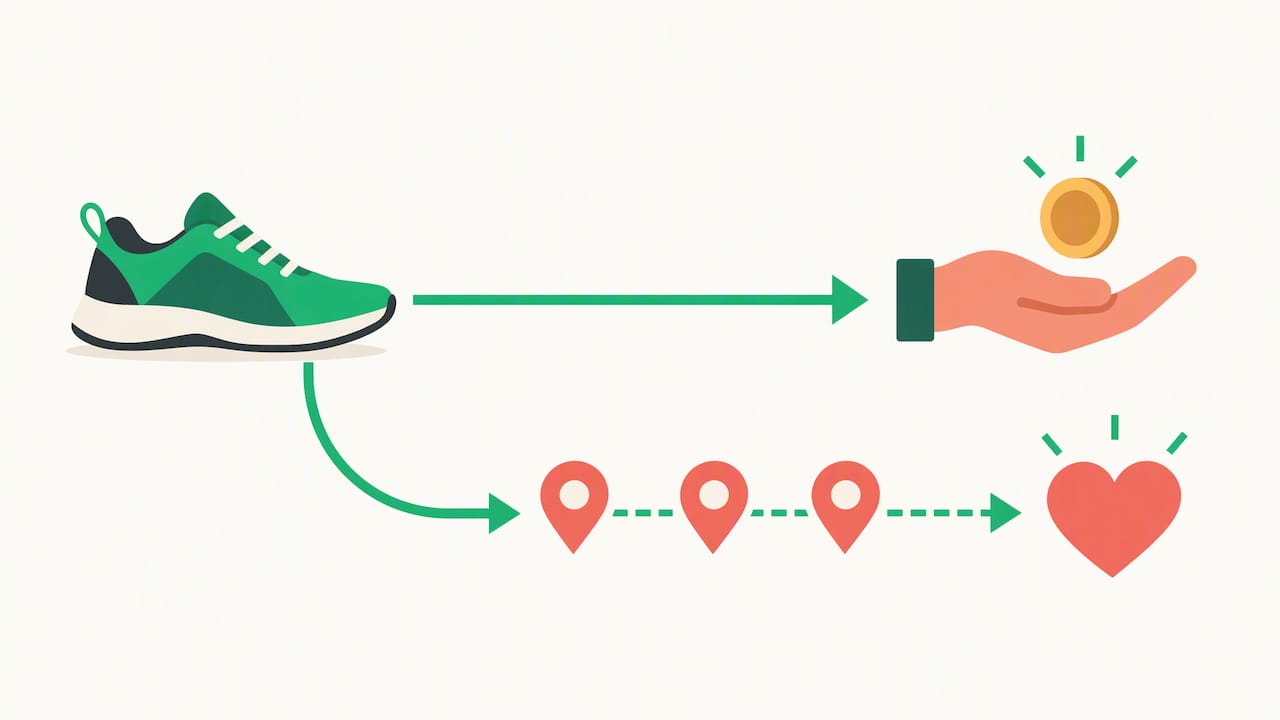
A randomized pilot study found that small, sustainable incentives like $1 a day or $5 a week were enough to make a donation-based activity program financially workable for a community partner like a YMCA.
A related randomized controlled trial backed this up over a longer stretch, correlating objectively verified attendance with self-reported activity across twelve months.
Two design lessons fall out of this evidence:
- Ask for donations or frame challenges right after activity, while the afterglow effect is strongest.
- Keep incentive levels modest and steady rather than large and occasional, since that is what sustained attendance in the trial data.
Your step-by-step checklist to move and give
Turning your daily walk or ride into a donation takes less effort than most people expect.
- Download a tracking app, such as the free Charity Miles app, and create a profile.
- Choose a charity from the app’s list, picking one whose mission actually matters to you.
- Check your tracking permissions so GPS or pedometer data logs correctly during your activity.
- Confirm how donations are calculated, including the per-mile rate and any sponsor caps, before you start counting on a specific payout.
- Join a team if one is available, whether that is a friend group or an employer-sponsored challenge, since team structures tend to keep people consistent.
- Schedule recurring activity, like a lunchtime walk or weekend ride, and set phone reminders so logging miles becomes routine rather than an afterthought.
Pro Tip: Pair your tracked activity with a recurring calendar block, like “Tuesday/Thursday 7am walk,” so the habit survives busy weeks.
Launching an Employee Empowerment program that works
HR and CSR leaders looking to link movement to giving need a few structural decisions up front, not a one-off step challenge.
Start with the parameters: create private teams for employees, set a sponsorship rate per mile, cap total company spending, and decide whether donations flow to each employee’s chosen charity or a single company-selected cause. From there, design for engagement with inclusive activity rules that count walking and commuting alongside running, add themed challenges to keep things fresh, and build in recognition so participation feels seen, not just logged.
Measurement closes the loop. Track participation rate, total dollars raised, and signals tied to wellbeing and retention, then report those figures back to employees and leadership so the program’s value stays visible.
| Program element | What to measure |
|---|---|
| Participation | Share of eligible employees actively logging miles |
| Fundraising | Total dollars donated through the program |
| Wellbeing | Self-reported energy, stress, or burnout signals |
| Retention | Turnover trends among participating teams |
Before launch, build a short operational checklist: a communications plan explaining how the program works, clear privacy and data handling rules, a pilot team to test the format, and a review cycle to adjust based on what the data shows.
- Decide sponsorship rate and cap before announcing the program.
- Pilot with one team before rolling out company-wide.
- Report results back to participants on a regular cadence.
Making activity-based incentives last
A program only works if it survives past its first month, and the design choices behind that are fairly predictable.
- Keep incentives small and ongoing. A pilot study found that levels as modest as $1 a day proved more sustainable for sponsors than large one-time payouts, and steady amounts also match how habits form.
- Favor local or proximate beneficiaries. Research on fitness-linked CSR appeals found that donations supporting local or proximate causes are perceived as more impactful, which increases willingness to give.
- Define activity broadly. Counting walking, cycling, and commuting, not just structured workouts, keeps the program open to every fitness level.
- Report transparently. Sharing how miles convert to dollars, and confirming payouts actually reached the chosen charity, builds the trust that keeps people logging activity.
Pro Tip: If you’re choosing a charity partner for a company program, ask whether they can report back specific, local outcomes. A concrete story about regional impact does more for continued participation than a generic thank-you.
The HARMAN case study: what an 11x jump looks like
Since launching its Charity Miles team in 2021, HARMAN saw an 11x increase in employee participation, with more than 1,200 employees generating over $120,000 for charity. The result reflects a few program choices rather than luck.
- A private company team gave employees a shared, visible goal instead of an anonymous individual app experience.
- Flexible sponsorship terms let the company set its own rate per mile and spending cap, keeping costs predictable.
- Themed challenges and recognition kept the program from fading after the initial launch excitement.
For any organization considering a pilot, the practical lesson is to start small, measure participation and dollars raised from day one, and expand the format once a single team shows it works.
Why purpose changes how we move
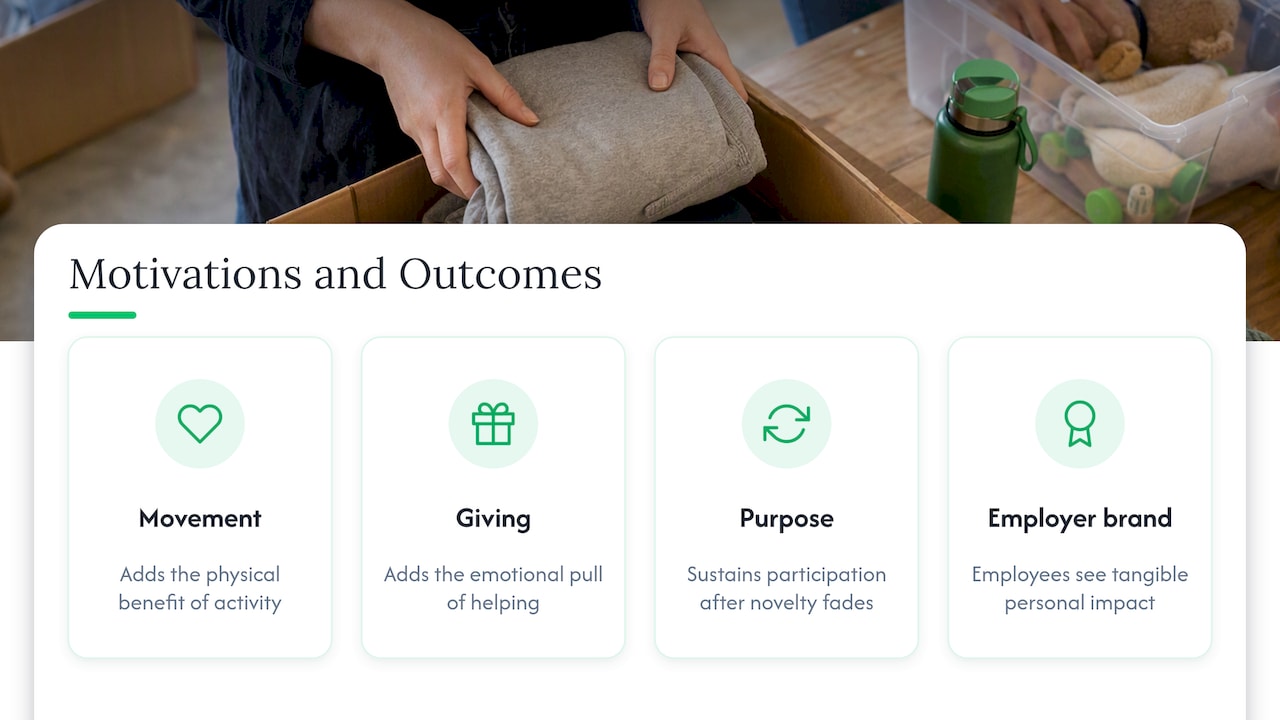
Activity-based giving works because it stacks two motivations that reinforce each other: the physical benefit of movement and the emotional pull of helping someone else. We have seen this pairing matter more than either motivation alone, since purpose tends to sustain participation long after a fitness goal’s initial novelty fades.
For organizations, the payoff extends past the dollars raised. Wellbeing improves, engagement rises, and the employer brand benefits when employees can point to a tangible, personal impact they helped create.
— Gene
How Charity Miles makes activity-based giving easy
We built the Charity Miles app to be free for every individual member, with no subscription or hidden fee standing between your miles and the causes you care about. Any walk, run, or ride counts, so the program stays open to people at every fitness level, not just competitive athletes.
For HR and CSR teams, our Employee Empowerment program lets you set your own sponsorship rate, spending cap, and donation allocation, whether that means letting employees choose their own charity or directing funds to a company cause. Teams that want outside structure can also explore our Corporate Sponsorship Opportunities for brands looking to activate communities around activity-based giving.
- Individuals can download the free app and start logging miles toward a chosen charity today.
- HR teams can pilot a private team challenge with a defined sponsorship rate and cap before scaling company-wide.
- Organizations exploring complementary wellness resources may also find value in partner tools like free sobriety support resources designed for workplace wellbeing programs.
Ready to put a mile toward a cause? Get started with Charity Miles or bring our Employee Empowerment program to your team.
FAQ
What is the definition of charitable activities?
Charitable activities are actions or programs that provide a public benefit, such as relief of poverty, advancement of education, or protection of health, without the donor receiving a substantial benefit in return. The Internal Revenue Code defines charitable contributions under this principle, which is the same standard that governs activity-based donations made through apps or employer programs.
What is the 30/70 rule for charities?
There is no official rule defined in IRS guidance or the charitable contribution rules under IRC §170. Definitions of acceptable fundraising-to-program spending ratios vary by organization and watchdog group, so it’s worth checking a specific charity’s own reporting rather than assuming a fixed standard applies.
How can people be encouraged to engage in philanthropic activities more frequently?
Small, consistent incentives tend to work better than large one-time rewards, since pilot research found modest, ongoing amounts more sustainable for sponsors and easier for participants to stick with. Timing donation requests right after exercise, when a post-exercise generosity boost is strongest, also increases participation.
Do activity-based donation platforms verify how miles convert to dollars?
Reputable platforms disclose their per-mile rate, any sponsor caps, and how tracked distance converts into a donation amount. Charity Miles, for example, is free for both members and charities, and uses GPS and pedometer data to calculate miles that convert into sponsor-funded donations.
Sources
- Study shows post-exercise ‘warm glow’ increases generosity — University of Portsmouth
- Small sustainable monetary incentives versus charitable donations to promote exercise: Rationale, design, and baseline data from a randomized pilot study — PMC
- 26 USC § 170 — Charitable, etc., contributions and gifts — Cornell Law School